
Why Glass Yard Art Changes Everything About Outdoor Styling
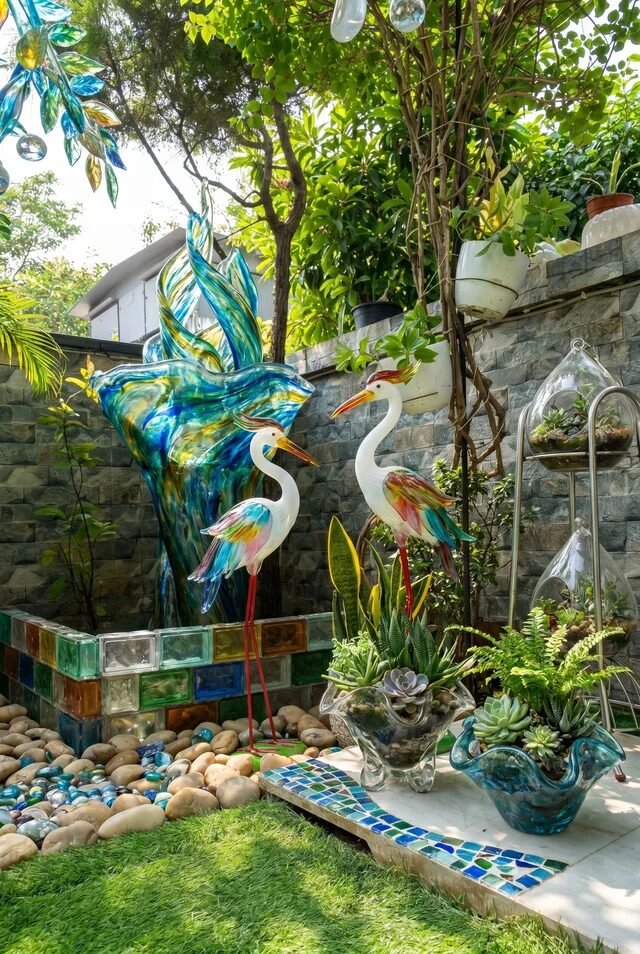
There’s something low-key addictive about glass yard art, and once we notice it, we can’t unsee it. It’s not just decoration—it’s light, color, and movement all doing their little performance throughout the day. Morning sun? Soft glow. Golden hour? Full cinematic moment. Nighttime with a few warm lights? Instant fairytale energy. We’re not just styling a yard—we’re designing an experience that shifts with time.
What makes glass pieces so powerful is how they interact with their surroundings. Unlike solid decor, glass doesn’t block space—it plays with it. That means we can layer it into gardens without making things feel heavy or crowded. It’s basically the cheat code for adding color without visual clutter. And yes, we love a good cheat code.
As we’ve seen in these ideas, the real magic happens when we think intentionally—placement, lighting, color repetition. That’s how glass goes from “cute accent” to “main character energy.”
Hanging Stained Glass Teapot Garden Moment
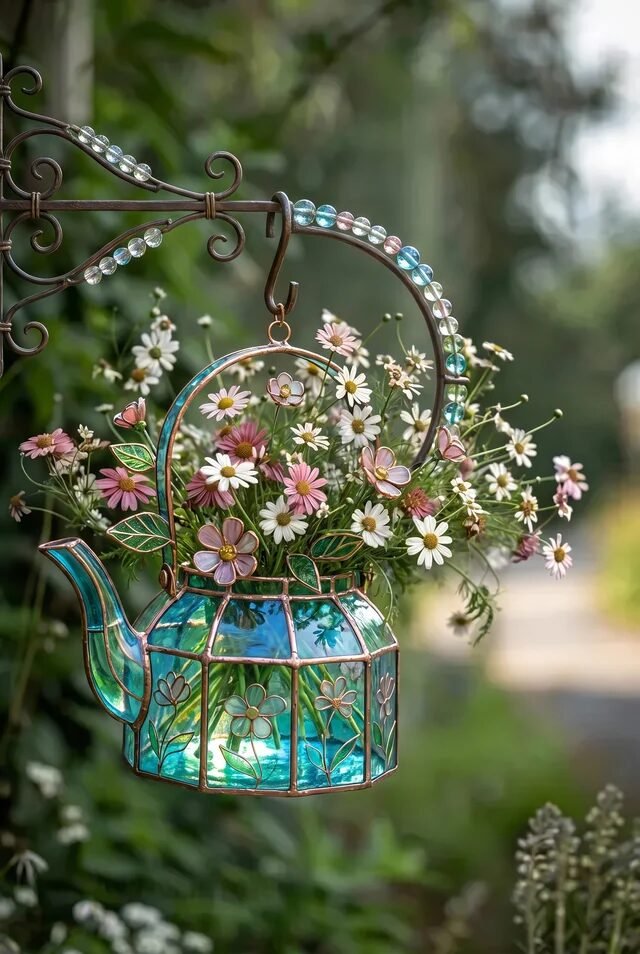
There’s something ridiculously charming about turning a teapot into a hanging stained glass planter, and honestly, it’s doing more emotional labor than half your yard combined. The curved silhouette naturally creates a soft focal point, while the translucent glass plays with light in a way that feels almost… cinematic. We’re not just decorating here—we’re choreographing how sunlight interacts with color. That’s the magic.
What really makes this work is placement. You want it slightly off-center, hanging at eye level or just above, so it feels discovered rather than announced. Pairing it with delicate wildflowers keeps the visual weight balanced—nothing too heavy or structured, or it kills the whimsy. The metal bracket adds a contrasting texture, which keeps the whole look from becoming too “precious.”
If we’re recreating this, think color harmony first. Echo the glass tones in nearby plants or decor so it feels intentional. A random pop of stained glass works, but a repeated color story? That’s design. Also, don’t skip drainage—cute is great, root rot is not.
Mosaic Glass Birdbath That Actually Steals Attention
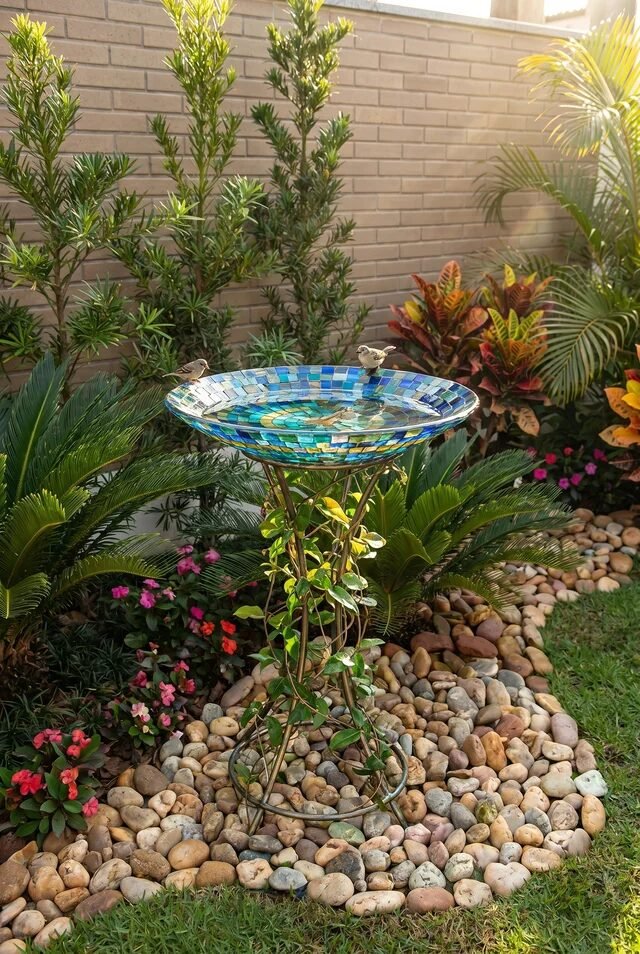
This isn’t just a birdbath, it’s basically a spotlight for your garden. The mosaic glass surface reflects light in tiny fragments, which creates movement even when nothing’s happening. We’re using reflection as a design tool here, not just decoration. That’s why it feels so dynamic compared to plain stone or concrete.
The key to making this look elevated (not chaotic) is grounding it. Notice the ring of smooth river rocks underneath—it anchors the piece visually and creates a transition between structure and planting. Surrounding it with lush greenery softens the geometry of the bowl, so you get that perfect contrast between organic and crafted elements.
If we’re styling our own version, height matters more than you think. Slightly elevate the birdbath so it becomes a focal point, not something lost in the plants. And keep the surrounding palette cohesive—too many competing colors and the glass loses its moment. Let the mosaic be the main character, everyone else is just supporting cast.
Layered Glass Garden Display That Feels Curated
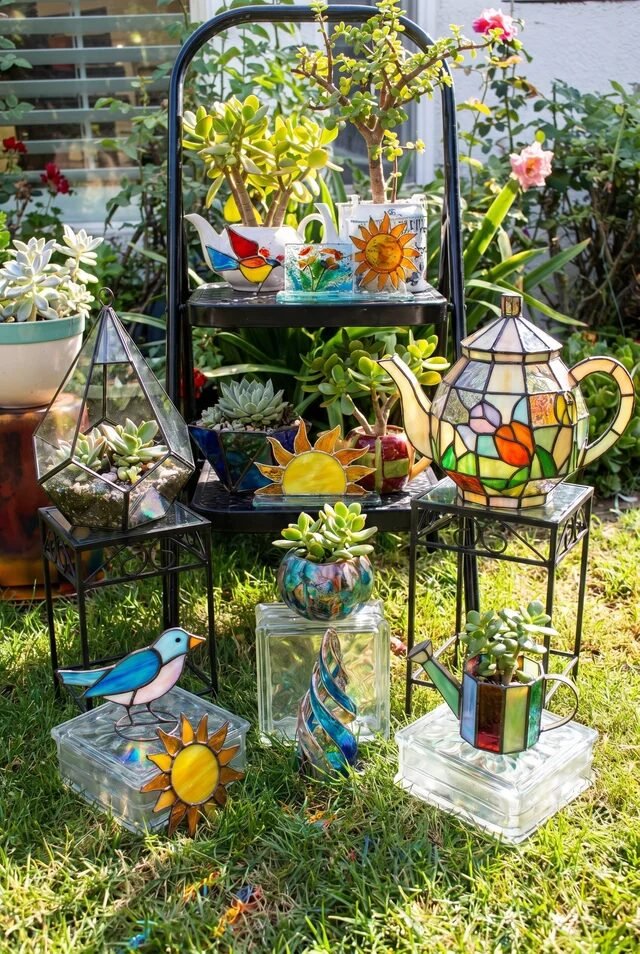
Okay this setup? It’s giving curated chaos—but like, the good kind. The trick here is layering different glass art pieces at varying heights so your eye keeps moving. We’re basically building a visual staircase, not just placing objects randomly. That’s why it feels intentional instead of cluttered.
What makes this work is the mix of shapes and themes without losing cohesion. You’ve got geometric terrariums, playful figurines, and stained glass pieces all coexisting because the color palette ties them together. The black metal stands act as a neutral framework, grounding everything so it doesn’t feel like a yard sale exploded.
When we recreate this, restraint is the secret sauce. Choose a color family and stick to it—don’t invite every rainbow shade to the party. Also, vary scale deliberately. If everything is the same size, the whole display falls flat visually. And pro tip: sunlight direction matters. Place this where it catches morning or late afternoon light for maximum sparkle payoff.
Stained Glass Mailbox That Outsmarts Your Landscaping
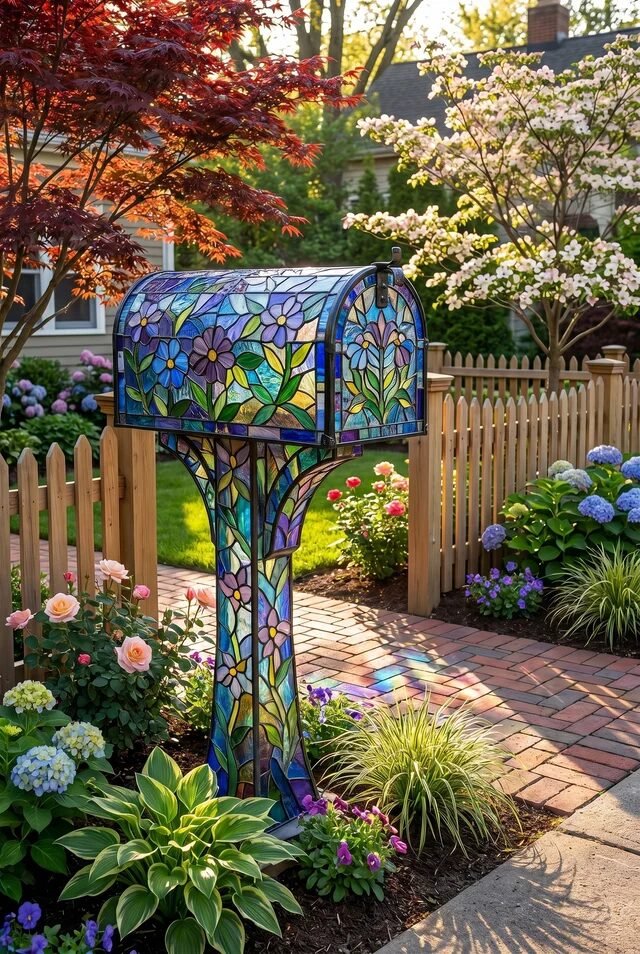
Let’s be honest, most mailboxes are doing absolutely nothing for curb appeal. This one? It’s carrying the entire front yard aesthetic on its back. The stained glass transforms a functional object into a statement piece, and suddenly your landscaping feels designed, not accidental. We love when utility meets drama.
The reason this works so well is contrast. The structured, vertical mailbox form is softened by the organic floral patterns in the glass. Then you layer in surrounding plants—hostas, hydrangeas, soft grasses—to echo those shapes in real life. That repetition creates visual harmony without being obvious about it.
If we’re bold enough to try this, placement is everything. Keep the surrounding area slightly minimal so the mailbox can shine (literally). Too many competing focal points and it loses its impact fast. Also think about durability—use weather-resistant materials or sealed panels so your art doesn’t age like milk in the rain.
Whimsical Glass Wheelbarrow Planter That Feels Storybook
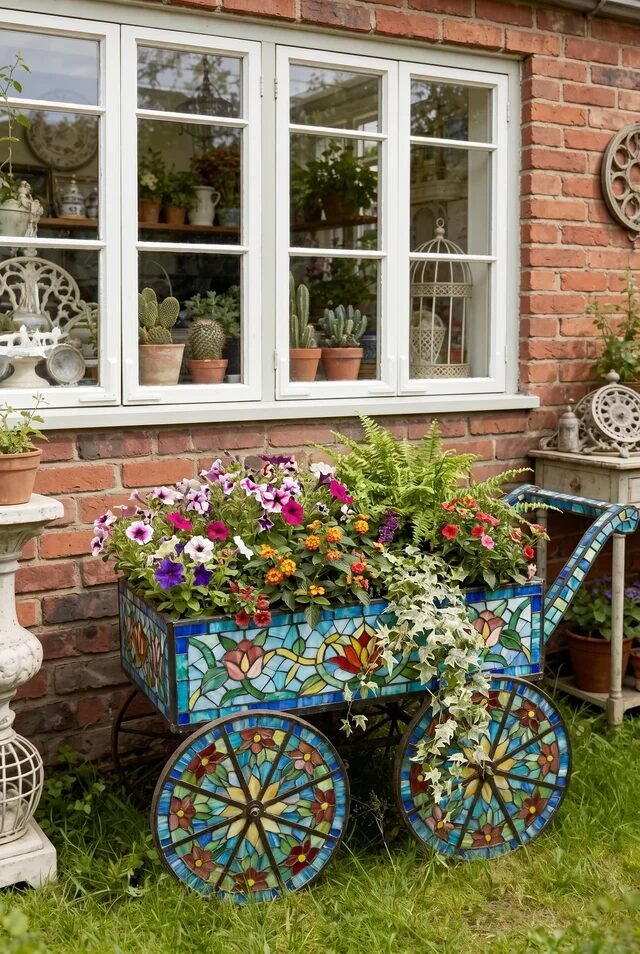
This is where garden decor crosses into full-on storybook territory, and we’re not mad about it. A stained glass wheelbarrow planter adds movement and personality, especially with those detailed mosaic wheels. It’s playful, but still grounded in solid design principles—aka our favorite combo.
What makes this piece successful is how it integrates with the architecture behind it. The brick wall adds warmth and texture, while the white window frames keep everything feeling fresh and clean. The glass colors pick up tones from both, creating a cohesive palette instead of a random color explosion.
When we recreate this, plant selection matters more than usual. Mix trailing vines with upright blooms so the composition feels full but not chaotic. Think layered planting—height, spill, and filler all working together. And don’t overcrowd the area around it. This piece thrives when it has a little breathing room to be admired, not buried in visual noise.
Whimsical Glass Fox Lantern Pathway Glow
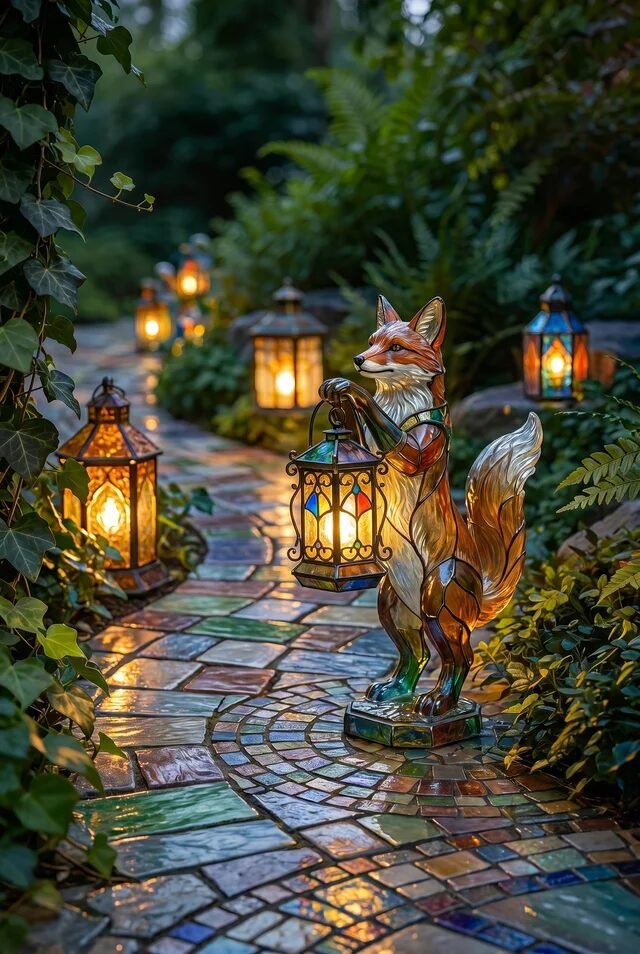
This setup feels like your garden just unlocked a secret fairytale level, and honestly, we’re here for it. The stained glass fox holding a lantern instantly becomes a narrative focal point, not just decor. We’re designing a story moment, not just placing objects. The glowing lanterns along the pathway guide the eye forward, creating depth and movement like a visual breadcrumb trail.
What makes this especially effective is repetition with variation. The lanterns echo each other in shape but differ slightly in placement and intensity, which keeps things interesting without feeling chaotic. The mosaic pathway underneath adds texture and subtly reflects light, amplifying that magical glow without needing extra elements.
If we’re recreating this, lighting temperature matters more than you think. Stick to warm tones to keep the vibe cozy, not clinical. Cool lighting would instantly kill the enchantment. Also, frame your path with greenery to soften the hard edges and make the glowing glass feel naturally integrated.
Vintage Glass Wheel Planter With Charm
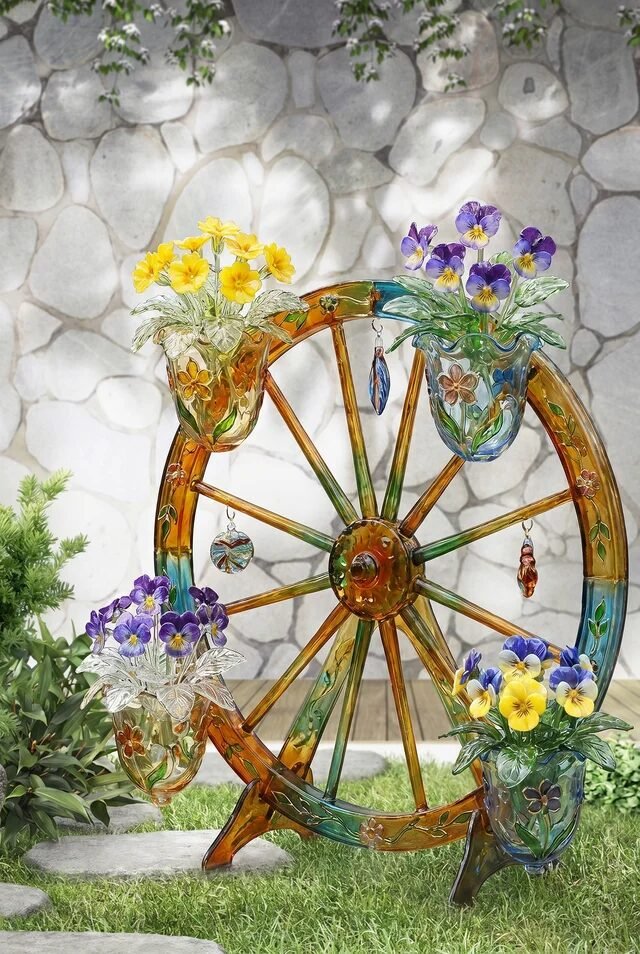
This one is giving antique garden-core, but make it intentional. The glass wagon wheel structure creates a strong circular form, which naturally draws the eye and anchors the space. Adding small glass planters around it introduces rhythm and repetition. We’re basically using geometry as a styling tool here, and it works.
The key design move is balancing transparency with color. The stained glass has rich tones, but because it’s translucent, it doesn’t feel visually heavy. That allows the flowers to shine without competing. The light neutral wall behind it is also doing quiet work, acting as a backdrop that lets the colors pop without distraction.
When we recreate this, think about spacing. Don’t overcrowd the wheel—each planter needs breathing room to read clearly. Negative space is what makes this look curated, not cluttered. Also, mix flower heights slightly for a layered effect, but keep the palette cohesive so it doesn’t turn into visual noise.
Pixel Glass Animal Sculpture That Pops
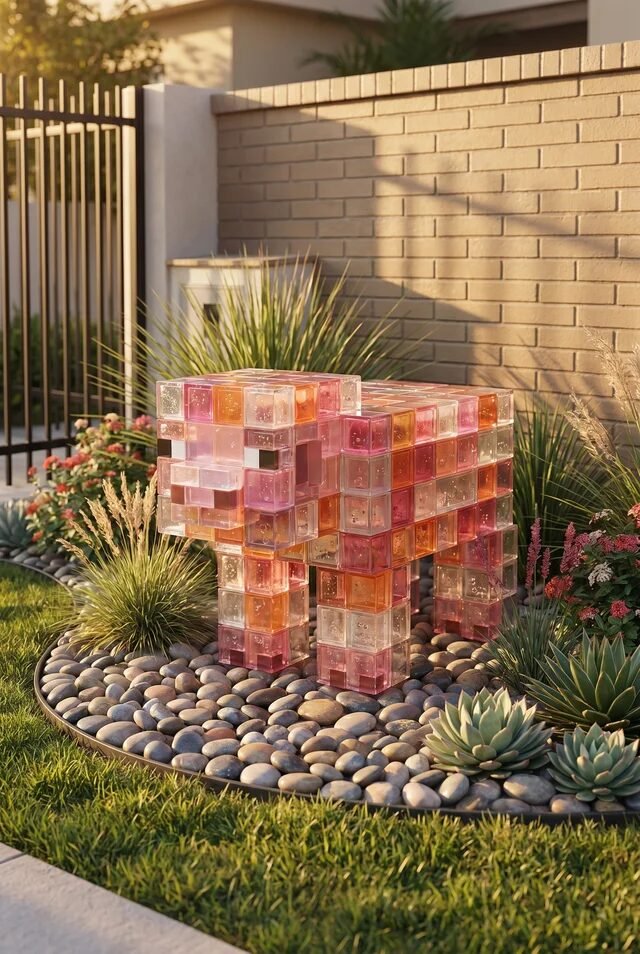
Okay, this is basically Minecraft but make it chic. The blocky glass structure turns a playful concept into a bold sculptural statement. What makes it work is the strong geometric repetition—every cube contributes to a cohesive form. We’re leaning into structure here, not softness, and that’s the whole point.
The surrounding landscape plays a huge role too. Smooth river rocks and low succulents create a clean, minimal base that contrasts with the vibrant glass colors. That contrast is what keeps the sculpture from feeling childish—it’s grounded by a more mature, restrained environment.
If we’re trying this ourselves, color selection is everything. Stick to a tight palette (like warm pinks and ambers here) so it reads as intentional. Too many random colors and it starts looking like leftover craft supplies. Also, consider scale carefully—this kind of piece needs enough size to feel impactful, not like a tiny afterthought.
Statement Glass Fountain That Commands The Garden
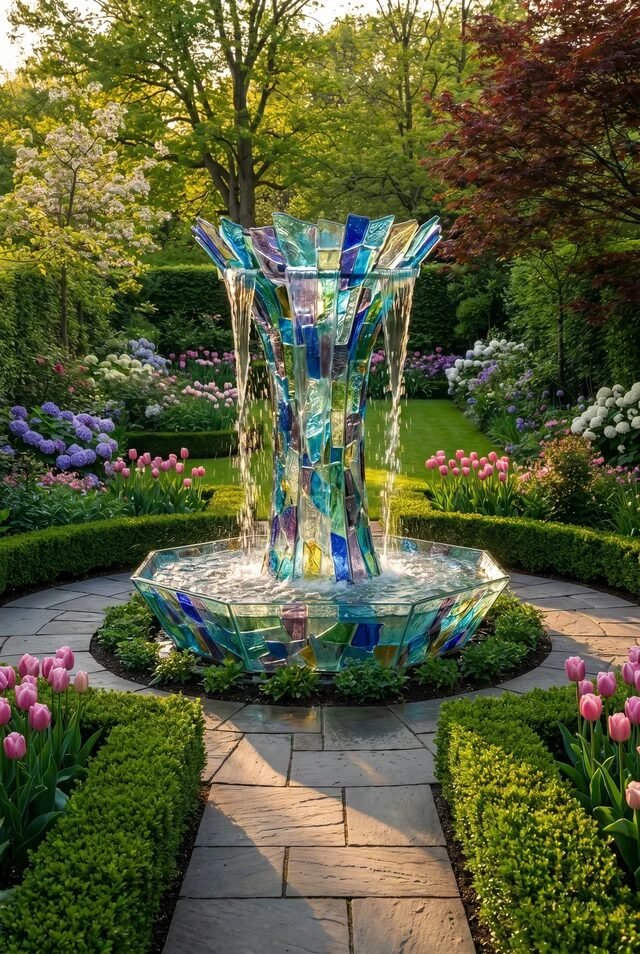
This is not subtle, and that’s exactly why it works. A stained glass fountain instantly becomes the centerpiece of the entire garden layout. The vertical structure draws the eye upward, while the flowing water adds movement and sound. We’re layering visual and sensory design, which is next-level styling.
The symmetry of the surrounding garden is doing a lot of heavy lifting here. Trimmed hedges and evenly spaced flowers create a structured frame that lets the fountain shine without competition. The glass panels catch and scatter light, making the piece feel alive throughout the day.
If we’re recreating this, placement is everything—center it along a clear axis so it feels intentional. Off-center would just feel like a mistake, not a statement. Also, keep surrounding colors slightly muted so the glass remains the star. And don’t forget maintenance—clean water and glass regularly, or the sparkle fades fast.
Glass Welcome Sign That Elevates Entry
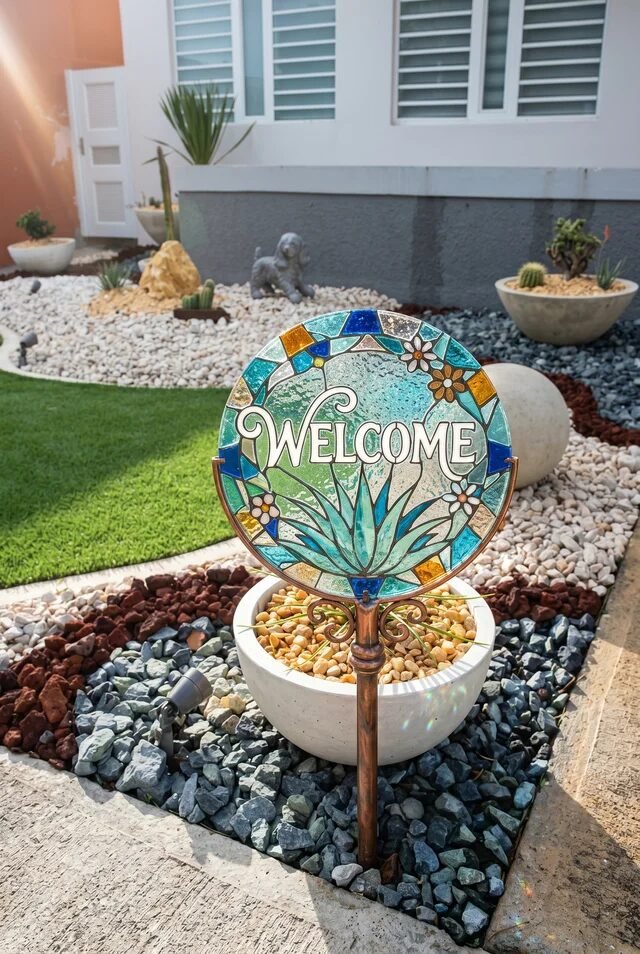
First impressions matter, and this is how you make your front yard say “we have taste” without actually saying it. The stained glass welcome sign acts as a small but powerful focal point, especially when paired with a clean, modern landscape. It’s proof that even functional decor can carry serious design weight.
What makes this work is contrast and clarity. The soft curves and colorful glass stand out against the structured gravel layout and neutral tones. The circular shape also breaks up the straight lines in the surrounding hardscape, adding visual interest without overwhelming the space.
If we’re recreating this, keep the surrounding area intentionally simple. Too many competing elements and the sign loses its impact instantly. Use a spotlight or natural sunlight positioning to enhance the glass colors, and anchor it with a planter or base that ties into your overall palette. Small detail, big upgrade energy.
Designing Outdoor Spaces That Actually Feel Like Stories
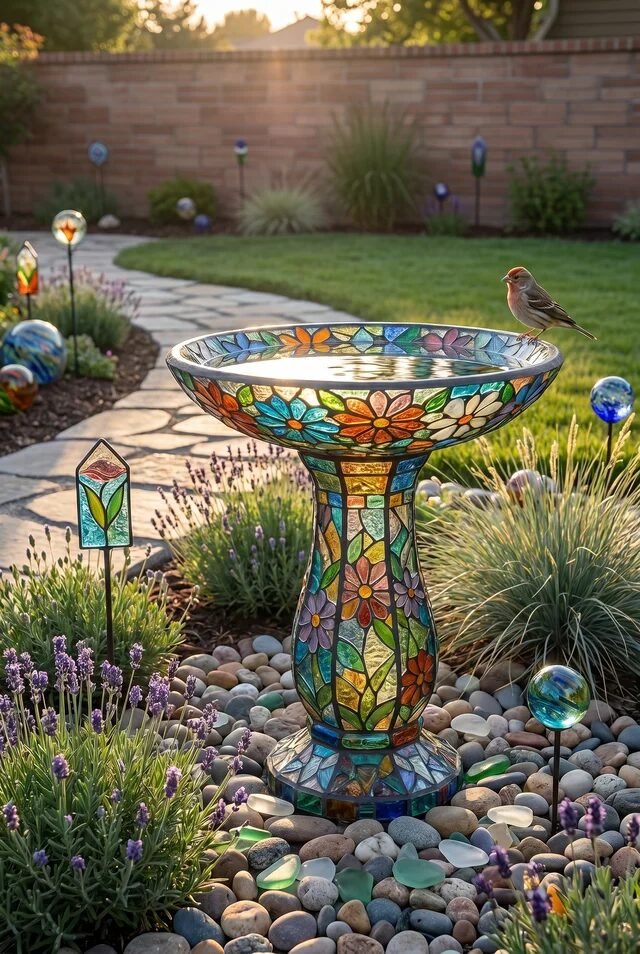
At this point, we can all agree—glass yard art isn’t just pretty, it’s strategic. Every piece we add has the potential to guide the eye, create focal points, and even set the mood of the entire outdoor space. Whether it’s a glowing pathway, a bold fountain, or a tiny whimsical detail, we’re shaping how people move through and experience the garden. And yes, that’s a big deal.
The real difference between random decor and a styled yard comes down to intention. Repeating colors, balancing shapes, and controlling visual weight are what make everything feel cohesive instead of chaotic. If everything is shouting, nothing gets heard—so we let certain pieces lead. Glass just happens to be very good at leading.
So when we recreate these ideas, we don’t just copy—we adapt. We consider light, scale, and placement like pros. Because at the end of the day, we’re not decorating. We’re directing a whole vibe.