
Tuscan Living Rooms That Somehow Feel Grand And Relaxed At Once
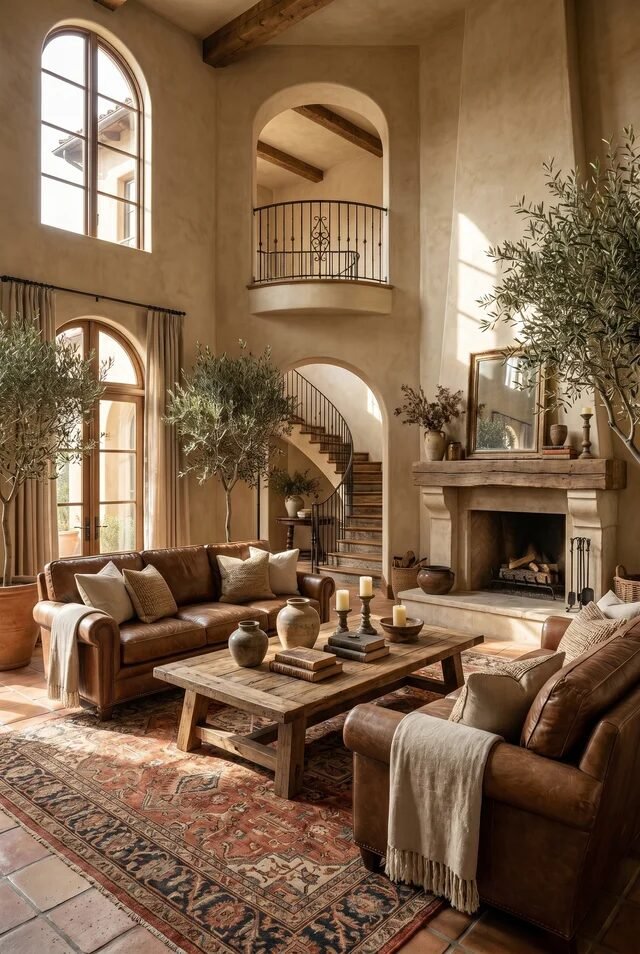
Some living rooms look beautiful for five minutes on Pinterest and then immediately feel dated the second a new trend arrives. Tuscan living rooms somehow avoid that entire problem. They feel timeless because the style is deeply connected to natural materials, warm architecture, and comfort-first design instead of temporary aesthetics chasing attention online. The real charm of Tuscan interiors comes from their ability to feel elegant without becoming emotionally cold or overly polished.
Across all these ideas, we can see recurring principles that make the style work so well. Earth-toned palettes create visual warmth, while stone textures, wood beams, linen fabrics, and aged finishes add depth that instantly makes spaces feel lived-in. Arched windows and oversized fireplaces also play a huge role because they soften large architectural spaces and encourage cozy gathering zones. Honestly, Tuscan interiors are basically proof that “less sterile, more soulful” is always the better design decision.
Most importantly, Tuscan living rooms prioritize atmosphere over perfection. And frankly? That’s why people never stop loving them.
Arched Windows And Creamy Tuscan Calm Energy
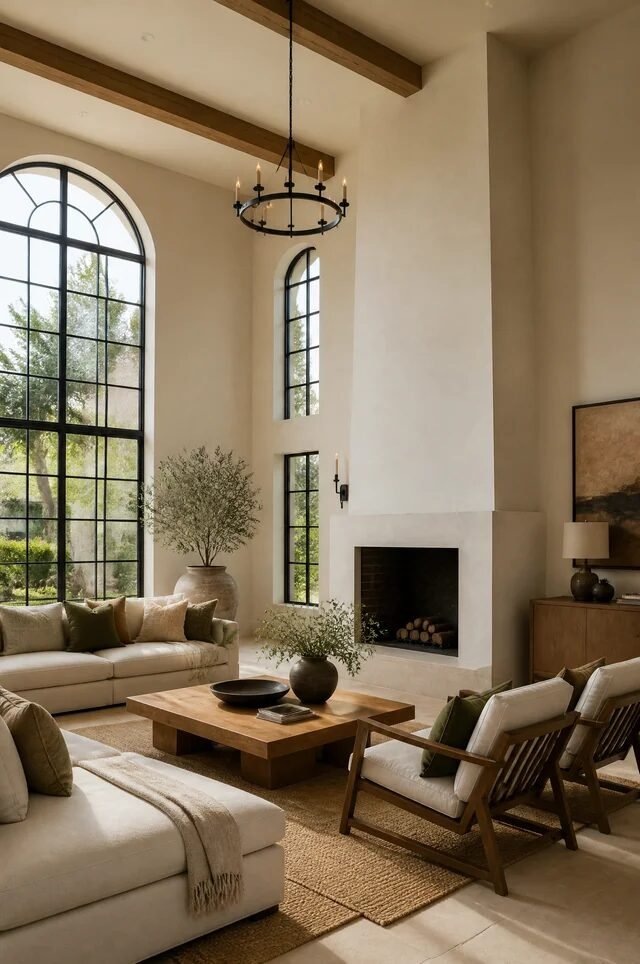
This living room is basically what happens when “quiet luxury” moves to the Italian countryside and starts drinking olive oil with every meal. The oversized arched windows immediately become the focal point, but what really makes the room work is the balance between vertical scale and soft organic textures. The extra-high ceiling could have felt cold or echoey, yet the chunky wood beams visually lower the space and make everything feel grounded. That’s a classic Tuscan design trick we should absolutely steal.
The furniture layout also deserves applause because every seat faces inward toward conversation instead of awkward TV worship. The creamy sofas, woven rug, and low wood coffee table create horizontal visual weight, which balances the dramatic height of the room beautifully. If someone recreates this look, the biggest mistake would honestly be adding too many colors. Tuscan interiors thrive when the palette stays earthy and restrained.
Notice how the greenery softens all the architecture too. Olive branches, aged pottery, and matte textures stop the room from feeling overly polished. Tuscan spaces should feel collected, sun-warmed, and slightly imperfect in the best way possible. Basically, if your living room looks like it smells faintly of rosemary and expensive bread, we’re winning.
Stone Fireplace That Feels Warm And Cinematic
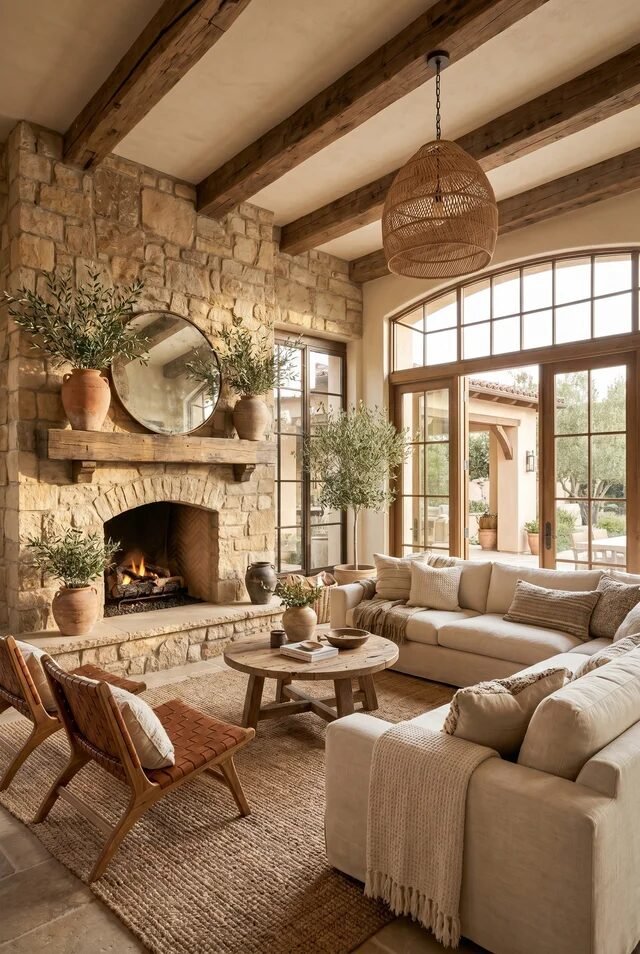
This room feels like a Nancy Meyers movie accidentally wandered into rural Italy and honestly? We support it. The massive stone fireplace instantly creates emotional warmth before the fire is even lit. Natural stone is one of the most important Tuscan design elements because it adds age, texture, and visual heaviness that make large rooms feel intimate. Without it, spaces like this can start looking too modern and emotionally unavailable.
One reason this room works so well is because the textures keep layering without becoming chaotic. We’ve got woven chairs, soft upholstery, rustic wood beams, terracotta pottery, and linen textiles all existing together peacefully like a really stylish family reunion. The rounded coffee table also helps soften the room because Tuscan interiors often balance heavy architectural lines with curved silhouettes.
Lighting matters here too. The woven pendant introduces warmth and casualness so the stone doesn’t feel overly formal. If readers want to recreate this look, focus on materials before decor shopping. Prioritize limewash tones, warm woods, aged metals, and tactile fabrics first. Tuscan interiors are less about “decorating” and more about creating depth through natural materials that age beautifully over time. Honestly, perfection would ruin this room’s charm.
Minimal Tuscan Spaces Still Feel Incredibly Cozy
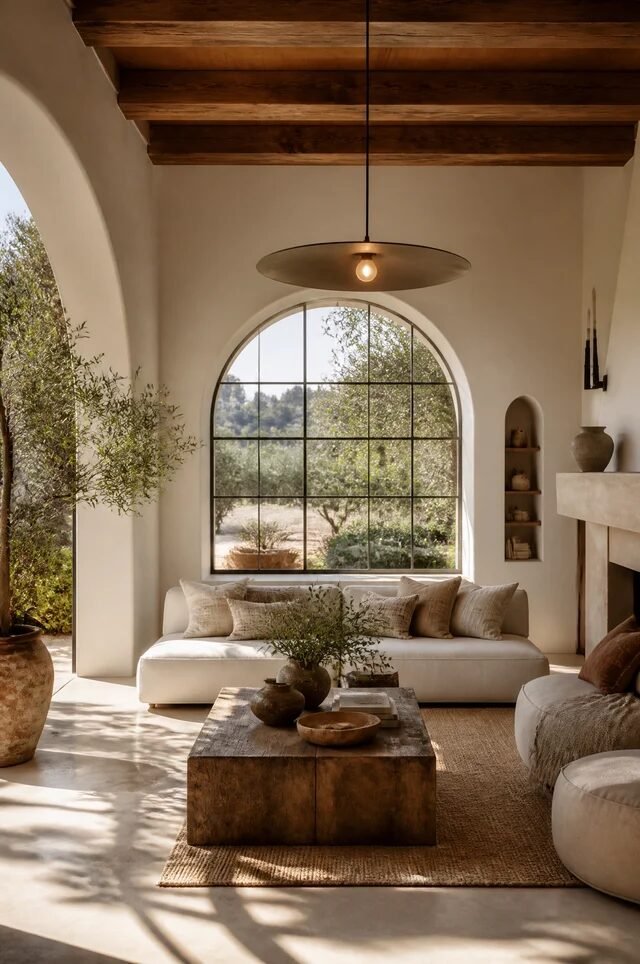
A lot of people think Tuscan interiors have to be super rustic and overloaded with decor, but this room proves the opposite. This version feels cleaner, airier, and slightly modern while still keeping that warm Mediterranean soul intact. The magic comes from the proportions. The oversized arched window creates softness and symmetry, while the dark ceiling beams add contrast that keeps the neutral palette from floating away visually.
The furniture choices are intentionally low-profile, which allows the architecture to stay center stage. That’s actually a smart design principle in rooms with dramatic windows or ceilings. Instead of competing with the structure, the decor supports it quietly. The chunky wood coffee table anchors the room beautifully because the darker stain repeats the ceiling beams and creates visual rhythm throughout the space.
Another detail worth stealing is the restrained styling. There are only a handful of decorative objects, yet the room still feels rich because texture is doing all the heavy lifting. Linen upholstery, plaster walls, raw wood, woven rugs, and ceramic pottery create depth without clutter. Tuscan interiors work best when every material feels sunbaked, organic, and slightly imperfect instead of shiny and showroom-ready. Basically, if it looks like it came from a luxury furniture warehouse yesterday, it’s probably too polished.
Dramatic Tuscan Living Rooms With Warm Contrast
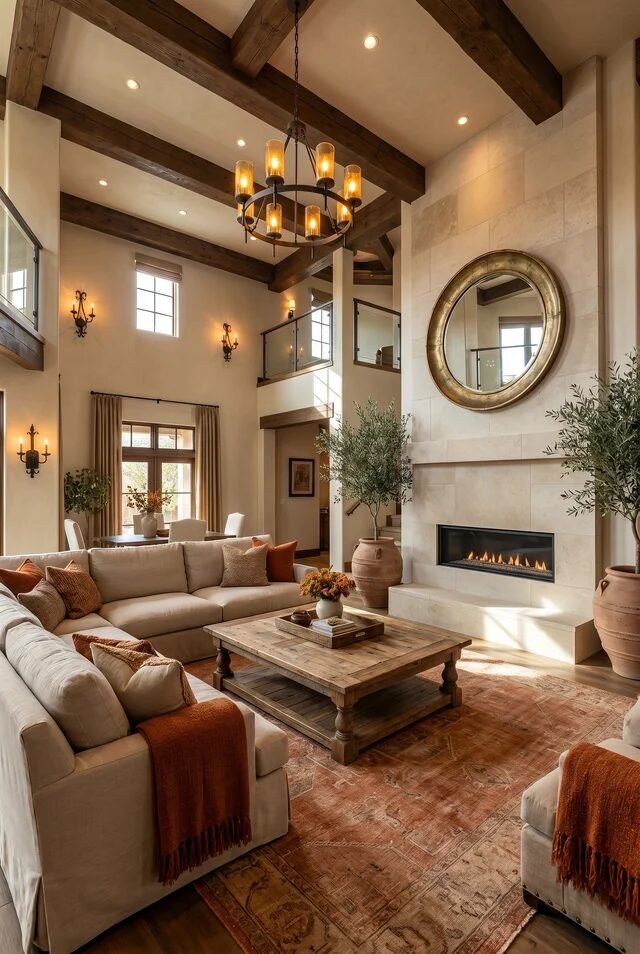
This room said “subtle” and then immediately installed a giant chandelier and double-height fireplace wall. Honestly iconic behavior. What keeps the space from feeling overwhelming, though, is the warm earthy palette running consistently through every layer of the room. The terracotta accents, warm wood beams, bronze lighting, and creamy upholstery all stay within the same temperature family. That consistency is what makes dramatic Tuscan interiors feel cozy instead of chaotic.
Scale is also being handled extremely well here. In tall rooms, undersized furniture can make everything feel awkwardly empty, but these oversized sofas and chunky coffee table visually hold their own against the architecture. The large round mirror above the fireplace also deserves credit because it softens the hard rectangular lines surrounding it while reflecting extra light back into the space.
One underrated trick in this room is the layered lighting. We’re seeing sconces, chandelier lighting, recessed ceiling lights, and fireplace glow all working together. Tuscan interiors should never rely on one harsh overhead light because that instantly kills the cozy atmosphere. Warm layered lighting creates the golden-hour effect that makes Mediterranean-inspired interiors feel inviting at night instead of sterile. Basically, overhead white LEDs are the enemy here. Respectfully.
Rustic Tuscan Rooms With Rich Earthy Character
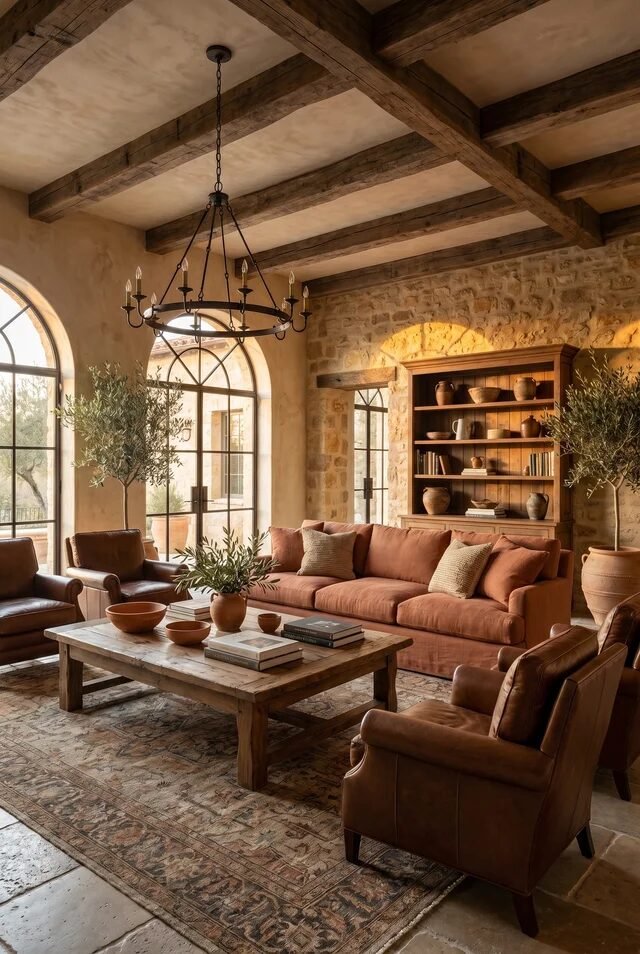
This living room leans deeper into traditional Tuscan styling, and the result feels unbelievably warm and grounded. The earthy clay-toned sofa completely changes the mood compared to the typical beige-only palette we usually see online. Warm rust, terracotta, camel, and tobacco shades are actually incredibly authentic to Tuscan interiors because they mirror the natural landscape of the Italian countryside.
The architectural details are doing heavy lifting too. Exposed beams, textured stone walls, and arched windows create instant old-world character before furniture even enters the room. But what makes the space feel livable instead of theme-park rustic is the softness layered throughout. The plush rug, linen pillows, warm wood tones, and cozy upholstery stop the stone from feeling harsh or cold.
We also need to appreciate the styling restraint here because it could’ve easily turned into “olive oil restaurant decor.” Instead, the shelves are intentionally sparse, letting negative space breathe between objects. That breathing room makes the room feel elevated and curated.
Tuscan interiors become timeless when rustic materials are balanced with clean composition and intentional spacing. Also, the leather chairs? Elite choice. They add richness and contrast without fighting the relaxed atmosphere.
Indoor Outdoor Tuscan Spaces Feel More Expensive
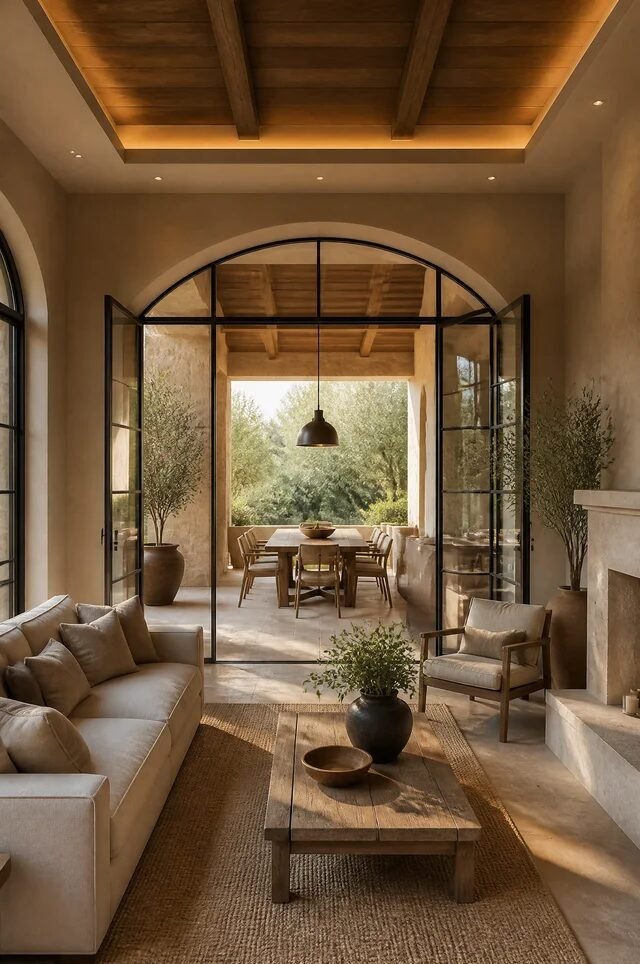
This living room understands the assignment. The giant steel-framed arched doors instantly blur the line between indoors and outdoors, which is honestly one of the most important principles in Tuscan-inspired homes. Mediterranean interiors always feel connected to nature, so natural light, airflow, and garden views become part of the design itself instead of just background scenery. That’s why this room feels calm without even trying hard.
The warm neutral palette also deserves attention because nothing here feels too stark or icy. The sandy walls, rustic wood ceiling, woven rug, and soft beige upholstery all sit within the same earthy tone family. That tonal consistency creates visual harmony and makes the room feel naturally layered instead of heavily decorated. We also love how the furniture stays low-profile so the architecture remains the star of the show.
If readers want to recreate this vibe, focus on materials with organic texture first. Think linen, unfinished wood, aged pottery, and matte stone finishes. Tuscan interiors should feel sun-soaked and relaxed, not glossy and over-styled like a furniture showroom trying too hard on Instagram. Also, those olive trees? Immediate emotional support decor.
Rustic Stone Walls Create Instant Tuscan Drama
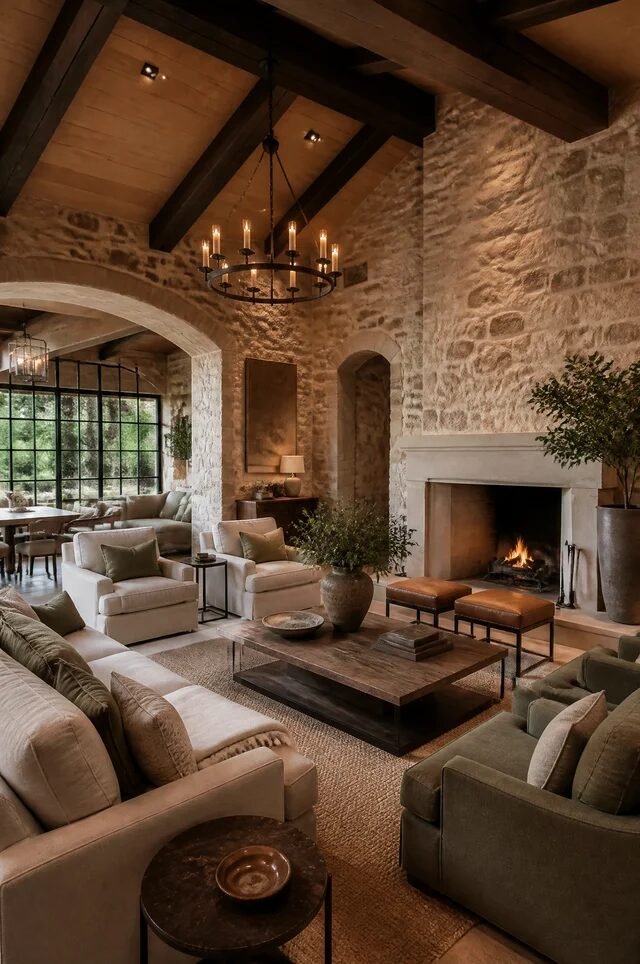
This room is basically the architectural equivalent of fresh focaccia bread with olive oil. Warm, comforting, and impossible to hate. The oversized stone walls immediately create depth and authenticity, which is why Tuscan interiors often feel timeless compared to trendier design styles. Natural stone adds irregular texture and visual movement, helping large rooms feel layered instead of flat and empty.
One thing this room does exceptionally well is furniture zoning. Even though the space is huge, the seating arrangement feels intimate because everything centers around the coffee table and fireplace. That’s a smart layout trick for oversized living rooms. The layered seating also helps soften the heaviness of the stone architecture. Plush upholstery balances all the rough texture so the room still feels inviting rather than medieval castle-core.
Lighting plays a massive role here too. Between the candle-style chandelier, fireplace glow, and soft recessed lighting, the room feels warm from every angle. Harsh cool lighting would absolutely destroy the atmosphere here in under five seconds. Tuscan interiors rely heavily on ambient warmth because cozy mood lighting enhances the earthy materials and makes the textures feel richer at night. Honestly, overhead white LEDs belong in parking garages, not this masterpiece.
Soft Minimal Tuscan Interiors Feel Surprisingly Luxurious
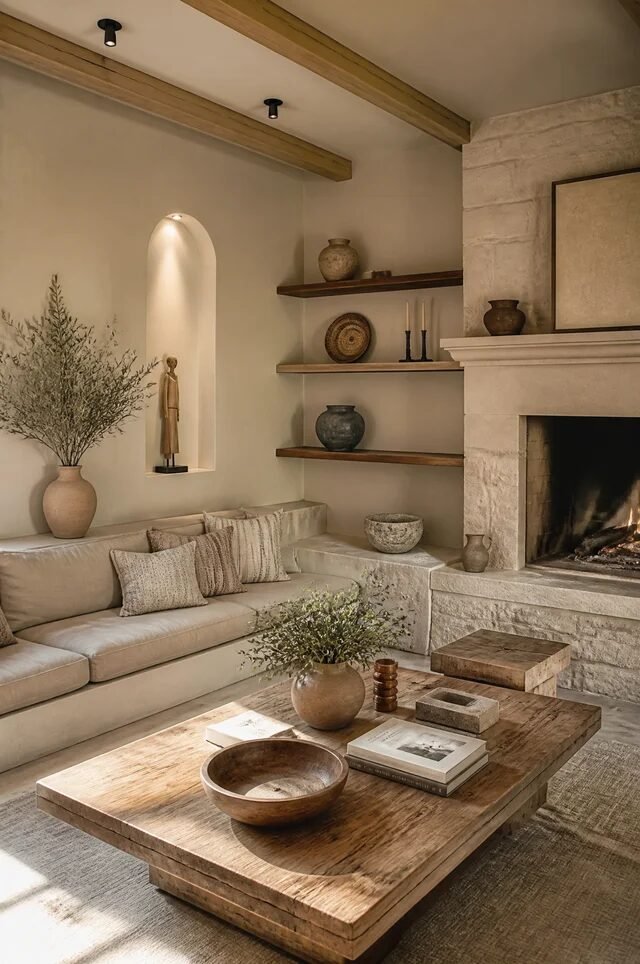
This room proves we don’t need fifty decorative objects for a space to feel rich and inviting. The styling is incredibly restrained, yet the room still feels layered because texture is doing almost all the work. Tuscan-inspired minimalism focuses less on clutter and more on tactile contrast between plaster, linen, stone, wood, and ceramic finishes. Basically, every surface quietly contributes to the vibe.
The built-in seating is also genius for maintaining visual flow. Instead of bulky furniture interrupting the room, the sofa becomes part of the architecture itself. That creates a calm, grounded atmosphere while maximizing openness. We also love how the recessed wall niche introduces vertical interest without overwhelming the room. Small architectural moments like that are what make minimalist Tuscan spaces feel custom instead of plain.
Another detail worth stealing is the floating wood shelving. The darker wood adds contrast against the creamy walls while visually tying into the ceiling beams and coffee table. That repetition creates cohesion throughout the room. Tuscan interiors work best when materials repeat subtly across multiple surfaces because it creates harmony without making the room feel too “matchy.” Also, the styling restraint here deserves a standing ovation because one extra trendy decor item could’ve ruined the serenity immediately.
Double Height Tuscan Rooms Still Feel Cozy
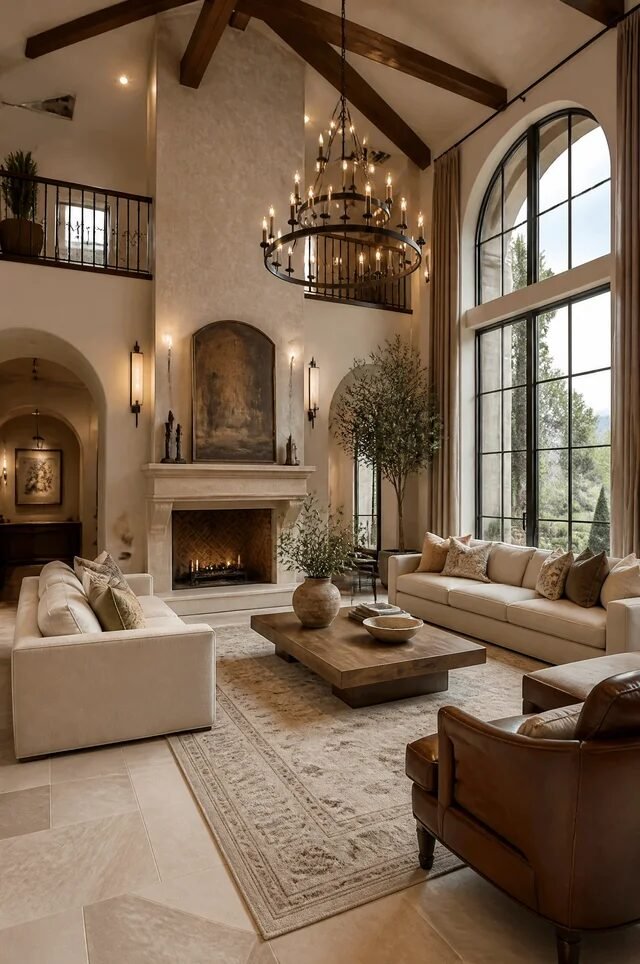
Tall living rooms can easily feel cold and emotionally distant, yet this one somehow feels intimate despite looking large enough to host a minor royal event. The reason is balance. The oversized chandelier visually fills the vertical space while the large sofas and chunky coffee table anchor the lower half of the room. Good design is honestly just visual teamwork.
The giant arched windows deserve their own fan club too. Their curved shape softens the sharp verticality of the walls and ceiling beams, preventing the room from feeling overly rigid. Tuscan interiors often rely on arches because curves naturally create softness and movement within architectural spaces. Pairing those windows with long neutral drapes also helps frame the height without making the room feel heavy.
Color distribution is another smart detail here. The palette stays intentionally calm with creamy upholstery, pale stone tones, warm woods, and muted textiles. That restraint allows the architecture to feel dramatic without becoming visually exhausting.
Modern Tuscan Living Rooms Feel Warm And Airy
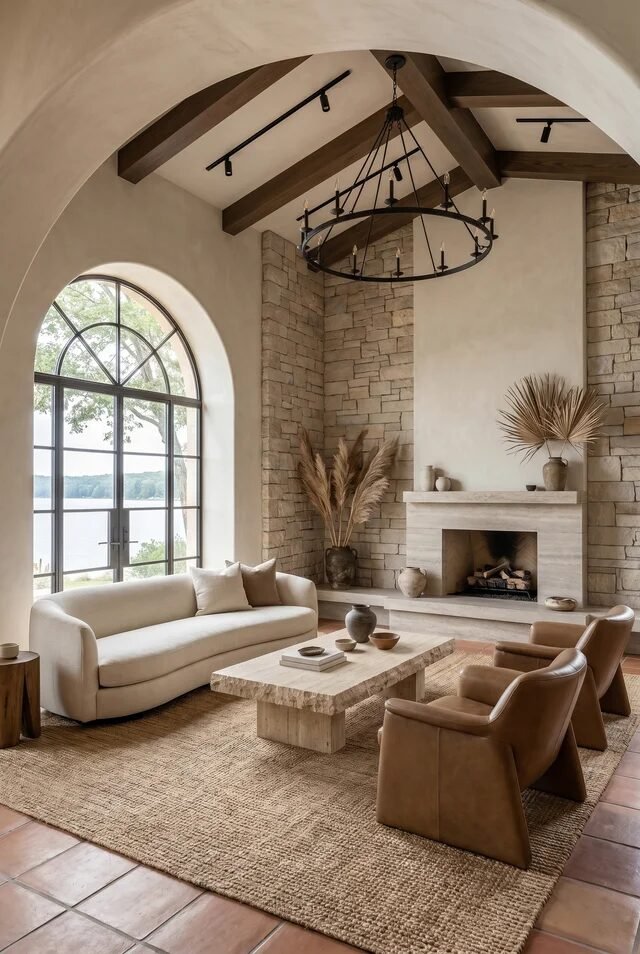
This space leans slightly more modern, but it still keeps the soul of classic Tuscan design intact. The clean-lined sofa and simplified furniture silhouettes stop the room from feeling overly rustic, while the stone fireplace wall and dark wood beams maintain that earthy Mediterranean warmth. That balance between refinement and rustic texture is exactly what makes modern Tuscan interiors feel elevated instead of themed.
The room also uses negative space incredibly well. There’s breathing room around the furniture, which allows every texture to stand out more clearly. The woven rug, stone surfaces, terracotta flooring, leather chairs, and limestone-style coffee table all get their own visual moment without competing for attention. That’s an underrated decorating principle people forget when recreating cozy interiors. Not every corner needs “stuff.”
One of the smartest details here is the contrast between shapes. The curved sofa softens the harder stone fireplace and angular ceiling beams beautifully. Repeating only straight lines would’ve made the room feel too rigid. Tuscan interiors often feel inviting because they mix structured architecture with softer organic forms that create visual relaxation. Honestly, this room feels like the kind of place where we’d accidentally spend six hours drinking coffee and pretending we’re in a slow European movie montage.
Cozy Tuscan Spaces Always Age Like Fine Wine
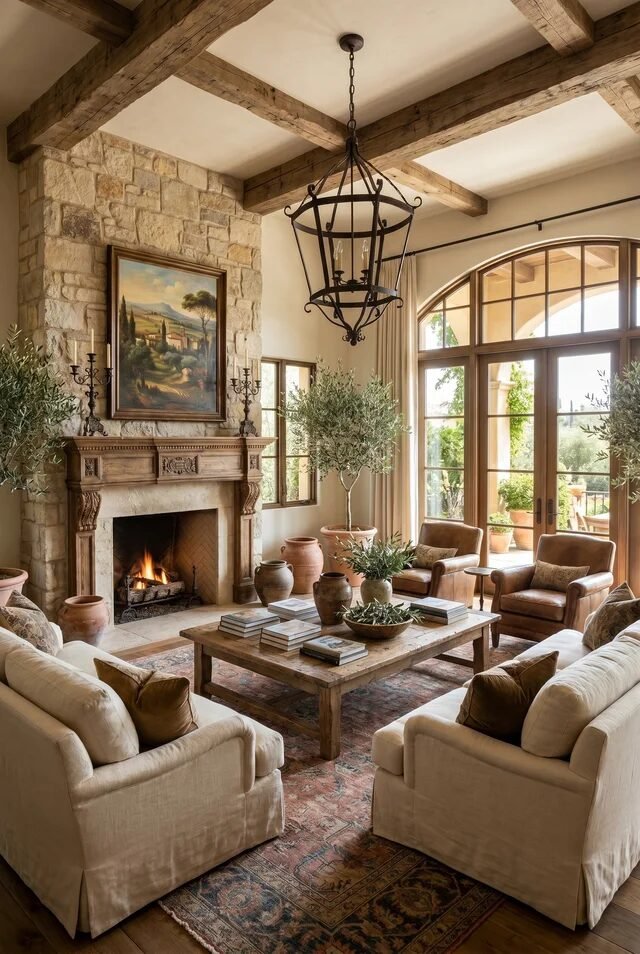
The best thing about Tuscan living rooms is that they don’t rely on flashy trends to feel impressive. Instead, they create comfort through balance, texture, warmth, and timeless architectural details that still feel beautiful years later. A well-designed Tuscan space feels collected slowly over time, not panic-bought during a weekend furniture sale with suspiciously aggressive discounts.
What makes this style especially versatile is how adaptable it can be. Some Tuscan living rooms lean rustic with heavy stone walls and darker woods, while others feel airy and modern with softer palettes and minimal styling. Yet they all share the same emotional core: warmth, relaxation, and connection to natural materials. That consistency is exactly why the aesthetic continues surviving every trend cycle while other design styles quietly disappear into internet history.
If readers want to recreate the look, focus less on buying “Tuscan decor” and more on building layered warmth through texture, earthy tones, soft lighting, and architectural character. Tuscan interiors work best when the room feels welcoming first and styled second. Basically, if the space makes people want to stay for another glass of wine, we nailed it.