

Vintage Christmas Styling That Skips Every Single Predictable Matching Ornament Set
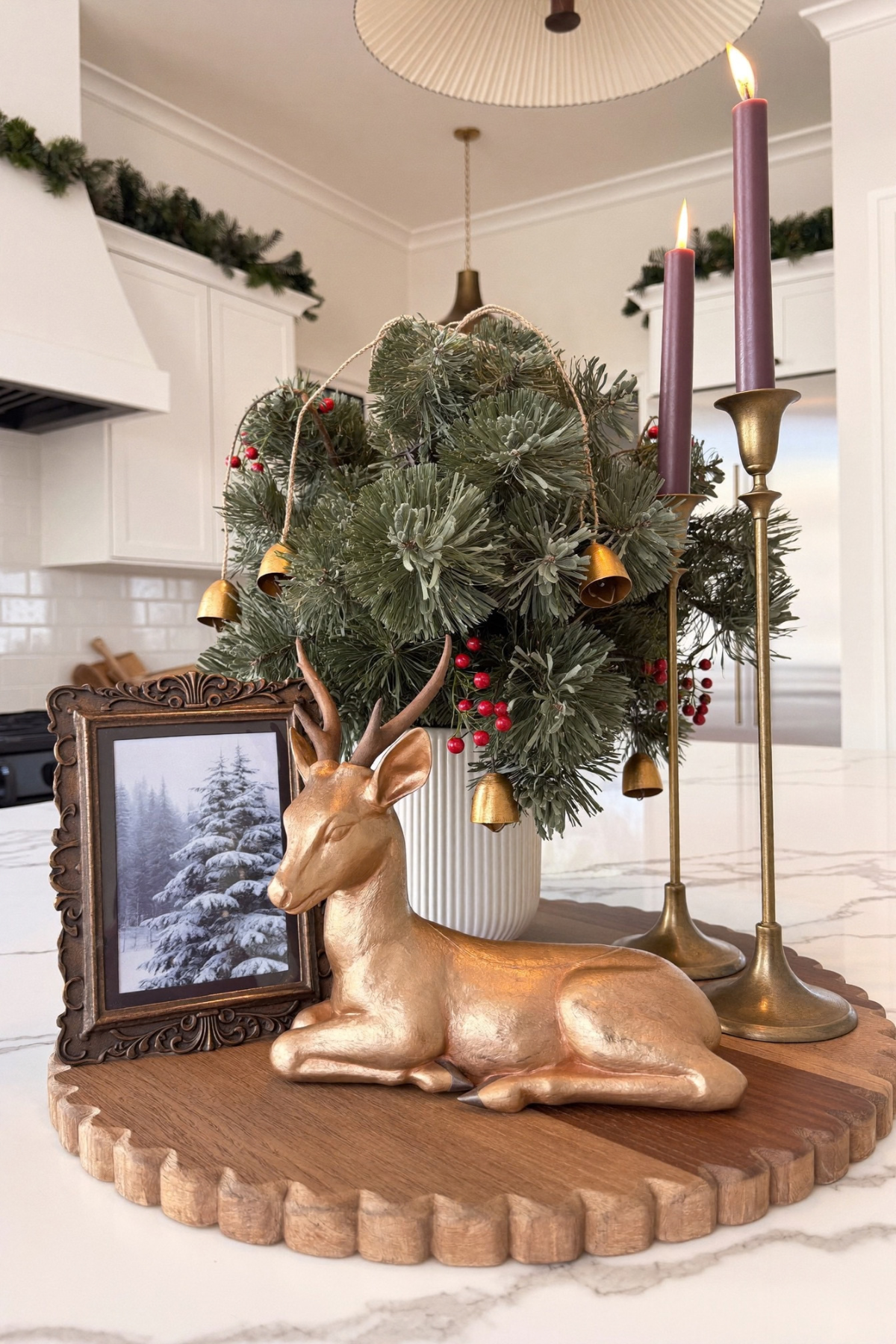
Vintage Christmas decor rarely starts as one purchase. It is usually a slow accumulation, a hand-me-down ornament, a flea market find, something pulled from a box that once sat on someone else’s mantel. That history is exactly what makes it worth chasing.
The look works because nothing in it is trying too hard. Mixed metals sit next to hand-painted glass, a little tarnish is allowed to show, and some pieces look genuinely old because they actually are. That imperfection reads warmer than anything bought as a matched set.
Below we are breaking down a range of vintage Christmas setups, from full trees to a single wreath, and walking through the actual design logic behind each one so you can borrow pieces for your own home without copying anything exactly.
Let A Cake Stand Hold Ornaments
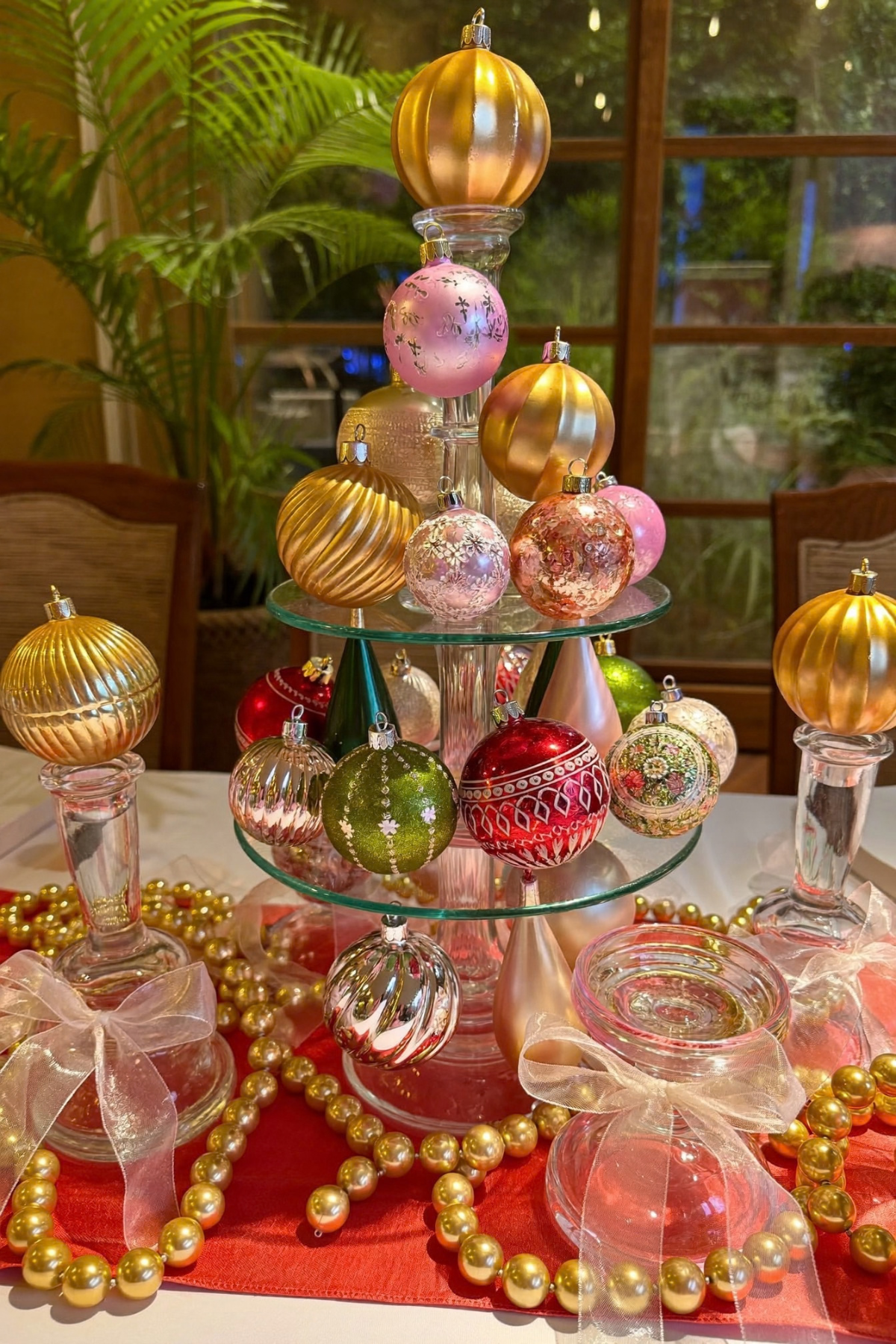
That tiered stand under the ornaments was not built to hold cake. Here it is doing tree topper duty instead, propped up with balls in gold, blush, moss, and cranberry balanced across three glass tiers so nothing on the table sits flat.
Grading ornaments by size from top to bottom is what keeps a display like this from reading as clutter. Smaller, shinier pieces cluster near the top where the eye lands first, while the heavier jewel-toned glass with painted detail anchors the base. Pearl strands and sheer ribbon fill the gaps without competing for attention.
You do not need actual mercury glass to pull this off. A cake stand, a set of glass candlesticks, or even stacked books under a plate will do the same lifting job. Group ornaments by finish first, then scatter a few loose ones around the base so the eye keeps moving.
Hang Old Family Photos Instead
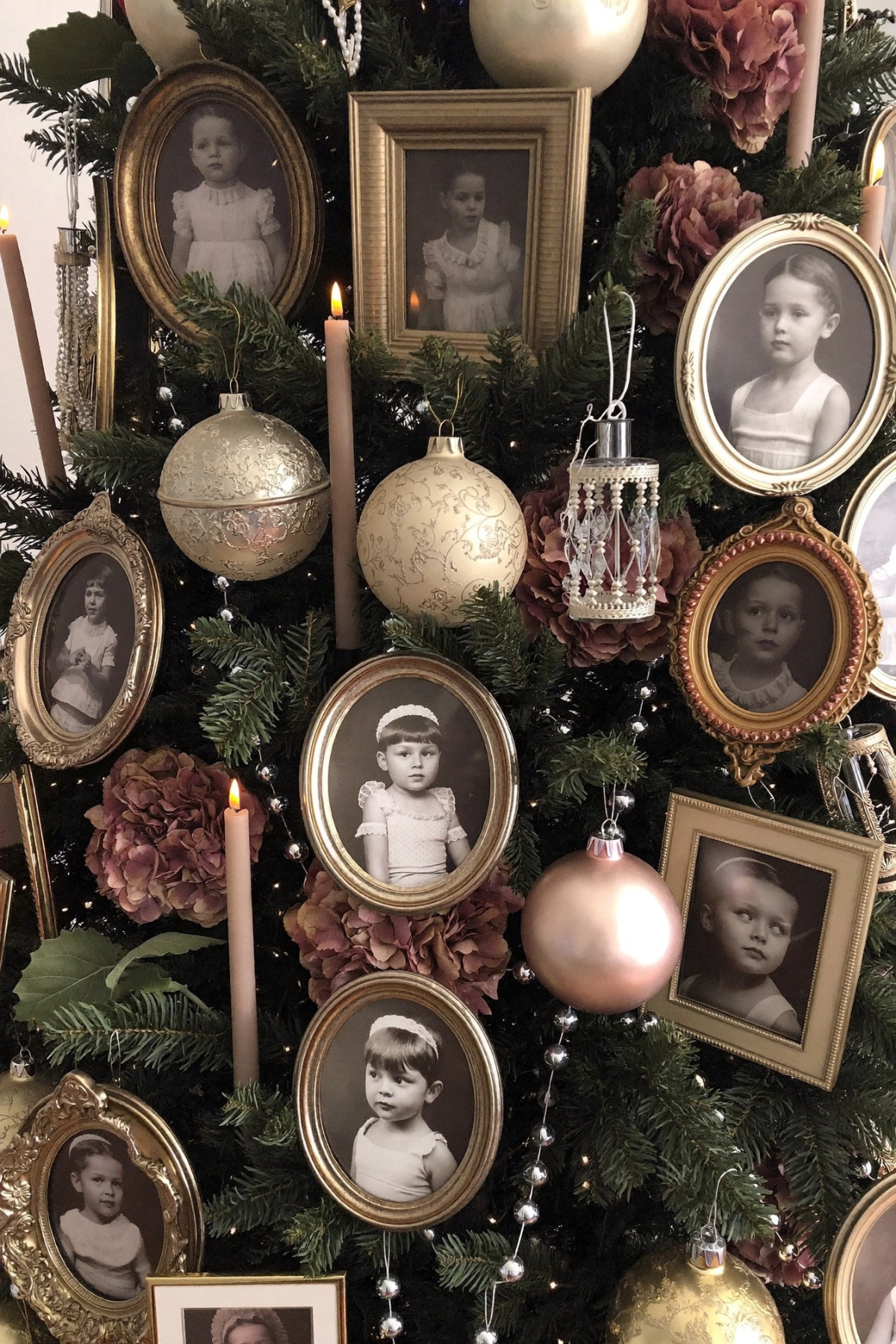
Putting family photographs inside miniature frames and hanging them directly on the tree turns the whole thing into an archive rather than decoration. Every branch becomes a place to look at rather than just look past, which is a genuinely different way to use a Christmas tree.
The frames matter almost as much as the photos themselves, since a mismatched set of gold and brass ovals reads as inherited rather than staged. Dusty rose hydrangea and warm taper candles pull the sepia tones of old portraits into the rest of the palette, so nothing looks randomly placed once it is all hanging together.
If you want to try this, scan and reprint old photographs in a warm, slightly faded tone rather than true black and white, then have small oval frames drilled or fitted with wire hangers. Cluster three or four together on one section of the tree instead of spreading them evenly.
Build A Tree Over Years
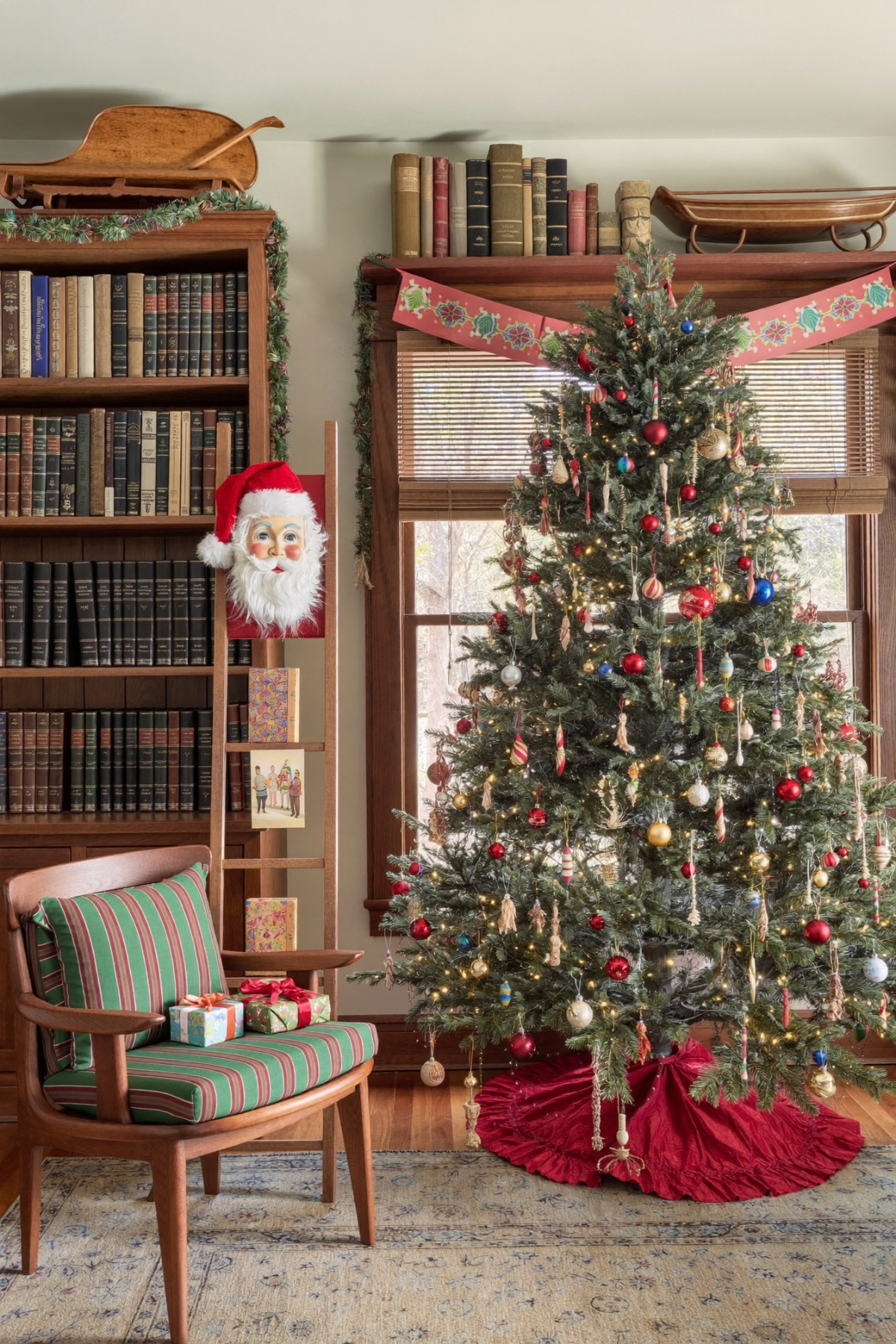
Start collecting ornaments in twos and threes, not sets of twelve, and a tree like this one starts to make sense. Nothing here matches on purpose. Candy-striped icicles hang next to painted glass balls, wooden beads loop through the branches, and a few pieces look like they survived several decades of storage boxes.
Scale variation is doing the real work, since tiny painted ornaments sit at the same height as large solid-color balls, which keeps the eye from settling anywhere too long. A deep red ruffled tree skirt grounds the whole thing, giving all those small, busy shapes one solid surface to rest against.
Around it, an old wooden sled, a stack of cloth-bound books, and a mid-century striped chair do just as much work as the tree itself. None of it was bought as a set. It was gathered the way most good vintage rooms are, piece by piece, over longer than one holiday season.
Make A Wreath From Cutters
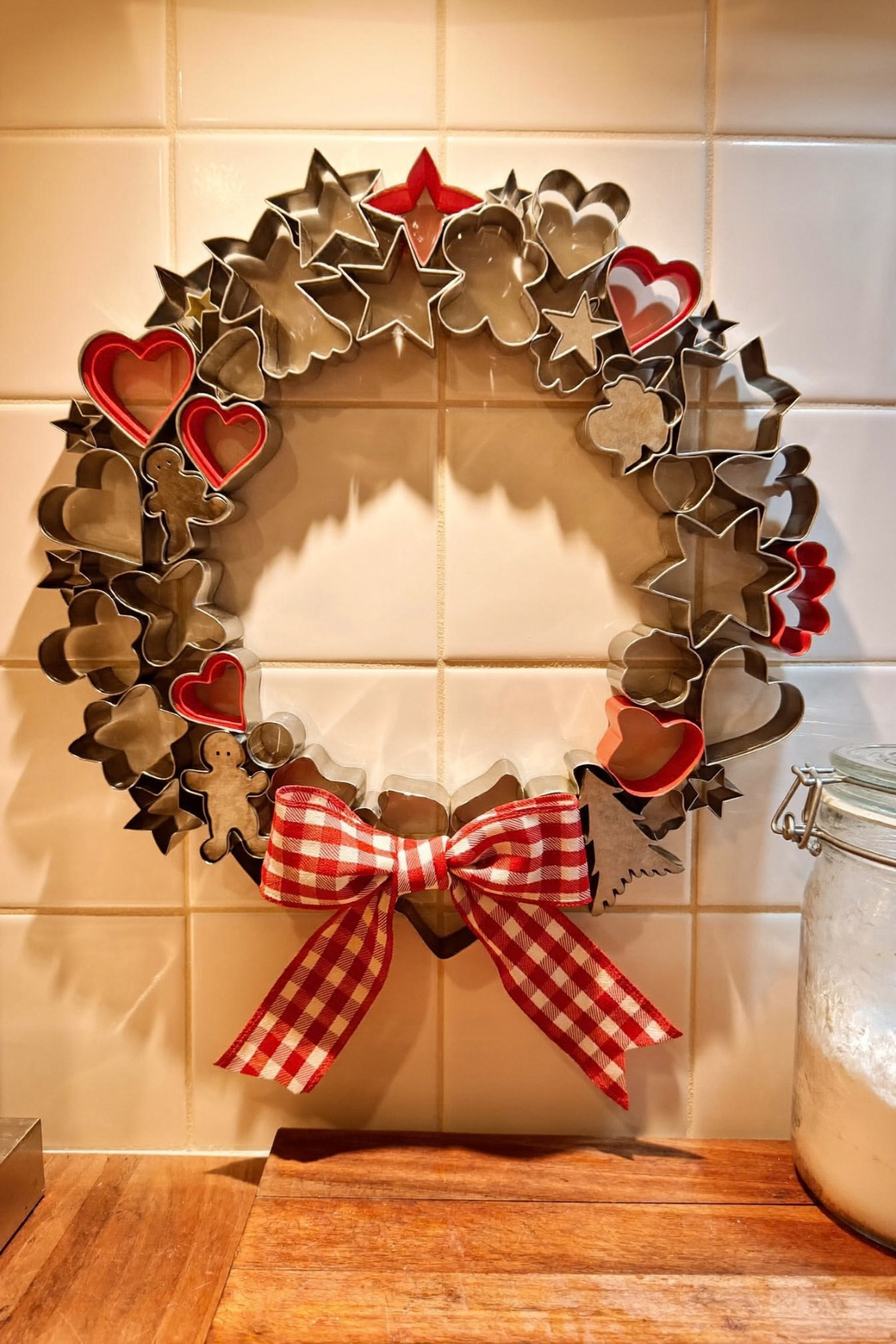
This is not a pine wreath. It is a ring of vintage metal cookie cutters, stars, gingerbread men, hearts, and trees, wired together into a circle and finished with a red gingham bow, a genuinely clever way to reuse a kitchen drawer nobody needed for a whole month anyway.
Repetition is what sells this, since dozens of small tin shapes packed tightly together read as texture from a distance instead of individual objects. A few red-enameled cutters break up all that dull metal shine, and the gingham bow gives the eye one warm, familiar spot to land on before it wanders back into the metal again.
Thrifted cookie cutters are cheap and easy to find in bulk, so this is a low-cost project if you already collect them. Hot glue each one to a foam or wire wreath base, layering shapes so the metal overlaps, then tie on ribbon last so it does not get buried.
Wrap The Tree In Ribbon
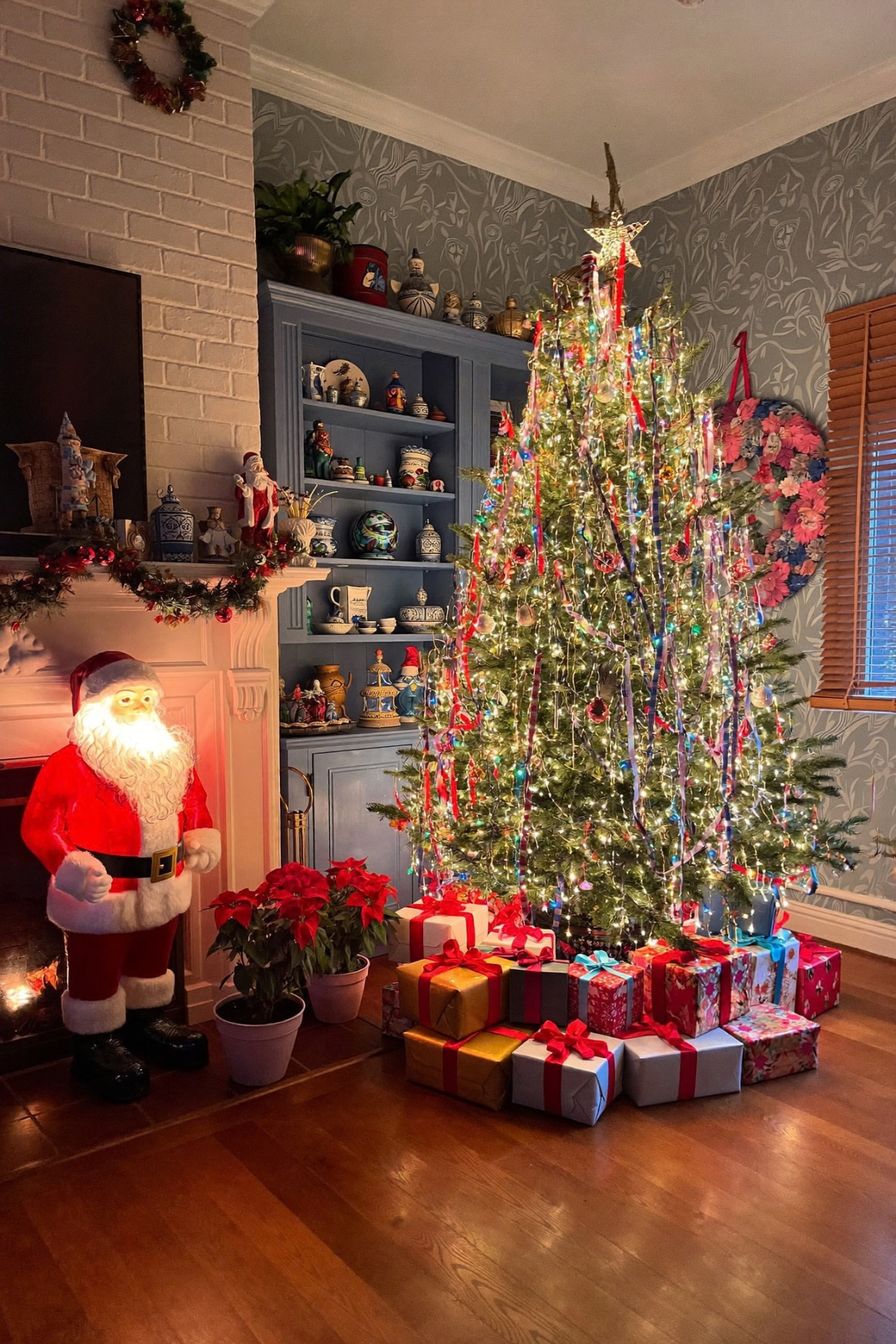
Ribbon does something garland cannot, it catches light and moves. Dozens of thin streamers in red, white, and blue run vertically through this tree instead of the usual horizontal garland loops, and paired with warm string lights it reads more like fireworks than foliage.
A glowing blow-mold Santa on the floor beside the tree pulls double duty as both decor and ambient lighting, something most modern rooms skip entirely in favor of overhead fixtures. Letting a light source sit low in the room instead of only up in the tree changes how the whole space feels after dark.
To copy the ribbon technique, buy wired ribbon in bulk and cut it into long single strands rather than pre-made loops, then tuck the cut ends deep into the branches so only the color shows. Vintage blow-mold figures turn up often at estate sales if you want that same low glow.
Collect Tiny Ceramic Village Pieces

A miniature ceramic truck with a striped awning and the word barista painted across its side sits next to a tiny green and white shop building, both small enough to hold in one hand, and together they turn a side table into something closer to a diorama than a centerpiece.
Collectible village pieces work as decor because they invite close-up looking instead of a quick glance, which is rare in a season full of oversized decorations. Painted storefront details, tiny chimneys, and hand-lettered signage reward anyone who actually leans in, and that scale contrast against a full-sized pie or table setting makes the miniatures feel even smaller.
Start with two or three pieces rather than a whole village, and place them somewhere people already gather, a dessert table or a coffee station, so they get noticed instead of sitting on a shelf collecting dust. Vintage and reissued village pieces both work as long as the scale matches.
Let Garland Spill Down Stairs
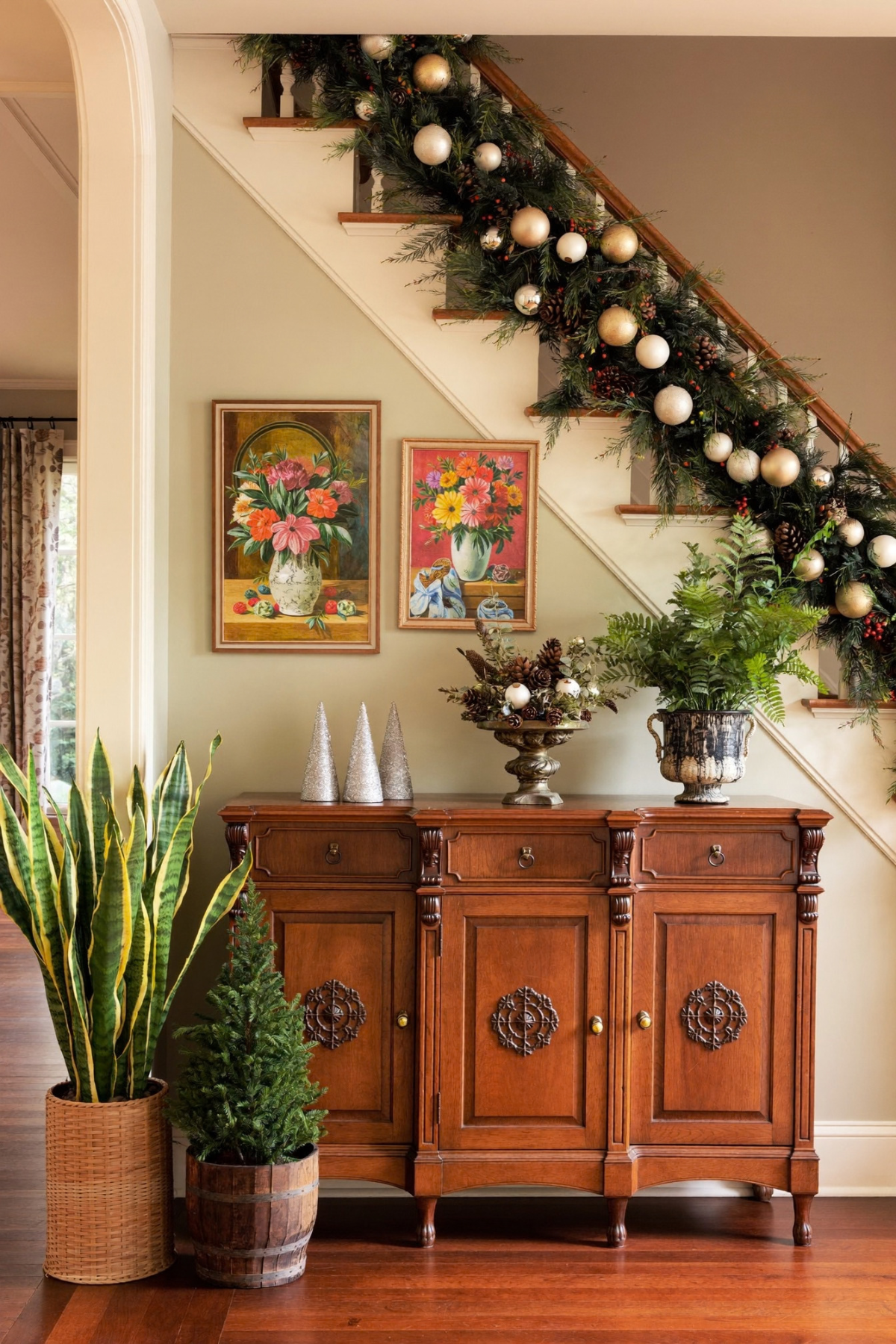
Garland does not have to stay flat against a mantel. Draped loosely along a staircase railing, weighted down with oversized gold ornaments and real pinecones, it turns an everyday hallway into the kind of thing people photograph before they even get to the tree.
Height variation on the console table below matters just as much as the garland above it, since a footed urn, a tall potted fern, and a cluster of low bottlebrush trees keep the eye moving up and down instead of stopping flat. Warm wood furniture underneath keeps all that metallic shine from feeling cold.
If you are working with a plain staircase, buy a longer garland than you think you need and let it swag loosely rather than pulling it tight. Add weight with real or faux pinecones and a mix of matte and glossy ornaments so light catches at different points along the run.
Skip The Full Sized Tree
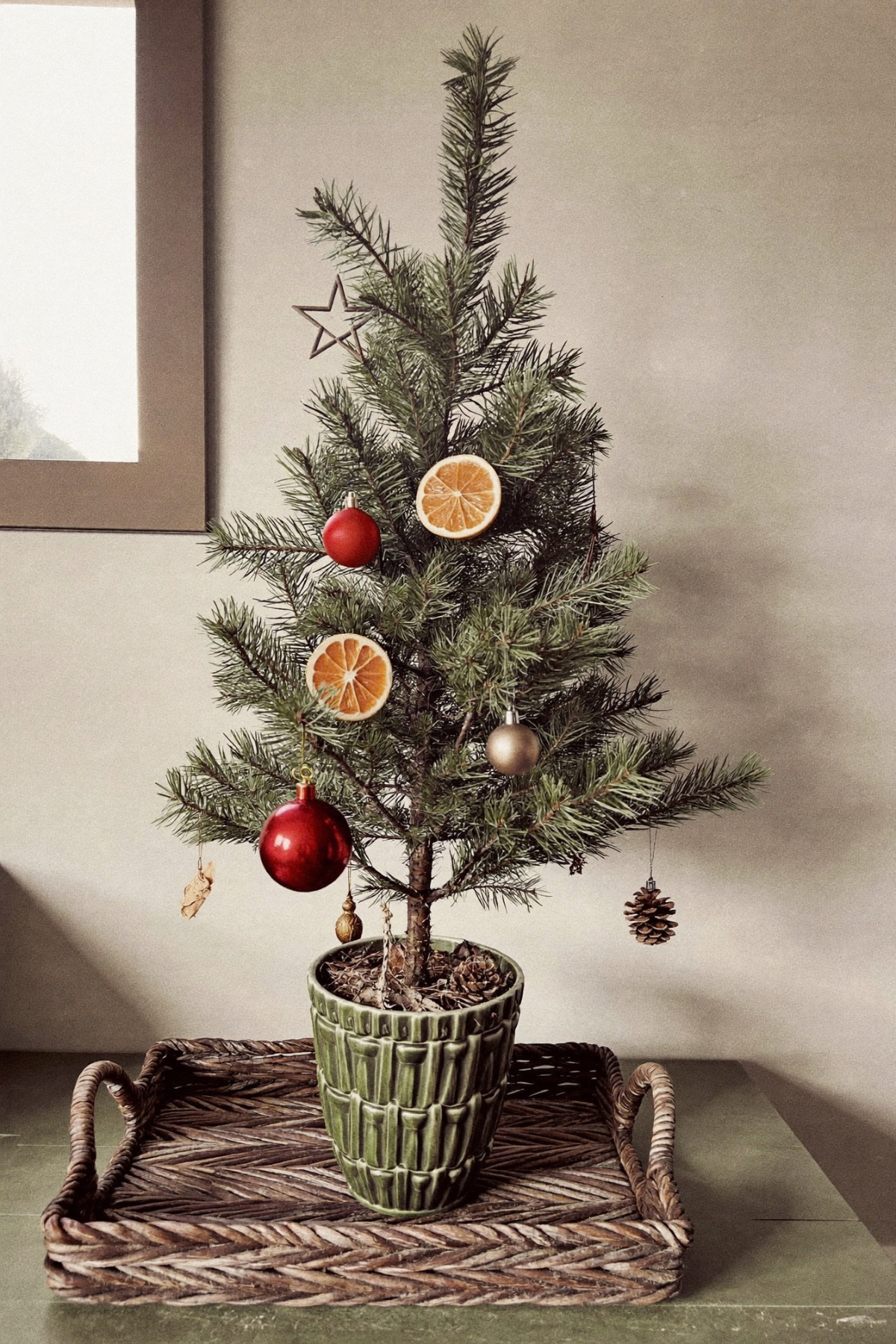
Not every tree needs to hit the ceiling. This one is barely two feet tall, planted in a simple green pot and set on a woven tray, decorated with only a handful of ornaments and a few dried orange slices instead of a full box of decorations.
Restraint is the entire design principle here, since a small tree can only carry a few ornaments before it looks overloaded, which forces every single piece to actually earn its spot. Dried citrus adds warmth and a faint scent without adding visual weight, and a single star topper keeps the top from feeling unfinished.
Any small potted evergreen works for this, even one you plan to replant after the season. Slice oranges thin, dry them in a low oven for a few hours, and thread a piece of twine through each one before hanging so they sit flat against the branches instead of twisting.
Plant A Tree In A Barrel
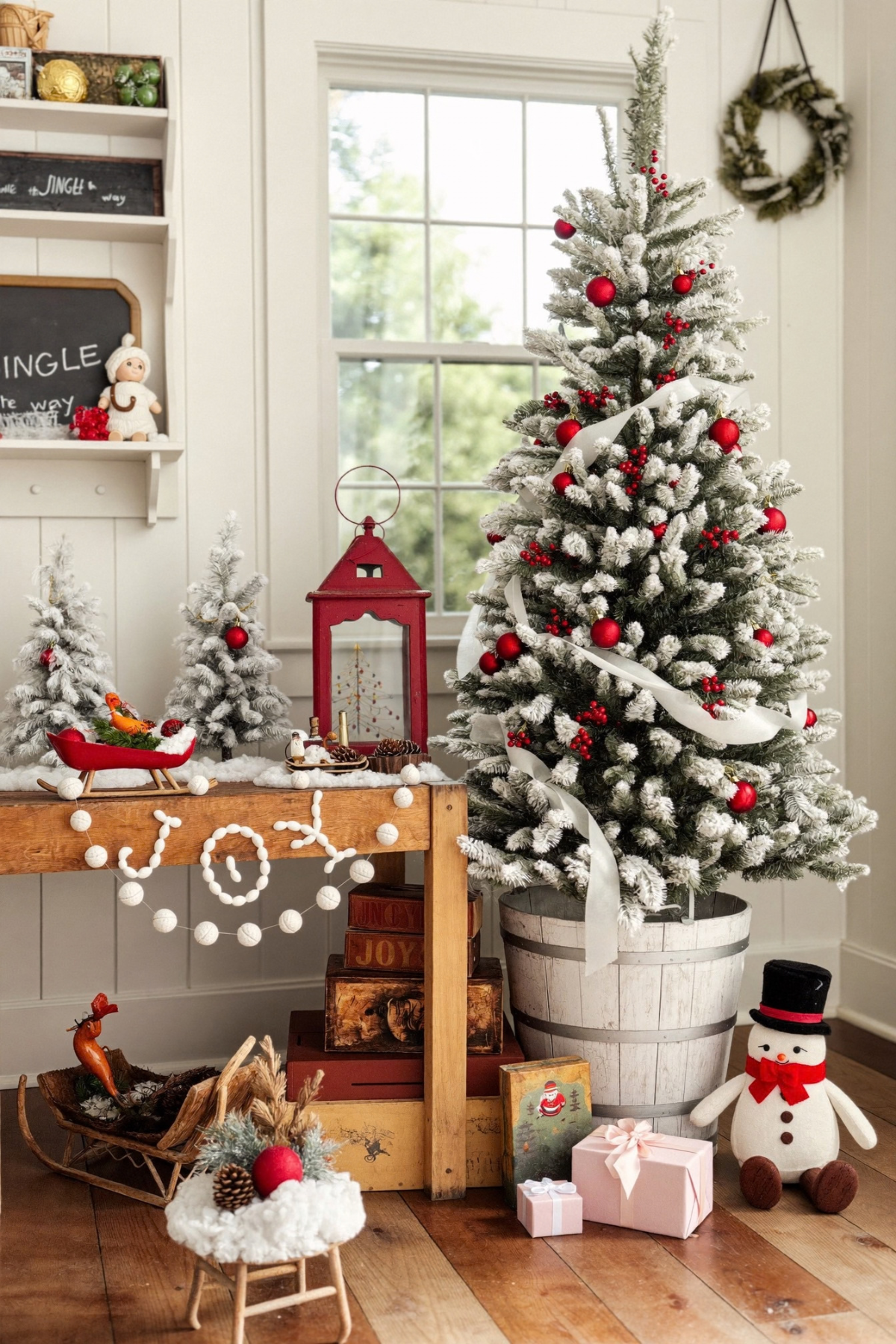
Red and white carry this entire corner, from the berry clusters and glass balls on the flocked tree down to the sitting snowman and the felt garland spelling out joy along the shelf edge, and keeping the palette that tight is what makes a busy corner still feel calm.
Swapping a standard tree stand for a weathered wooden barrel adds texture at the base, which is usually the most overlooked part of any tree setup. Smaller flocked trees flank the largest one at staggered heights, so the grouping reads as a little forest rather than one tree with two backups.
Flocking spray works on a real or faux tree if you want that frosted texture without buying a pre-flocked one, and a galvanized bucket or reclaimed barrel makes an easy stand-in for a tree skirt. Keep ornaments to two or three colors so the grouping stays cohesive across different tree sizes.
Line Up A Santa Collection
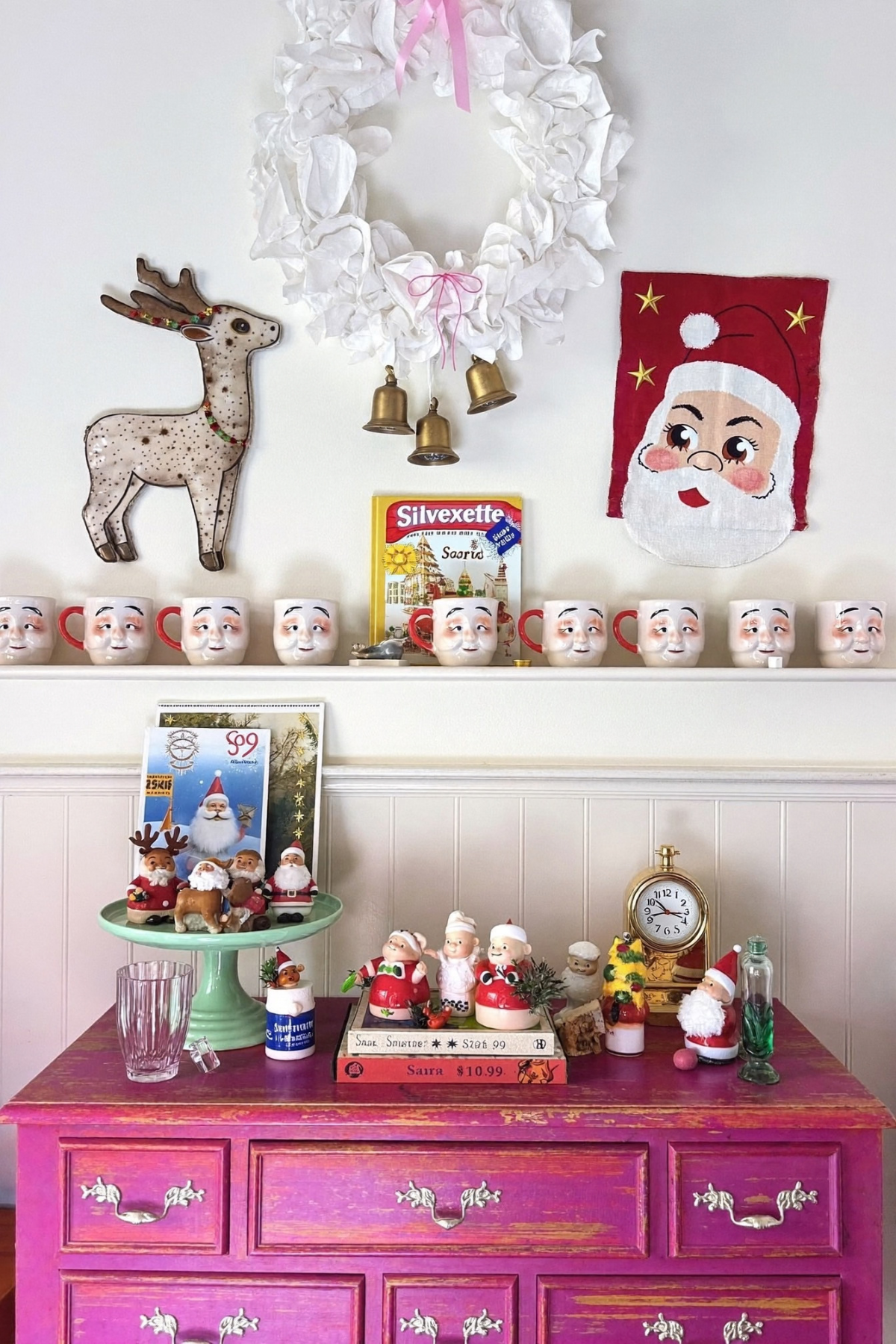
Nine identical Santa mugs lined up in a single row is either a serious collecting habit or a serious thrift store victory, and either way, the sheer repetition of that one face is what makes the shelf work as decor instead of clutter.
Lining up duplicates of one collectible object almost always reads better than spreading a variety of different pieces across the same space, since repetition gives the eye a clear rhythm to follow. Below the mugs, a loose cluster of figural Santas, a tissue paper wreath, and folk-art wall pieces sit against a bright magenta dresser that keeps the whole vignette from feeling too precious.
If your own collection is smaller, group whatever duplicates you do have on one shelf rather than scattering them through the house, and paint or thrift a bold piece of furniture underneath to give the grouping somewhere to stand out. Consistency in one small area beats spreading a collection thin.
None Of This Decor Needs To Match

None of the setups above match each other, and that is sort of the point. Vintage Christmas decor rarely comes from one collection or one store run. It comes from years of picking things up because they caught your eye, not because they filled a gap on a list.
What ties all of these ideas together is restraint somewhere and abundance somewhere else, never both at full volume in the same corner of a room. A wreath made of cookie cutters gets to be loud because nothing else near it is competing. A two-foot tree with three ornaments gets to stay quiet instead.
Pick one or two ideas here rather than trying all of them at once, and let the rest of your space stay as plain as it needs to be around them. Real collections build slowly anyway.