
The Kind of DIY Outdoor Projects That Age Well Instead of Falling Apart
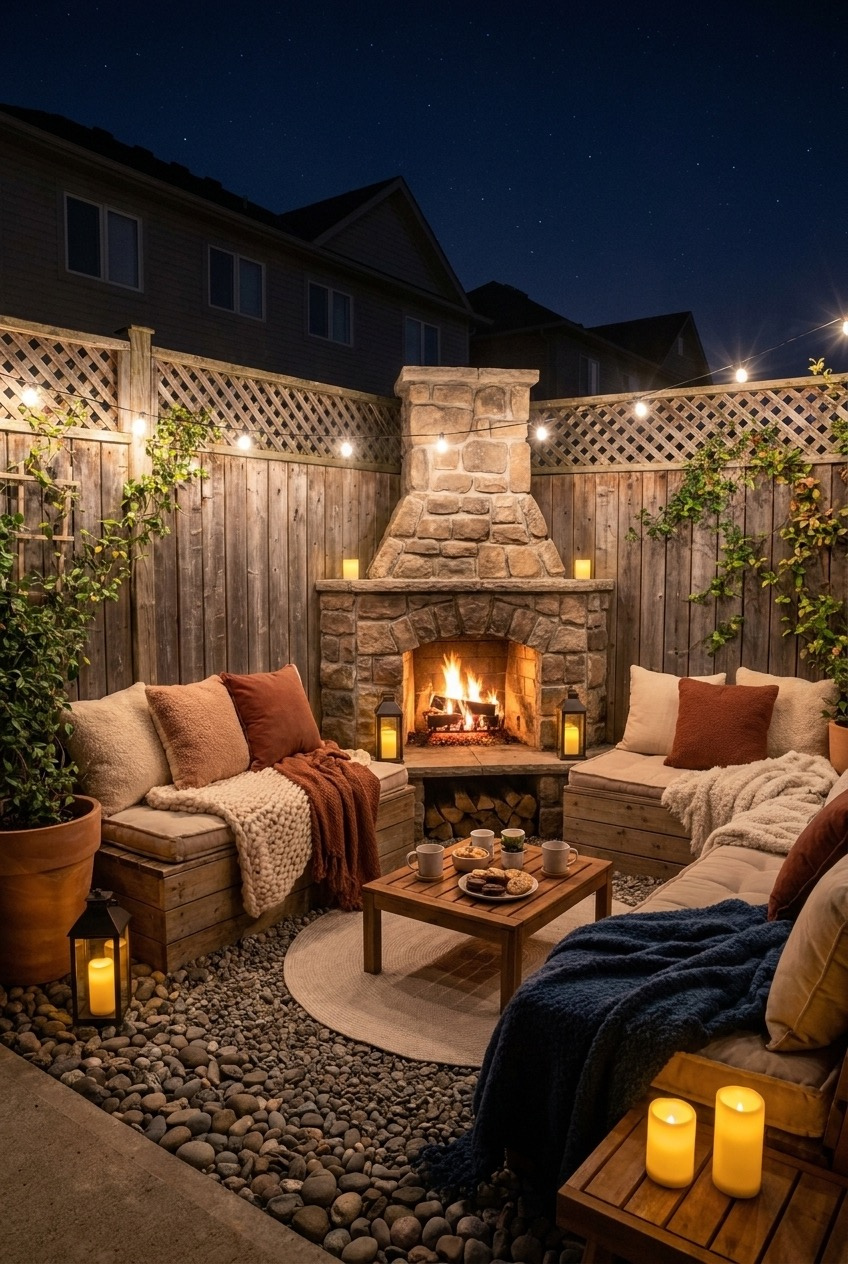
Most people treat their backyard like a waiting room between the house and the car. It’s grass, maybe a grill, and a feeling that something more could happen there eventually. We’ve noticed the outdoor projects that actually stick around are rarely the expensive overhauls. They’re the smaller builds someone made on a Saturday with reclaimed wood and a stubborn streak.
What follows is a mix of projects pulled from real backyards, patios, and porches, ranging from furniture builds to small additions that make a space feel lived in rather than staged. Some involve tools and a full weekend. Others are closer to an afternoon with a coffee in hand.
None of these require a trust fund or a construction crew. What they need is a willingness to use what’s already in the garage, plus patience for the parts that don’t go perfectly on the first try. That’s usually where the character comes from.
Building a Proper Home for Bees
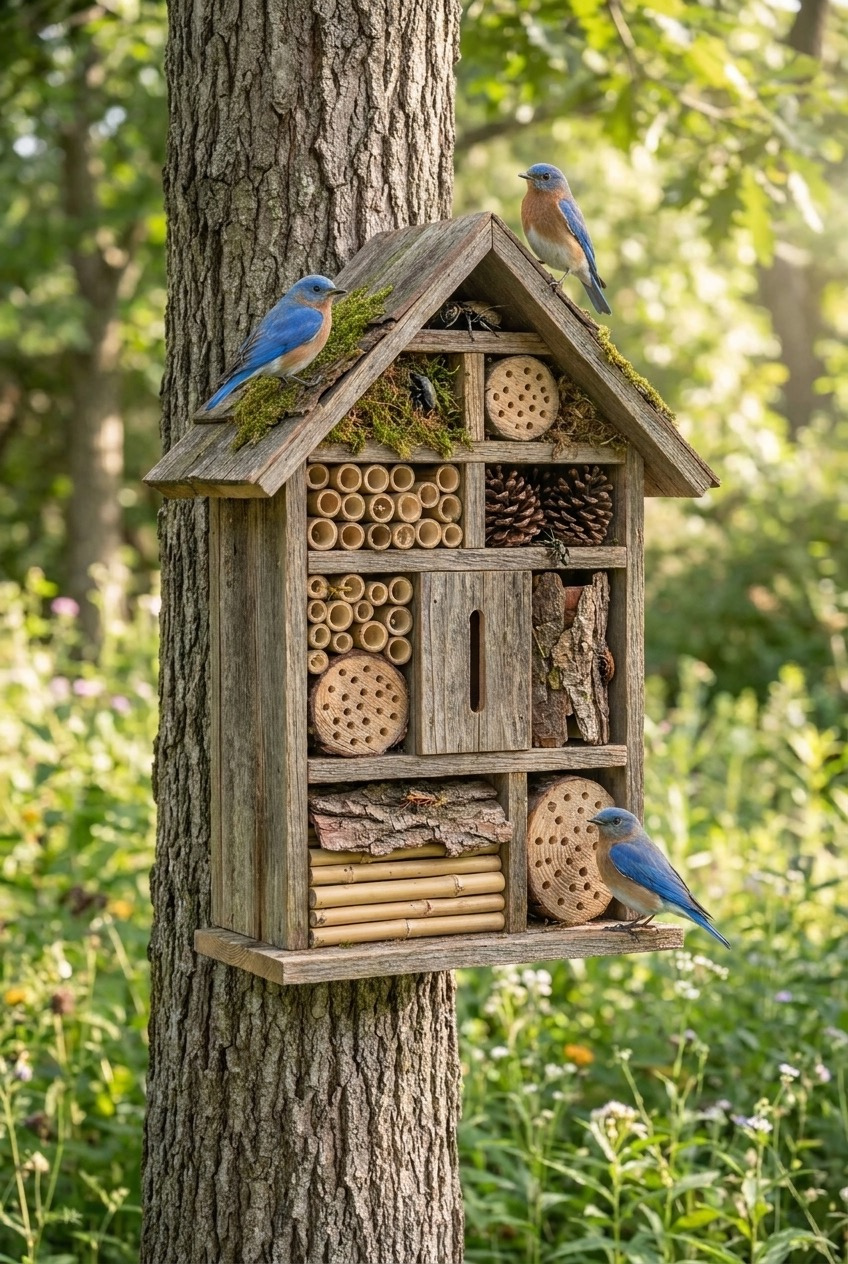
The whole point of a bee hotel is variety, not symmetry. Notice how this one splits into uneven compartments, each stuffed with a different material: bundled bamboo, pinecones, curls of bark, and blocks drilled with holes of different diameters. That mix isn’t random. Different pollinators and beneficial insects need different tunnel sizes, so a single material only ever invites one type of guest, and the rest pass it by.
Building your own starts with a simple box frame divided into a grid with a few thin shelves. Skip anything treated or painted on the inside, since chemicals will keep insects away from the whole structure. A strip of moss or bark along the roofline softens the shape and helps it blend into a tree line instead of looking like a birdhouse that lost its way.
Mount it around chest height, tilted slightly forward so rain doesn’t pool inside the tubes, and face it toward the morning sun if you can manage it. The materials matter more than the joinery here, so don’t stress over perfect corners or tight seams. A slightly crooked bee hotel still does its job just fine.
A Wagon Train Kids Actually Want
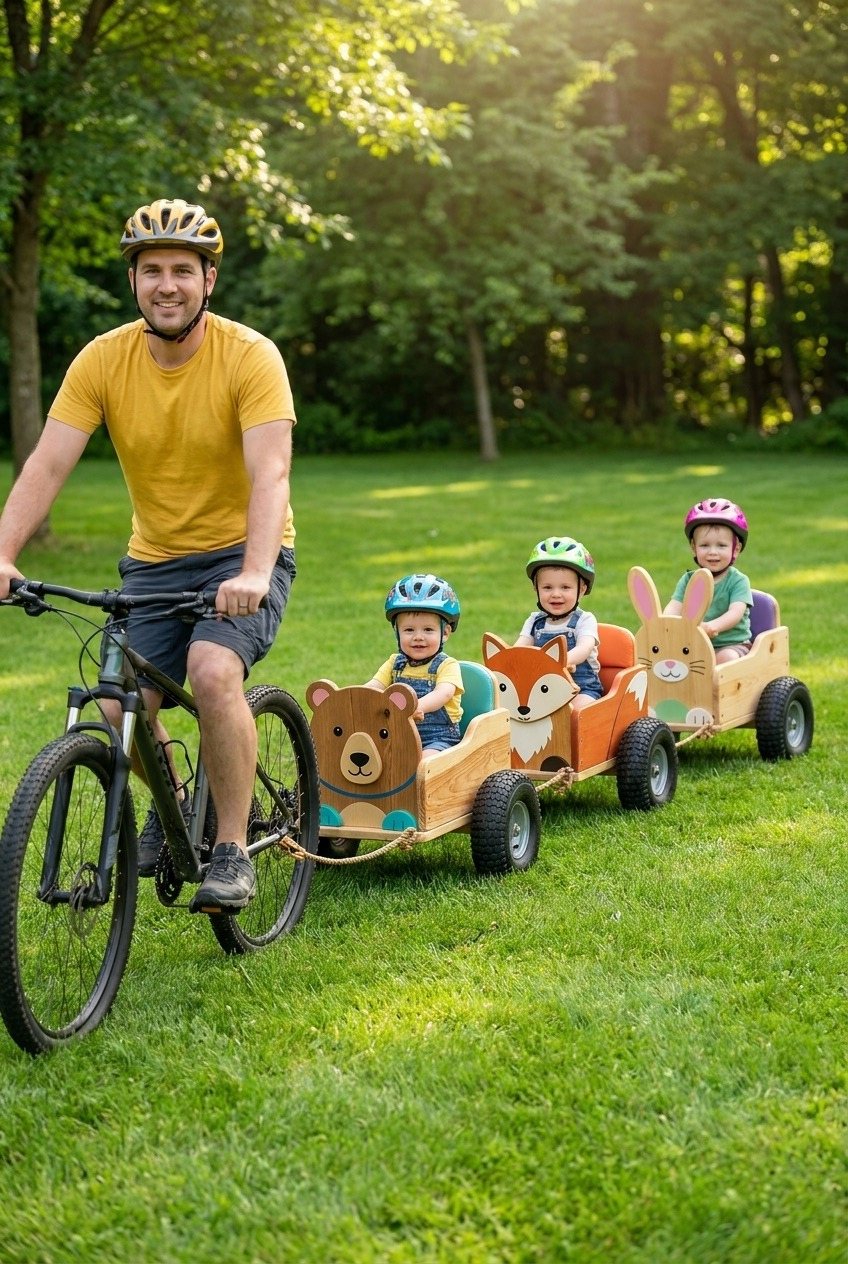
Three kids, three trailers, one very patient dad pedaling at the front. That’s the setup here, and it works because each trailer reads like its own character instead of a generic wagon. The bear, fox, and rabbit faces are cut from plywood and painted, which is a far cheaper trick than it looks and a lot more forgiving than carving.
If you’re building something similar, start with a basic wagon frame on real wheels rather than toy ones, so it can handle grass and gravel without folding. The animal face is just a cutout bolted or screwed to the front panel, so you can swap the design later without rebuilding the whole cart from scratch. Sand every edge twice, since little hands will be gripping the sides constantly.
The trailers connect in a line using a simple hitch and rope, which means the whole train turns with the bike instead of dragging sideways at every corner. Weatherproof paint is non negotiable if this thing lives outside, and a coat of clear sealant on top buys a few extra seasons before repainting.
A Pallet Sofa Under Wisteria
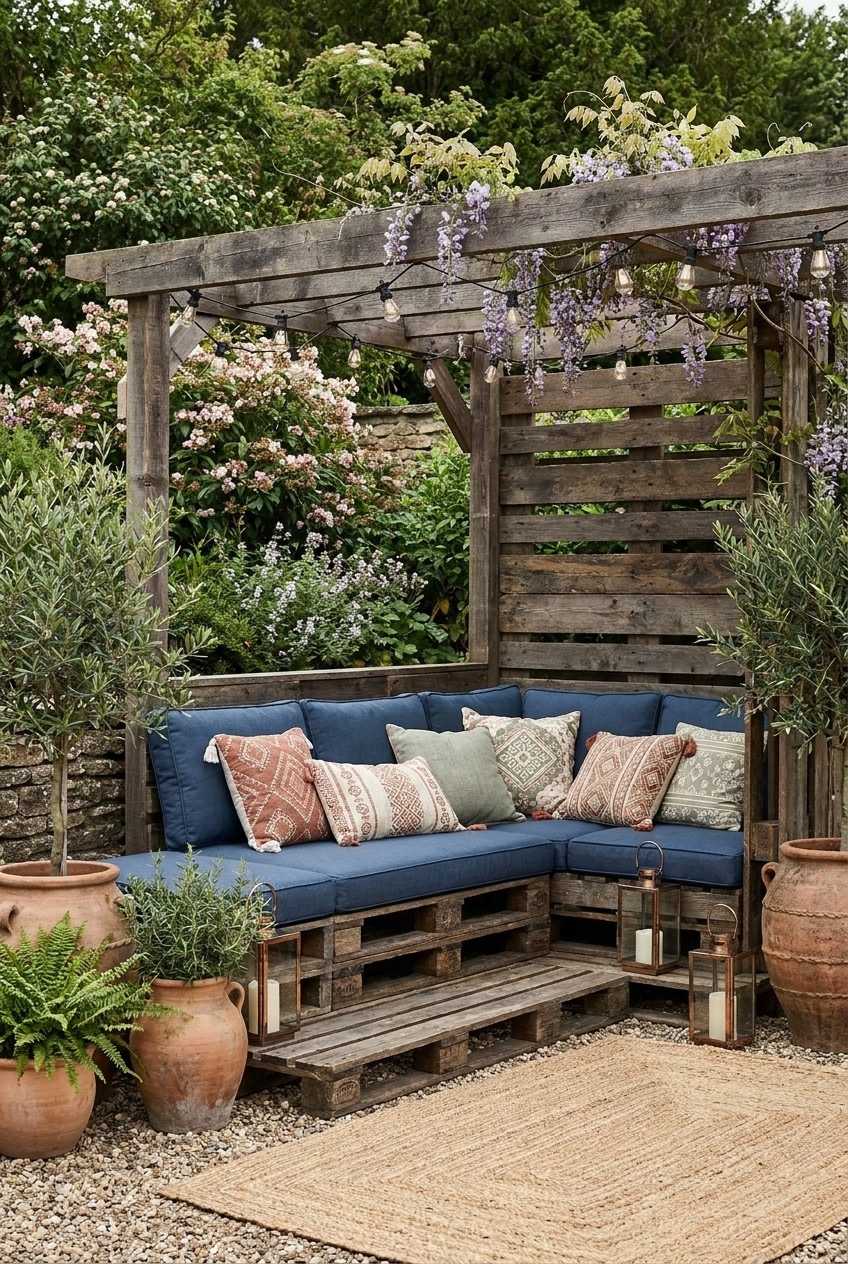
Start by scavenging or buying a handful of matching pallets, then sand down any rough or splintering edges before stacking them into an L shape. Screw them together at the corners so the base doesn’t shift every time someone sits down. This is the unglamorous part of the build, but it’s what keeps the rest of the setup from wobbling later.
The comfort comes almost entirely from what you add on top of the frame. Thick outdoor foam cushions cut to size, paired with a handful of patterned pillows in a color that contrasts with the wood, turn a stack of shipping pallets into something people actually argue over on movie night. Navy and rust work well against weathered gray timber, and neither shows dust the way pale fabric does.
Overhead, a simple post-and-beam pergola gives climbing plants like wisteria something to grab onto, and within a season or two it starts doing the shading work on its own. String lights woven through the beams do more for the mood than any single piece of furniture, so don’t skip that step to save a weekend.
Old Tires Become a Playground
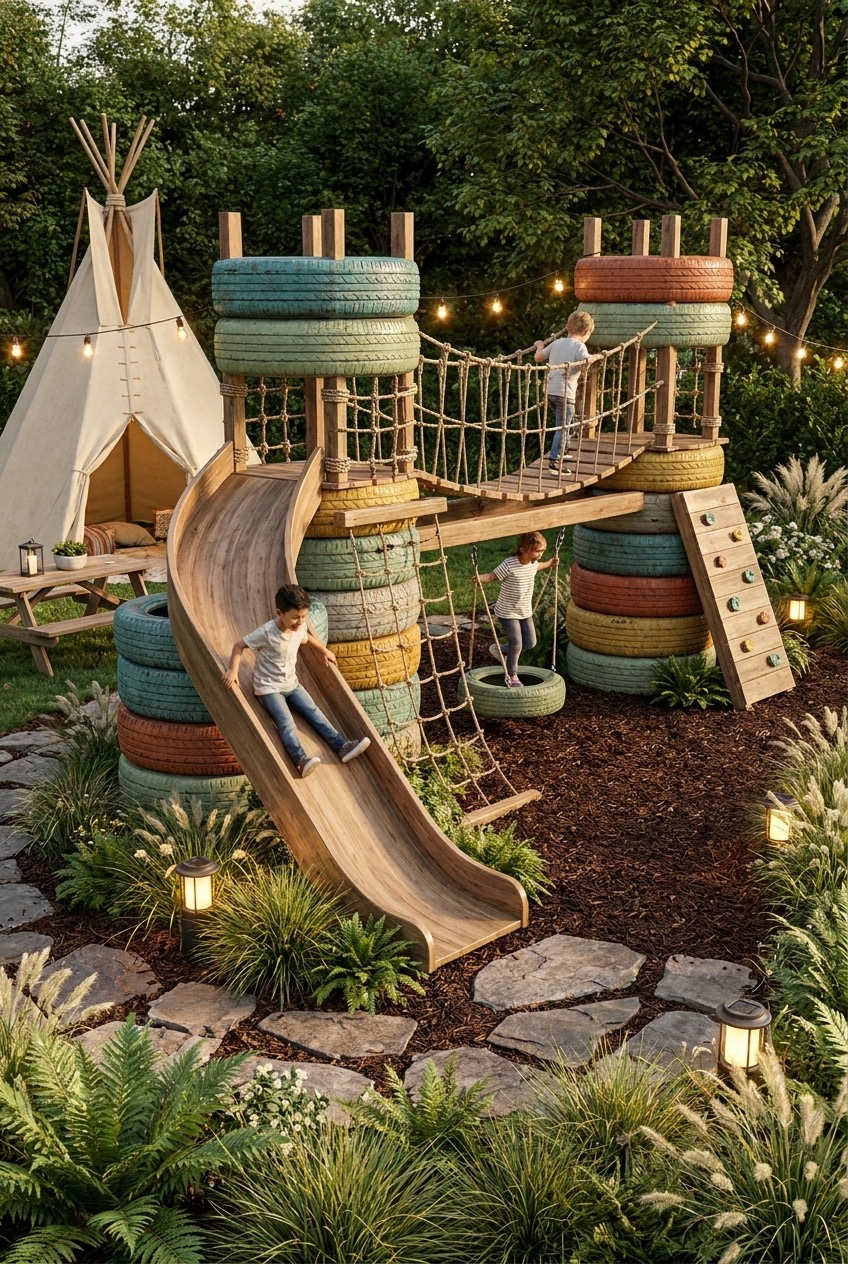
Free tires are one of the easiest materials to get your hands on, and stacking them into towers is basically the whole trick here. A central wooden post run through the middle of each stack keeps everything from shifting when a kid climbs it, which matters more than the paint job, even though the paint job is doing a lot of the visual work.
Painting each tire a different muted color before stacking breaks up what would otherwise be a wall of black rubber, and it’s the kind of weekend task that’s easy to hand off to older kids with a brush. A rope bridge strung between two towers and a curved wooden slide bolted to one side turn a pile of tires into an actual structure kids will return to for years.
Stability is the part worth taking seriously, since kids will climb it however they want, not however you planned. Anchor the posts into the ground with concrete footings, and check every bolt each season as the wood and rubber shift with the weather.
An Outdoor Movie Night Setup
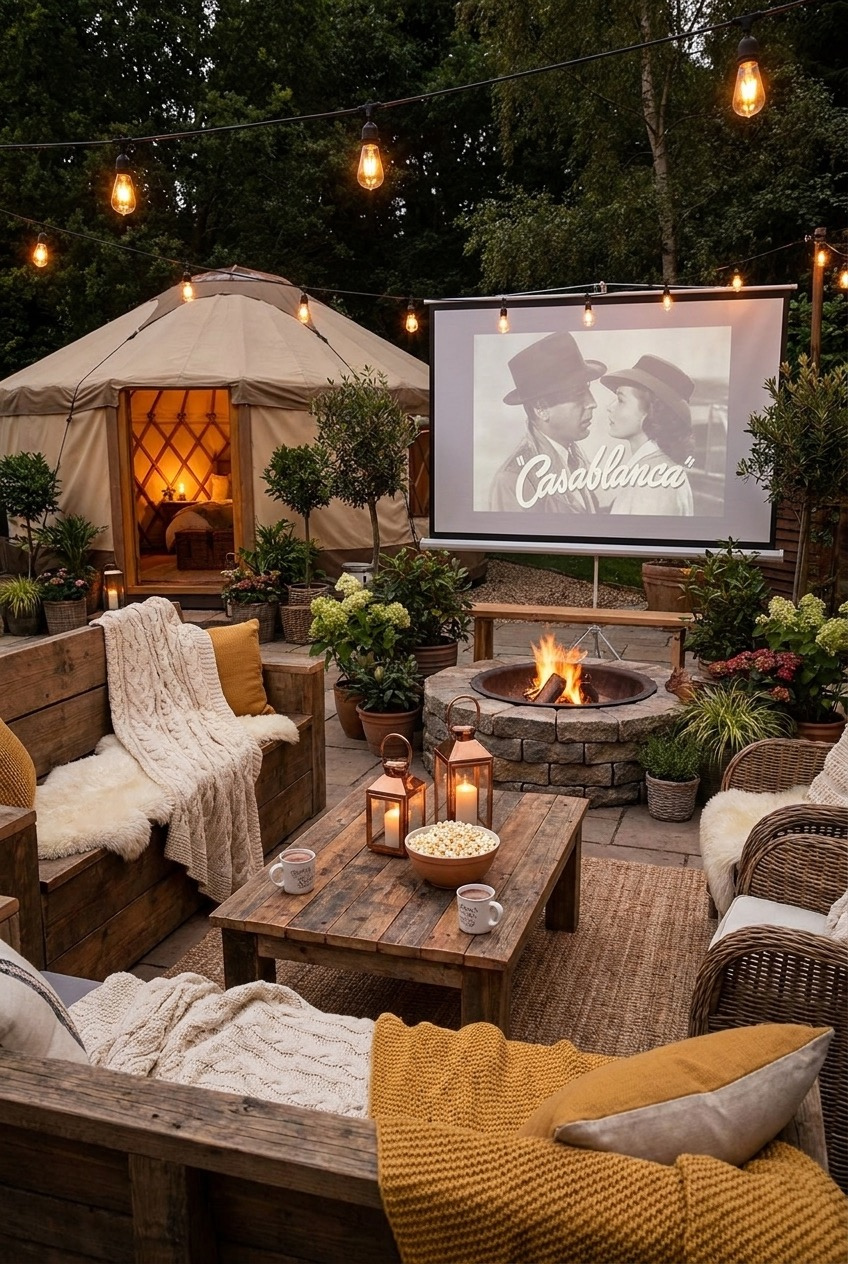
Good outdoor movie nights come down to layered light, not one big source doing all the work. Here you’ve got string lights overhead, a couple of lanterns on the table, and a fire pit handling the real warmth, all sitting at different heights so the space feels lit rather than lit up like a stage.
A projector and a pull-down screen are the only real purchases involved, and both pack away easily when they’re not in use, maybe with an old black and white film like Casablanca playing to set the mood. Position the screen far enough from the seating that the picture stays sharp, usually somewhere between eight and twelve feet depending on the projector’s throw distance, and angle the chairs so nobody’s craning their neck.
The blankets and mismatched seating are doing more heavy lifting than people give them credit for, since a stiff patio chair tends to empty out before the second act. Pile on knit throws, sheepskins, whatever’s soft, and let the fire pit anchor everyone in a loose circle around the screen.
Planter Boxes Doubling as Seating
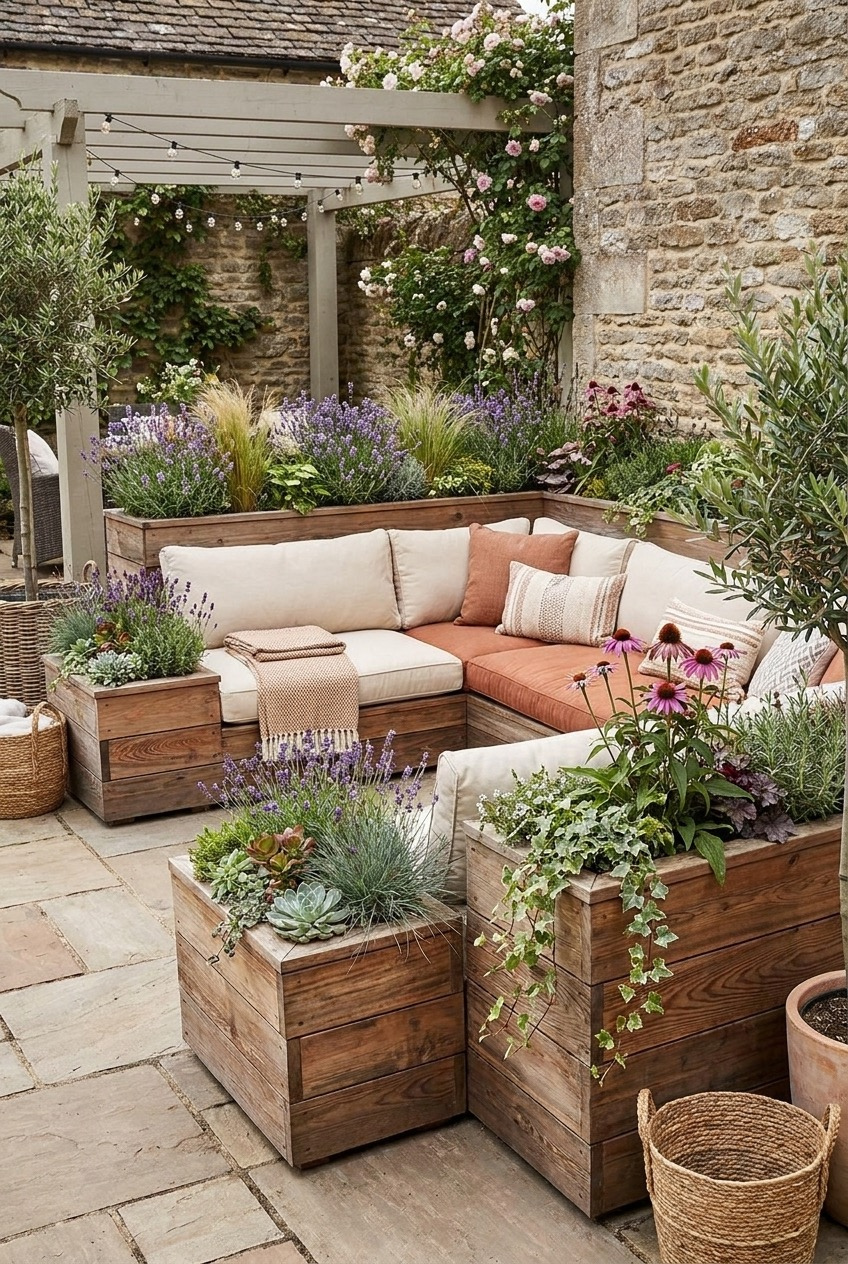
What looks like a garden bed at first glance is actually doing double duty as the backrest and side table for this whole seating area. The wooden planter boxes are built to the same height and width as furniture pieces, and that detail is what makes the corner feel planned instead of thrown together at the last minute.
Cedar or reclaimed fence boards work fine for the boxes themselves, and you don’t need fancy joinery, just butt joints and exterior screws with a liner inside to protect the wood from constant moisture. Fill them with a mix of lavender, ornamental grasses, and a few succulents tucked along the edges so you get height, movement, and texture instead of one flat green wall.
Position the tallest boxes where they’ll brush against your shoulder when you sit down, since that’s where the scent from the lavender actually reaches you. Everything else, the cushions, the woven baskets, the loose pillows, is just filling in around a structure the plants are already providing.
A Swinging Daybed for Lounging
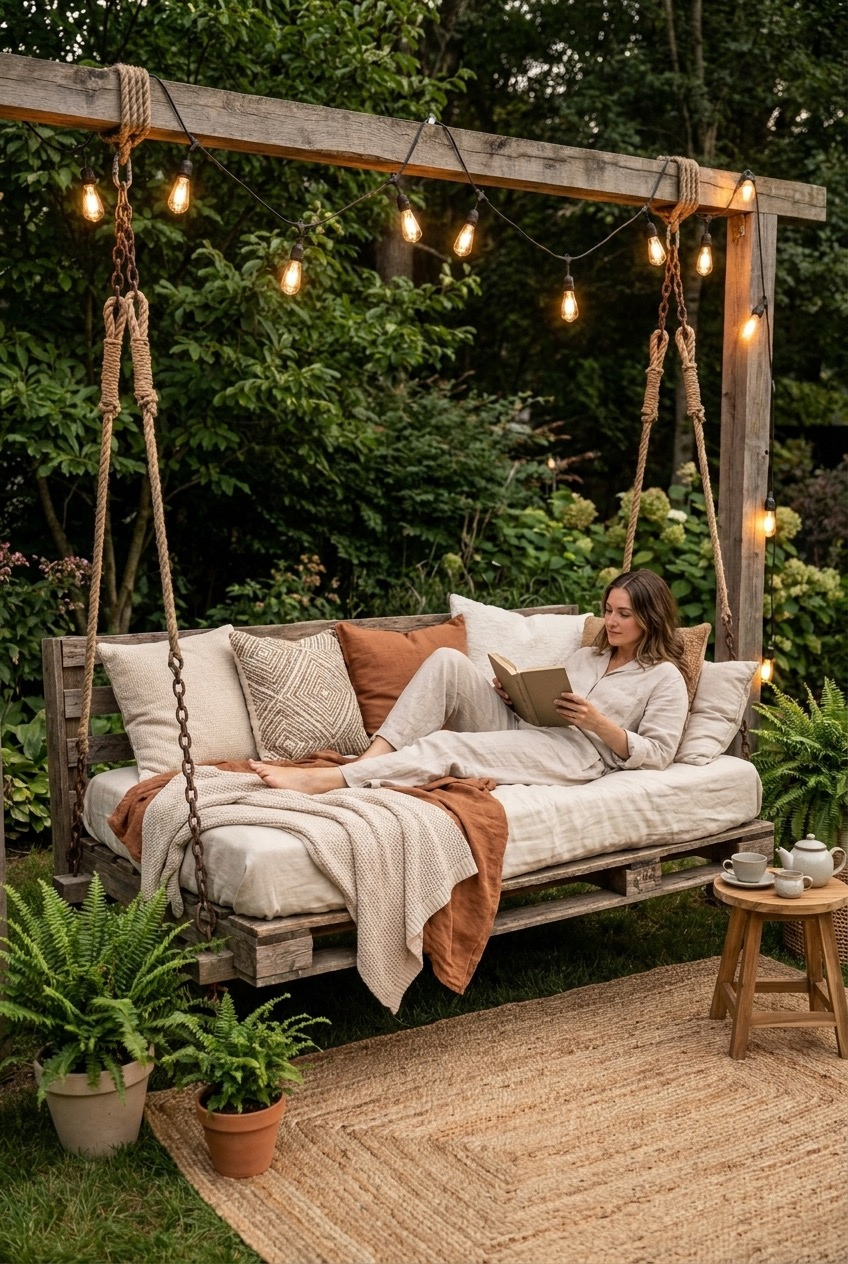
Spaces like this tend to feel like a nap is mandatory, and that’s mostly because of how the daybed hangs rather than sits on the ground. A pallet base, suspended from a sturdy overhead beam using a mix of rope and chain, sways just enough to feel different from a regular porch swing without turning into something that makes you seasick.
The beam is the part to get right. It needs to be rated for the weight of the mattress plus whoever’s lying on it, so oversized eye bolts and a beam thick enough to not flex are worth the extra trip to the hardware store. A weatherproof foam pad or an outdoor-rated mattress on top of the pallet keeps it from feeling like you’re lying on a shipping crate.
String lights along the frame turn it from a daytime nap spot into somewhere you’d actually want to read after dark, and a small side table within arm’s reach for tea or a book finishes the whole thing off.
A Tiered Stand for Plants
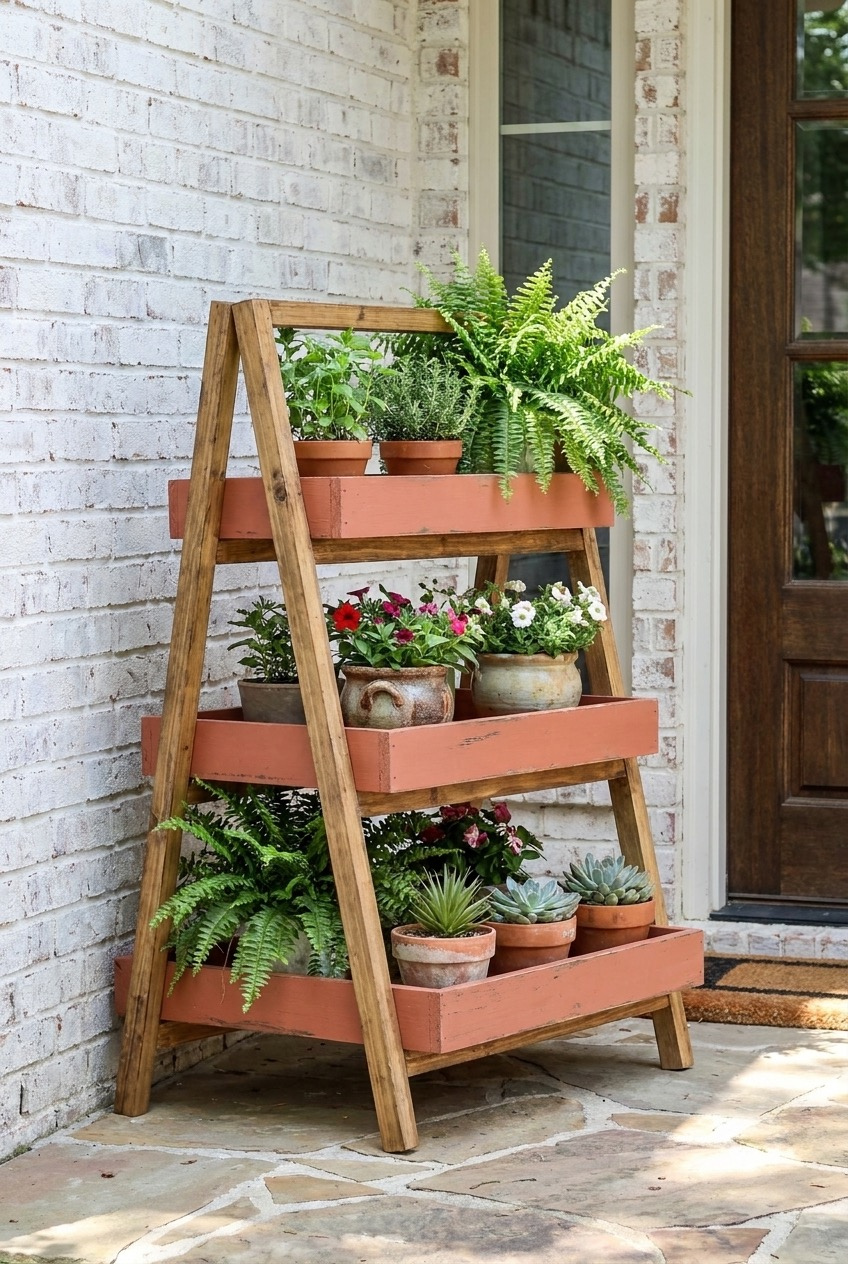
Small porches rarely have room for a wide plant collection, which is exactly the problem this A-frame shape solves. Because it leans rather than stacks straight up, it takes up barely more floor space than a single large pot while still holding three tiers worth of plants and pots at once.
The build itself is straightforward lumber work, two angled side frames joined by three horizontal shelves, with no complicated joinery required at any stage. Painting just the shelf edges in a terracotta or rust tone, while leaving the frame in natural wood, gives it a bit of definition without turning the whole piece into a weekend paint project.
Group plants by size on each tier rather than by type, putting trailing ferns up top where they can spill over and low succulents on the bottom shelf where they’re easy to reach and water. It reads as more deliberate than lining pots up by species alone.
An Old Birdcage Turned Planter
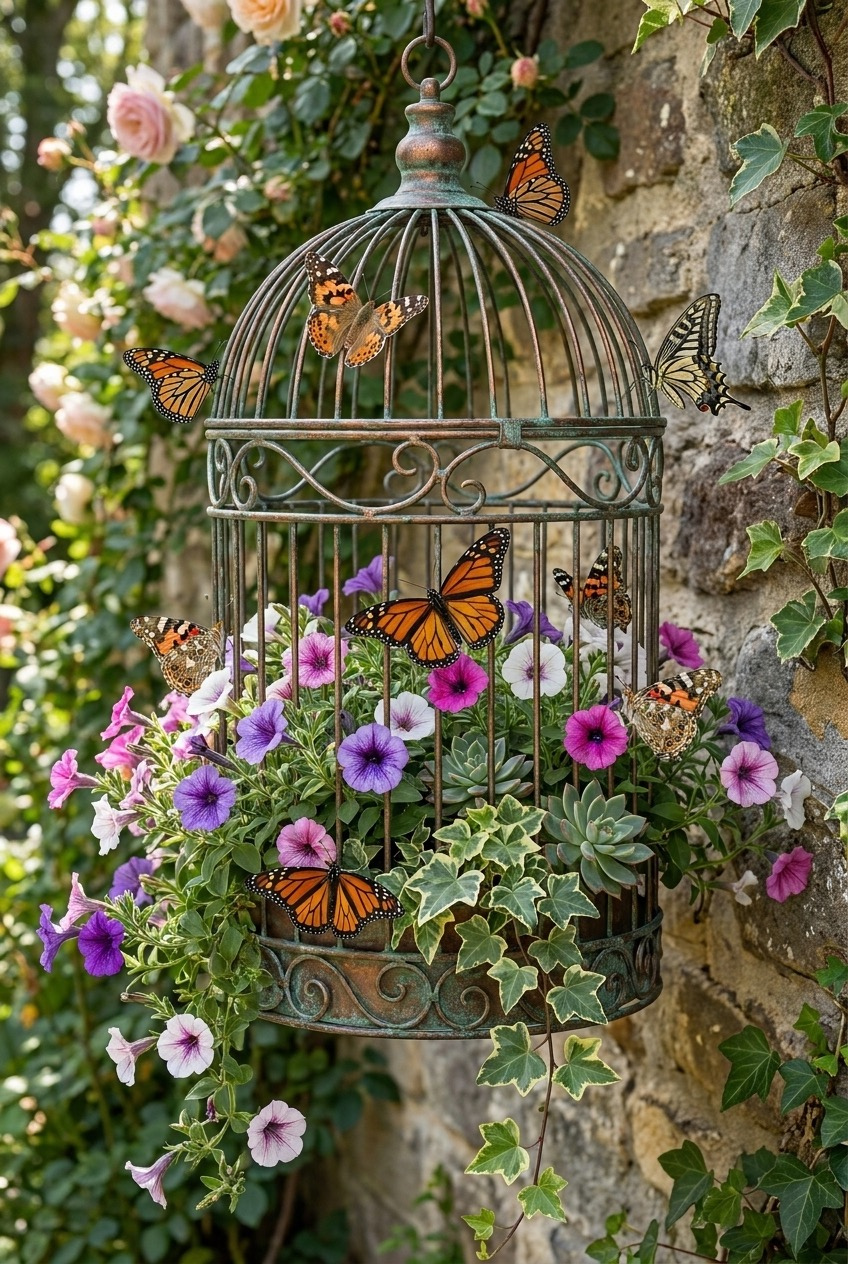
There’s a nice bit of irony in turning a cage into something that draws life in instead of keeping it out, and that’s basically the whole appeal of this idea. An old birdcage, the more weathered and patina-covered the better, gets lined and planted until it looks less like a cage and more like a hanging garden that happens to still have bars.
Thrift stores and flea markets are the best source, since a slightly rusted or chipped cage actually looks better here than a pristine one would. Line the bottom with sphagnum moss or a coco liner to hold soil in place, then plant trailing petunias and ivy around the edges so growth spills through the bars instead of stopping at them.
Succulents tucked in the center add structure once the trailing plants start taking over, and hanging the whole thing against a stone or brick wall gives it a backdrop that makes the aged metal pop instead of disappearing into the greenery around it.
A Vertical Garden on Pallets
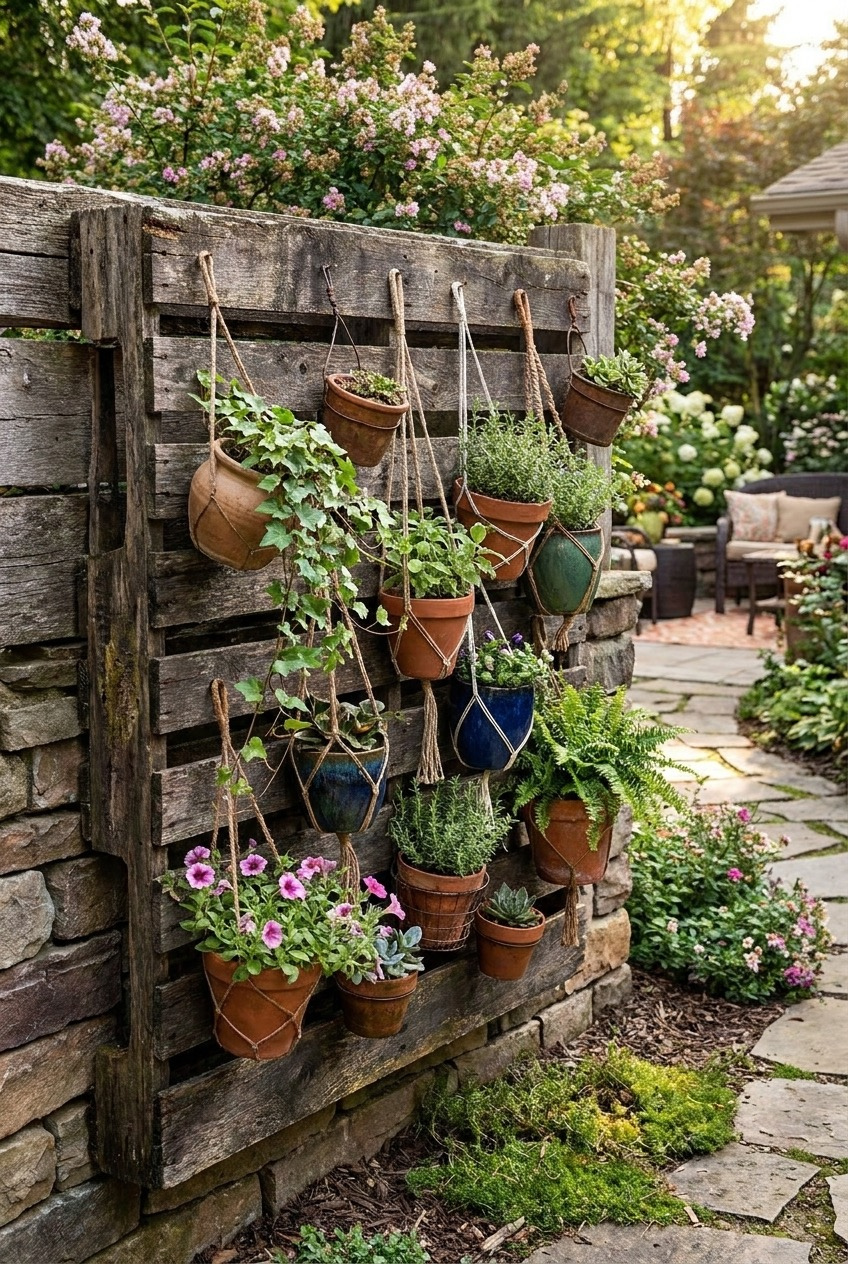
A flat wall is wasted space if you’re someone who keeps running out of room for pots, and an old pallet mounted against stone or fencing solves that pretty directly. The slats already give you a built-in grid for hanging hooks, so there’s no need to measure out a layout from scratch or fuss over spacing.
Screw eye hooks into the slats at staggered heights rather than a straight row, since a perfectly even grid ends up looking more like storage shelving than a garden. Mix rope-hung terracotta pots with a few glazed ceramic ones for contrast, and vary what’s growing in each: trailing ivy near the top, herbs in the middle, and low succulents or petunias toward the bottom where they catch more light.
Weight adds up fast once the pots are watered, so check that your hooks and the pallet itself are actually anchored into a stud or mortar joint, not just resting against the surface. A loose pallet garden is a bad surprise waiting to happen.
The Backyard You Build Beats the One You Buy
What ties all of these together is that none of them ask for a blank check or a full weekend crew. A bee hotel, a stack of old tires, a couple of pallets, that’s most of the material list, and the rest comes down to time and letting something look a little rough around the edges.
If you’re staring at a bare patio or a fence that’s just been sitting there, pick one project instead of trying to do all of them at once. A single planter box or a hanging swing changes how a space feels more than people expect, and it gives you a reason to keep going.
The backyards that feel the most lived in are usually the ones built in pieces over a few seasons, not all at once. Start with whatever’s already sitting in your garage, and let the rest come together slowly.