
Stop Random Landscaping—River Rock Designs That Create Real Structure
River rock landscaping is one of those design moves that quietly does a lot. It’s low-maintenance, insanely versatile, and somehow makes everything look more intentional—even if we’re low-key winging it. The magic of river rock is how it bridges structure and nature, softening hard edges while still giving your space definition and flow.
Across these ideas, we’re really playing with contrast, movement, and layering. River rocks guide the eye, define zones, and create that “effortless but curated” look we’re all chasing. Whether it’s a dry river bed, a patio accent, or a full-on focal feature, the key is consistency. Stick to a cohesive color palette, vary stone sizes strategically, and always think about how the rocks interact with plants and hardscape.
And let’s be honest—anything that looks this good and requires less maintenance is basically a design win. We love a beautiful shortcut.
Sunken Fire Pit Lounge Framed With River Rock Layers
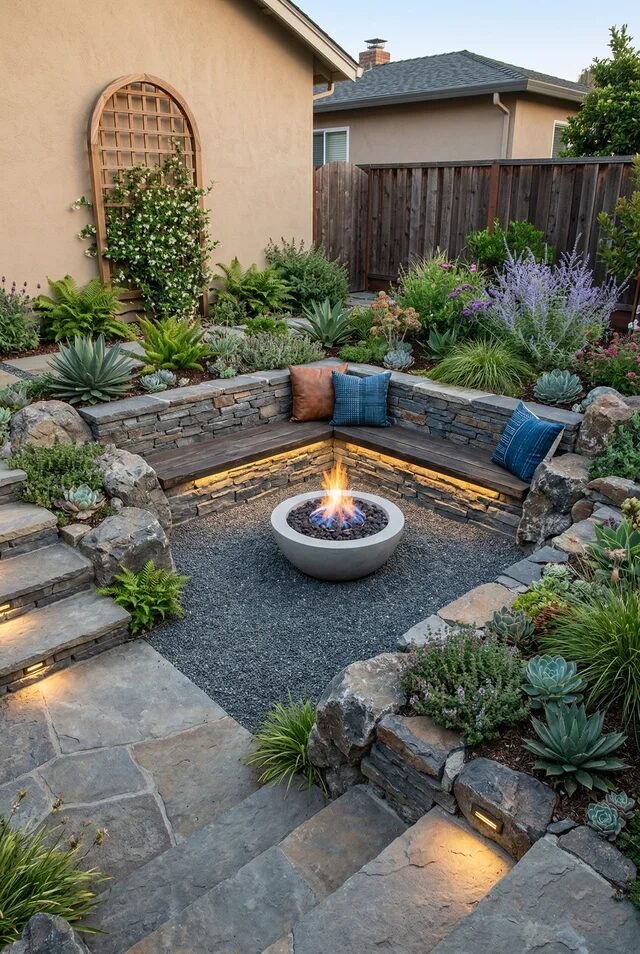
This setup is basically what happens when cozy meets “we accidentally designed a boutique hotel backyard.” The sunken seating instantly creates a sense of enclosure, and the river rock base around the fire pit softens what could otherwise feel too structured. We’re playing with contrast here—clean geometry from the seating, organic chaos from the rocks. That balance is what makes it feel intentional, not overdesigned.
Notice how the gravel and river rock combo defines the “zone” without needing walls. That’s spatial zoning done right. If you’re recreating this, keep your rock size consistent in each area—larger stones for borders, finer gravel for flooring—to avoid visual clutter. And yes, built-in lighting under the bench? Non-negotiable if we want that Pinterest glow-up at night.
Pro tip: add drought-tolerant plants like succulents and grasses around the edges. They echo the rugged texture of the rocks while keeping maintenance low, which is honestly the dream.
Curved River Rock Pathway That Feels Intentional
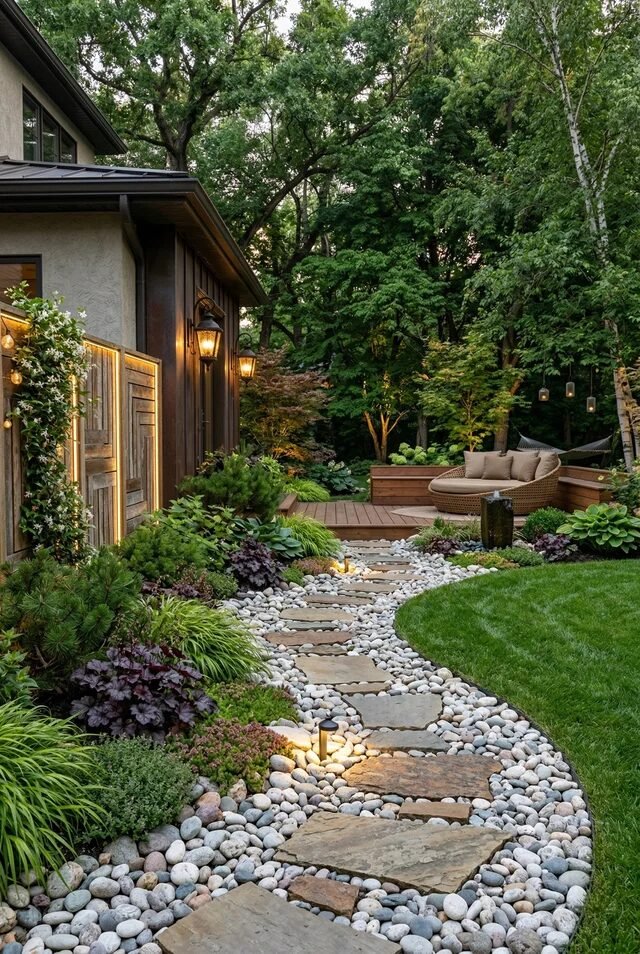
Straight paths are efficient, but curved paths? That’s where the magic (and main character energy) happens. This winding river rock pathway slows you down visually and physically, making the garden feel larger than it actually is. We’re using movement as a design tool here, not just a way to get from point A to B.
The mix of stepping stones and river rocks is doing double duty—function and texture. The flat stones guide your steps, while the surrounding pebbles create that soft, natural flow. When recreating, keep spacing consistent between stepping stones so it feels intuitive, not like a mini obstacle course.
Lighting is low-key the star here. Those small path lights tucked into the rocks create depth and highlight the curves at night. Layered lighting + layered textures = instant ambiance upgrade. Add shade-loving plants along the edges to keep everything lush without competing visually.
Dry River Bed Garden With Bold Floral Contrast
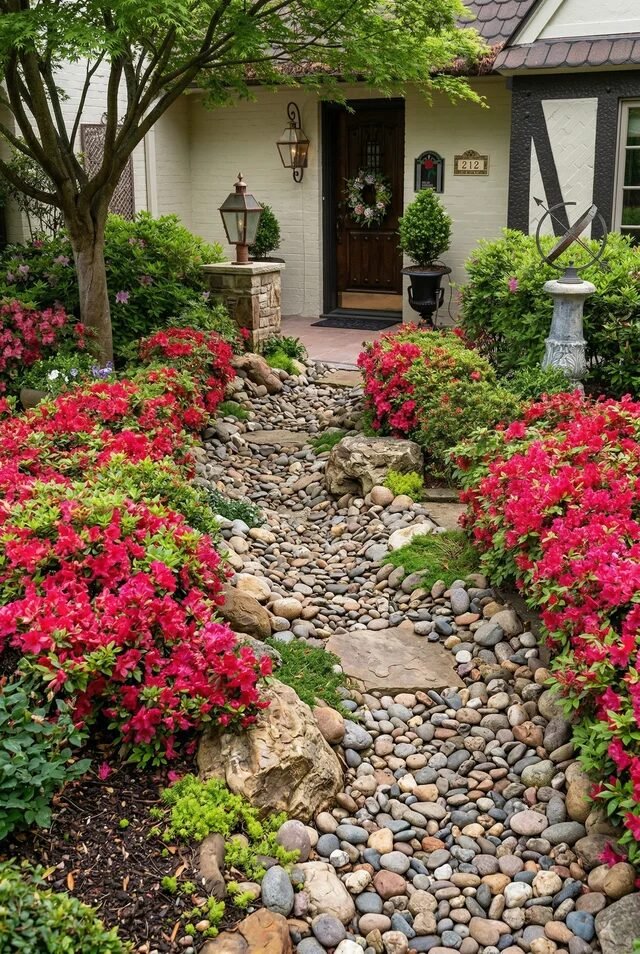
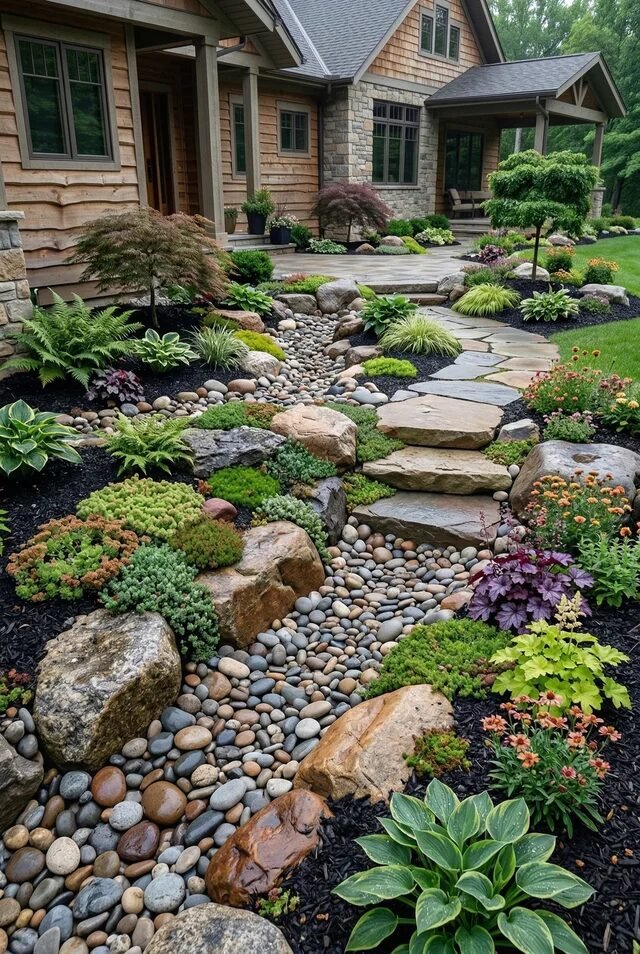
Okay, this is where we get a little dramatic—in the best way. The dry river bed acts as a neutral base, letting those bright flowers absolutely pop. This is a classic contrast play: muted stones vs saturated color. It’s giving “effortless,” but we know there’s strategy behind it.
The key here is shaping the river bed like water would naturally flow—slightly uneven, wider in some areas, narrower in others. That organic form keeps it believable. Use a mix of stone sizes to mimic real erosion patterns, then anchor everything with larger rocks so it doesn’t look scattered.
Planting is where we have fun. Go bold with color clusters instead of sprinkling flowers randomly. Mass planting creates impact, not chaos. And if you’re worried about maintenance, mix in evergreen shrubs to keep structure even when blooms fade.
Natural Pond Framed By Layered River Rock Edges
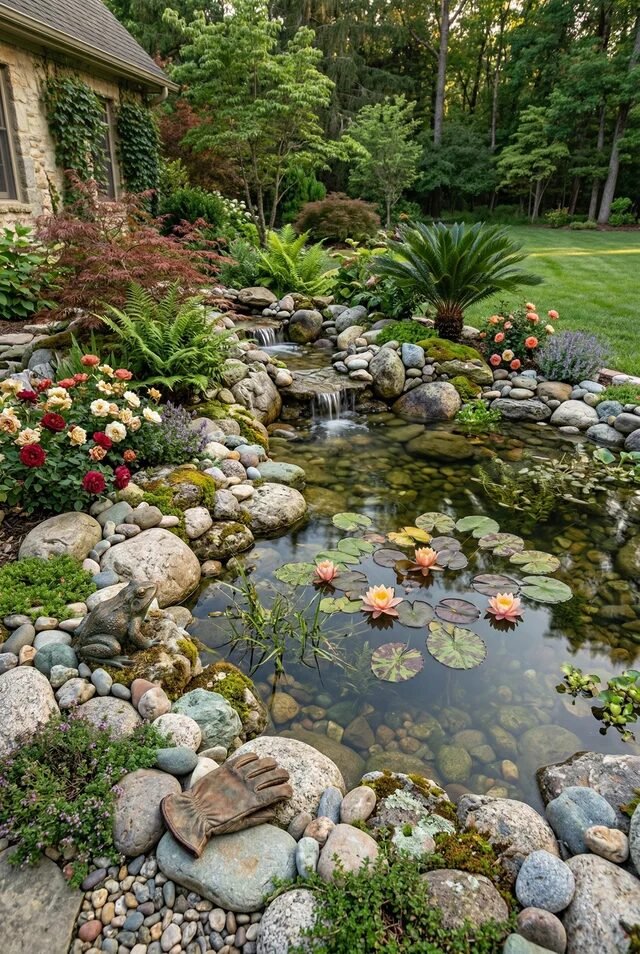
This is peak “we accidentally built a sanctuary.” The pond feels natural because the river rocks aren’t perfectly placed—they’re layered, varied, and slightly imperfect. That imperfection is actually the design principle: controlled randomness.
Start with larger boulders to define the pond’s edge, then transition into smaller river rocks as you move outward. This creates a gradient that feels organic and prevents harsh visual lines. Water lilies and aquatic plants soften the surface, while surrounding greenery blends the pond into the landscape.
Sound matters too. A small waterfall or trickling feature adds movement and that calming audio we didn’t know we needed. Water + stone + greenery is basically the holy trinity of relaxing outdoor design. Keep the color palette earthy so nothing competes with the water’s reflection.
Modern Foundation Bed Using River Rock Sculpting
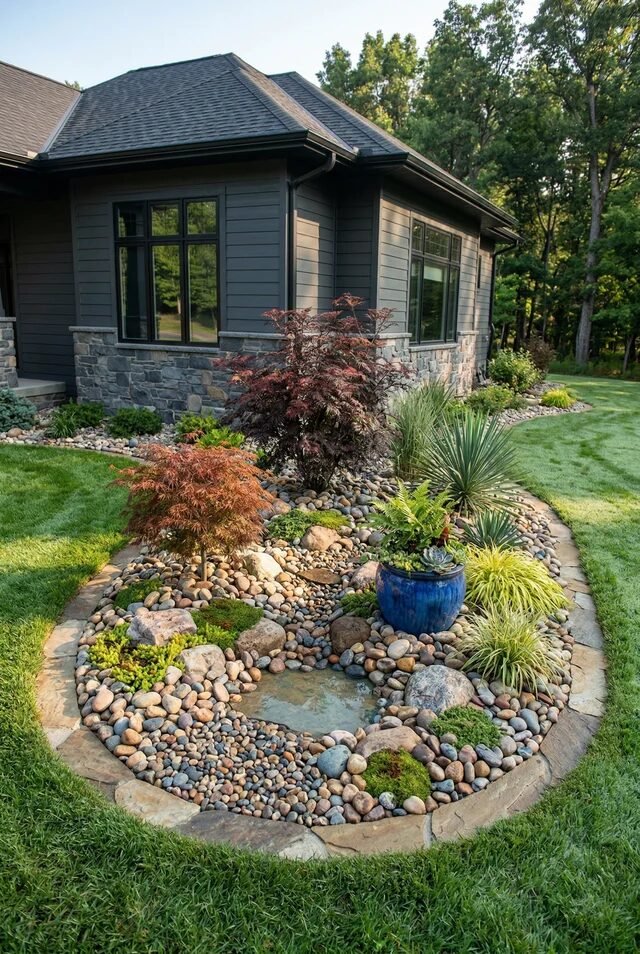
This one is for when we want “clean and polished” but still a little earthy. Instead of traditional mulch, river rocks create a sculpted foundation bed that feels elevated and intentional. We’re leaning into minimalism, but with texture doing all the heavy lifting.
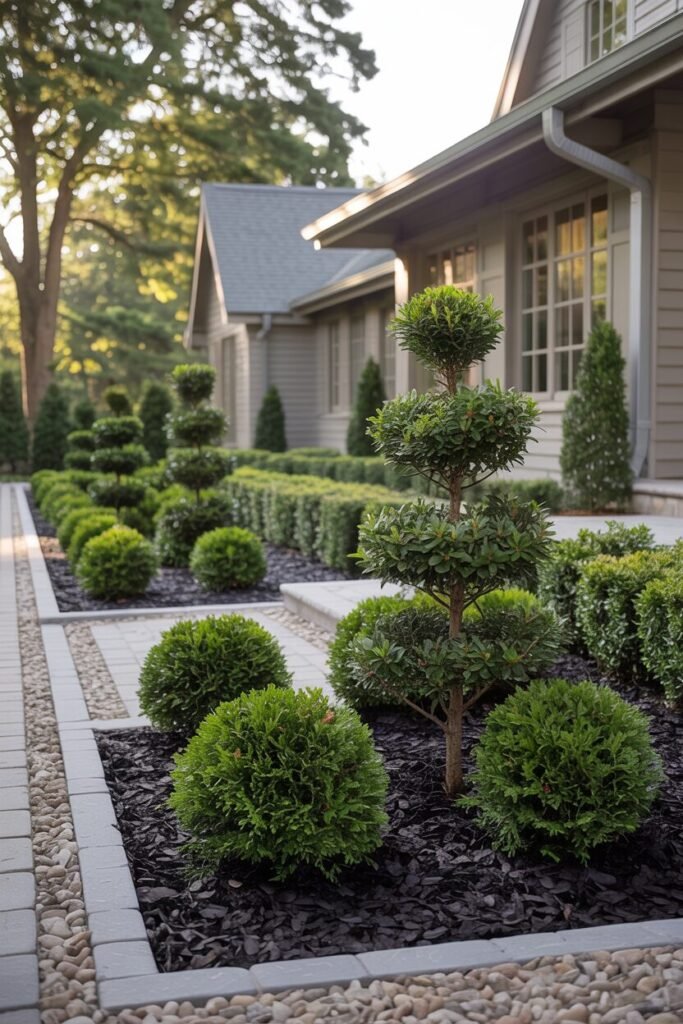
The trick is in the layout. Use curved edges to soften the hard lines of the house, then layer plants by height—tall shrubs in the back, mid-height textures in the middle, and low ground cover up front. The rocks act as negative space, letting each plant stand out instead of blending into a muddy mess.
Color coordination matters more than we think. Stick to a tight palette—greens, silvers, maybe a deep burgundy—and let the rocks tie everything together. Too many colors = visual noise, and we don’t do that here. Bonus: river rock is low-maintenance and doesn’t fade like mulch, so it’s a long-term win.
Circular Fire Pit Patio Anchored With River Rock
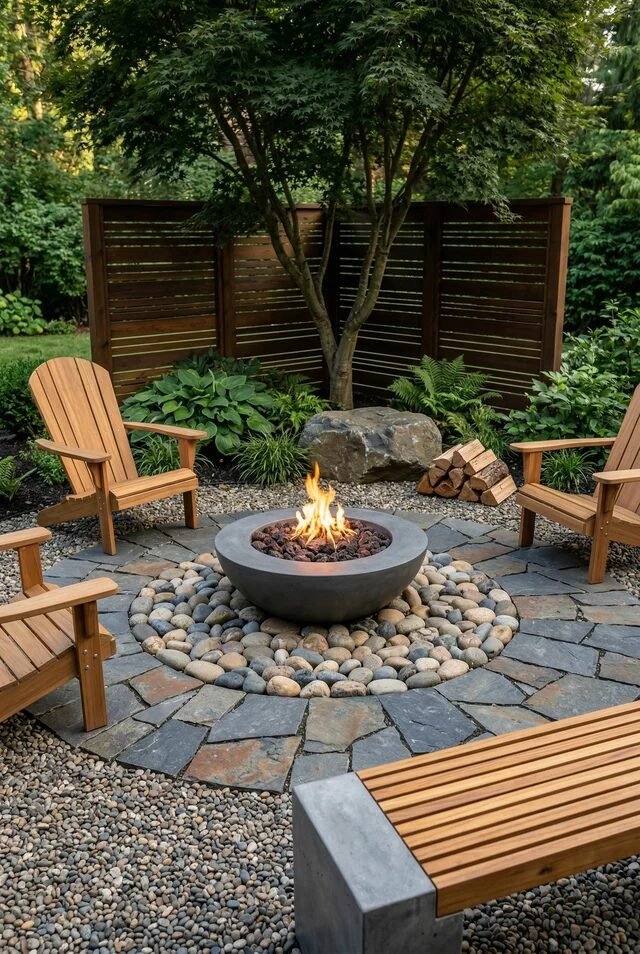
This one is giving “we actually planned this” energy, and it all comes down to the circle. Circular layouts naturally pull people in, making the fire pit the undeniable focal point. That ring of river rocks isn’t just decorative—it visually anchors the fire feature and softens the transition between hard pavers and loose gravel.
The layering here is low-key genius. You’ve got the central fire bowl, then river rocks, then stone pavers, then gravel. That’s textbook radial zoning, and it keeps the eye moving outward without feeling chaotic. If we’re recreating this, keep your circle crisp—use edging or a template so it doesn’t turn into a wobbly oval situation.
Wood chairs add warmth against all the stone textures, which is key. Mixing materials (wood + stone + metal) keeps the space from feeling flat. Bonus tip: repeat the rock color subtly around the space so everything feels connected, not random.
Cozy Lounge Patio With River Rock Stream Accent
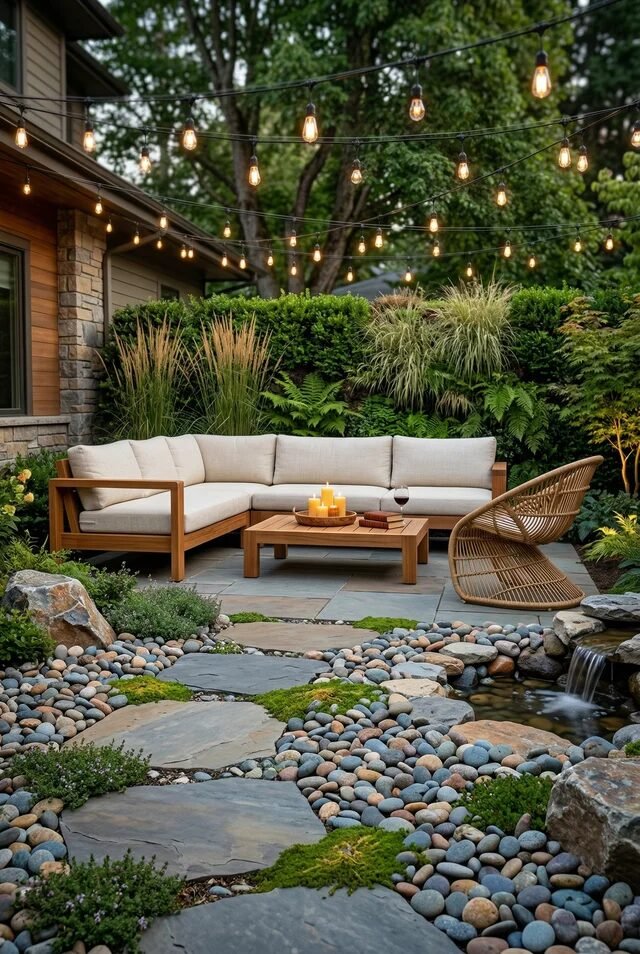
This is where landscaping starts flirting with storytelling. The river rock stream detail feels like it’s naturally weaving through the patio, even if it’s totally man-made. We’re using implied movement here—your eye follows the “water path” even when it’s dry.
The seating zone is clean and structured, which is exactly why the organic rock shapes work so well. It’s all about contrast. When recreating this, don’t overcomplicate the stream shape—gentle curves > dramatic zigzags. And mix stone sizes slightly to keep it believable, like actual erosion did its thing.
Let’s talk lighting because… wow. String lights overhead create a ceiling effect, making the space feel intimate. Layered lighting (overhead + ground + candles) turns a basic patio into a vibe. Add moss or creeping ground cover between rocks for that soft, “this has been here forever” look.
Flowing Dry River Bed Along Fence Line
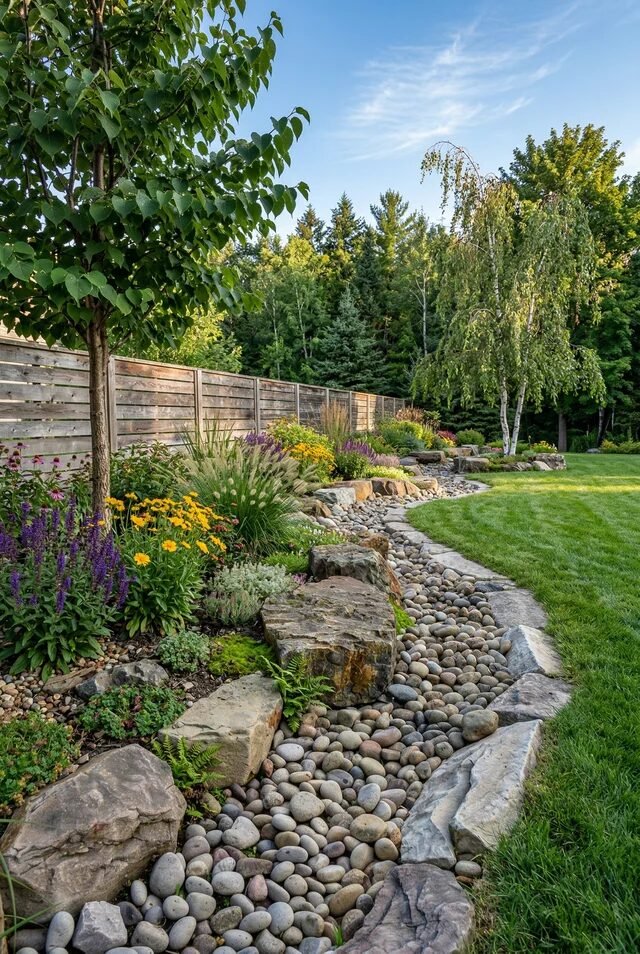
If your yard has that awkward empty strip along the fence… this is your moment. Turning it into a dry river bed instantly gives it purpose. We’re transforming “dead space” into a visual pathway that guides the entire landscape.
The trick is to make it feel like it belongs. Start wider near focal points and taper it as it flows—this mimics natural water movement. Large boulders act as anchors, while smaller river rocks fill in the flow. That variation is what keeps it from looking like a random pile of stones.
Planting alongside is where we elevate it. Go for layered heights—tall grasses, mid shrubs, low ground cover. This creates depth and prevents the river bed from looking flat or disconnected. Keep colors cohesive so the rocks still feel like the main character, not background noise.
Woodland Garden Path With River Rock Texture
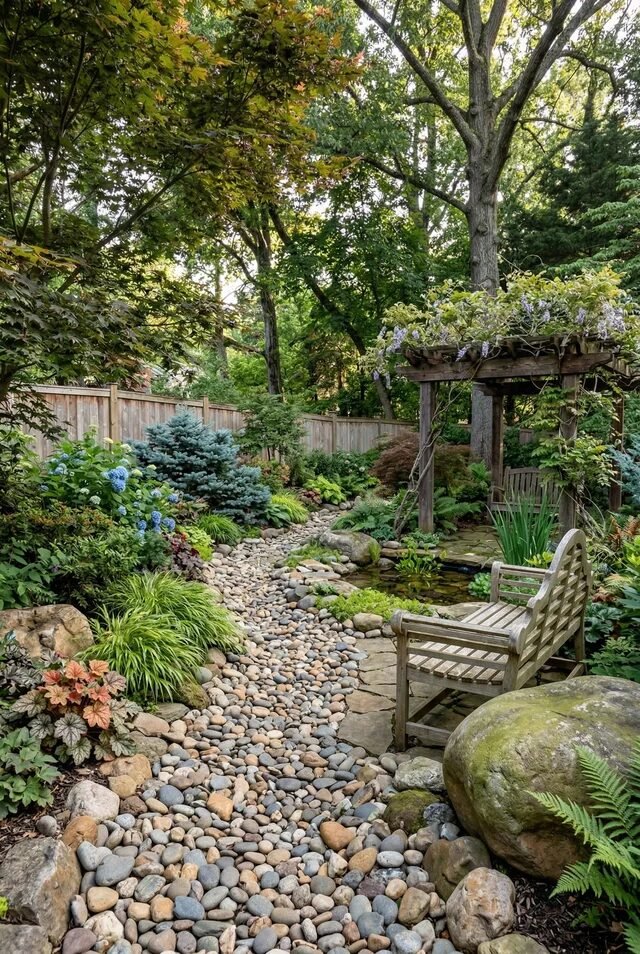
This is straight-up storybook energy, and we’re not mad about it. The river rock path feels organic and slightly imperfect, which is exactly the point. Perfection would actually ruin the vibe here—this design thrives on controlled irregularity.
Instead of a defined edge, the rocks blend into planting beds, making the path feel like it just… happened. To recreate this, skip rigid borders and let plants spill slightly into the path. It softens everything and makes the space feel alive, not staged.
The pergola and seating nook at the end act as a destination, which is key. Good landscape design always gives the eye somewhere to land. Use shade-loving plants, varied leaf shapes, and muted tones to keep that woodland feel consistent. And yes, bigger stones placed strategically = instant “nature did this” illusion.
Modern Zen Garden With River Rock Contrast
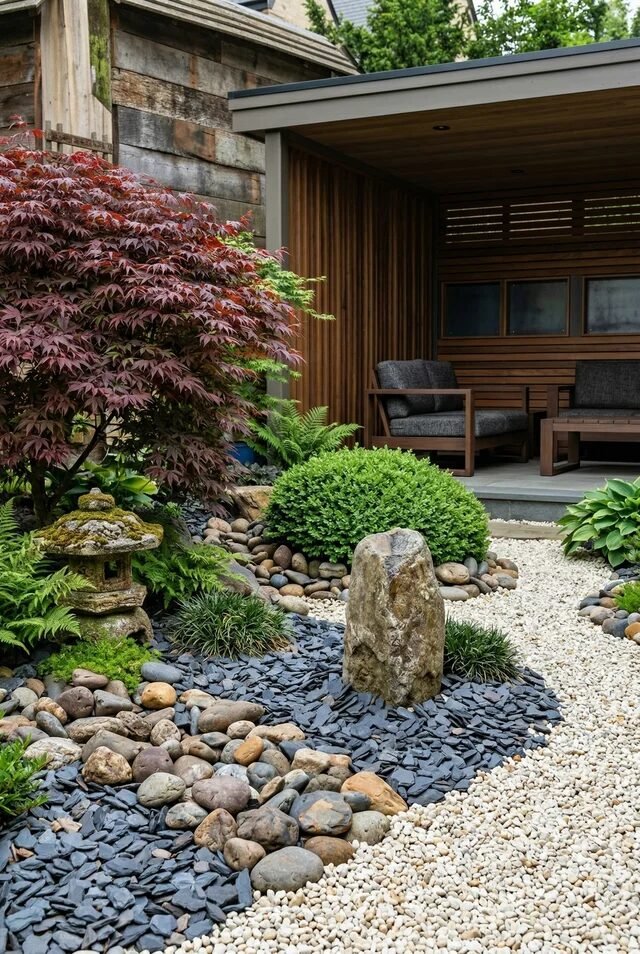
This one is for when we want calm, minimal, and just a little bit dramatic. The contrast between dark gravel, light stones, and river rocks creates a layered, graphic look. We’re leaning into contrast and negative space instead of filling every inch.
Notice how each material has its own “zone.” That separation is what keeps the design clean. If we mix everything too much, it loses that zen clarity. Use river rocks as transitional elements between materials—they act like a visual buffer.
The sculptural stone and Japanese maple are your focal points, so everything else supports them. Restraint is the real flex here—less clutter, more intention. Keep plant choices minimal and textural, not colorful. This is not the place for chaos, this is the place for “we have our life together” energy.
Designing With River Rock Without Overcomplicating It
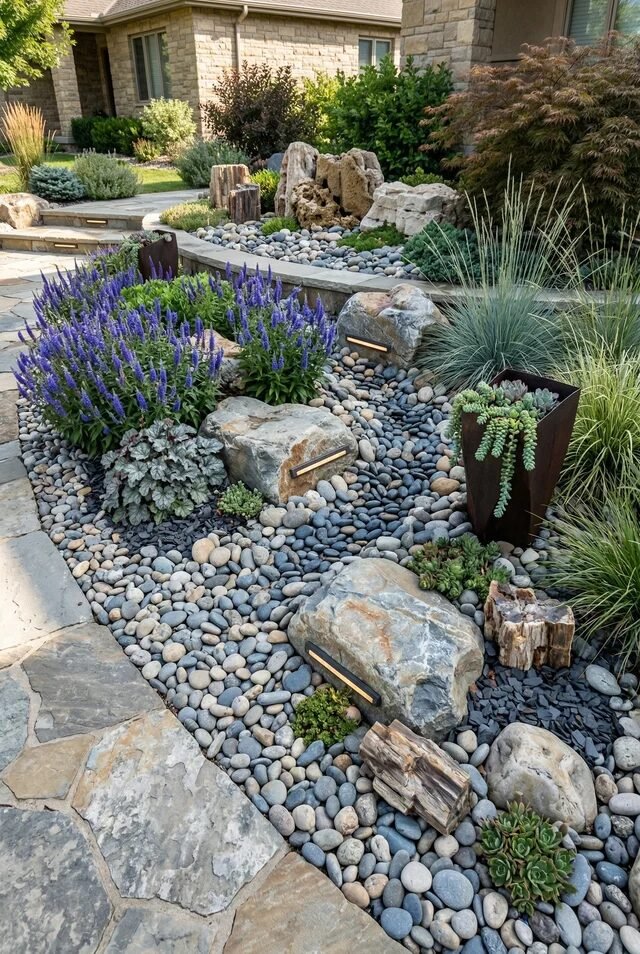
Here’s the thing: river rock landscaping only works if we don’t overthink it. The best designs feel natural, not forced, and that comes from restraint. We’re not just placing rocks—we’re creating flow, contrast, and visual rhythm across the space.
If there’s one takeaway, it’s this: let the rocks support the design, not overpower it. Use them to guide pathways, frame focal points, or soften transitions between materials. Pair them with intentional planting—layer heights, repeat textures, and avoid throwing in every plant you own (we’ve all been there).
Also, don’t skip the practical side. Proper edging, weed barriers, and drainage planning are what keep your space looking polished long-term. A good design isn’t just pretty on day one—it still works months later.
At the end of the day, river rock landscaping is about balance. And honestly? We nailed it.