
How to Build a Pond That Feels Like a Destination, Not Decor
Let’s be honest—most ponds fail not because of budget, but because of intention. A pond should never feel like a random hole filled with water. It should feel like a moment. Across all these ideas, what actually works is how water, planting, and structure are layered to create movement, depth, and purpose. That’s the difference between “nice” and “wait… this is kinda insane.”
We always want to think in zones. Water is just the base layer. Then comes edging (stone, gravel, or decking), followed by planting tiers, and finally vertical elements like bridges, trees, or walls. This layered approach is what turns a pond into an experience, not just a feature. And yes, curves will almost always win over straight lines unless you’re going ultra-modern.
Also, let’s not ignore practicality. Filtration, circulation, and maintenance matter. A beautiful pond that turns cloudy is basically a betrayal, so plan the behind-the-scenes just as carefully as the aesthetic.
Layered Waterfall Pond That Feels Like a Resort
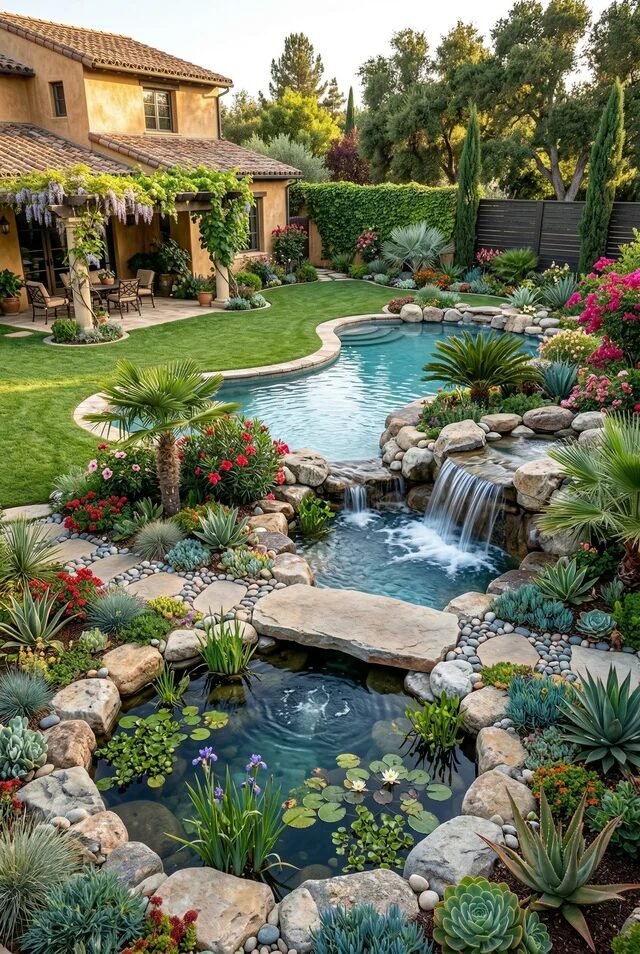
This is the kind of backyard that makes your morning coffee feel suspiciously expensive. The magic here is layering—both vertically and visually. We’ve got an upper pool, a mid-level waterfall, and a lower pond moment, which creates movement and sound (aka instant serotonin). The curved lawn softens everything, preventing the stone from feeling too heavy.
Notice how the rocks aren’t random—they’re intentionally varied in size. That’s a core design trick. Mixing large anchor stones with smaller filler rocks creates a natural, “not-too-perfect” look that reads expensive without actually being chaotic. The surrounding plants also follow a tiered approach: taller trees in the back, medium shrubs mid-zone, and low succulents up front.
If we were recreating this, we’d focus on flow first. Map the water path before planting anything. Then layer plants in odd-number groupings (yes, design people are obsessed with odds for a reason). And don’t skip lighting—subtle uplighting near the waterfall turns this into a nighttime flex.
Minimal Tropical Koi Pond With Clean Lines
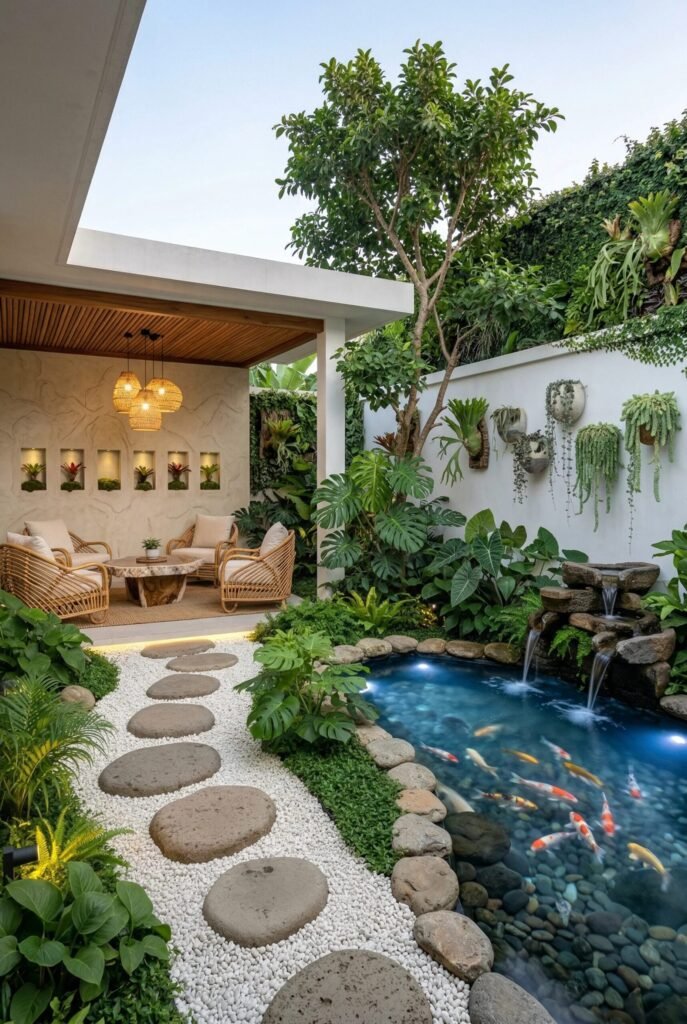
This one is giving “we meditate now” energy, and honestly, we love that for us. The biggest design win here is contrast. Clean architectural lines from the patio meet soft, organic planting, creating that high-end spa vibe without trying too hard.
The stepping stones are doing more than just being cute—they guide movement. That’s intentional. Good landscaping always controls how people experience the space, and here we’re gently led toward the pond. The white gravel acts as negative space, making the greenery and water pop way more than if everything was packed together.
For recreating this, restraint is your best friend. Don’t overplant. Stick to a tight palette—think tropical greens with subtle variation in leaf size and texture. And let’s talk pond clarity: koi need filtration, so invest in a proper system or your “zen oasis” turns into swamp real quick. Bonus tip: warm lighting under the water = instant luxury.
Natural Rock Pond Tucked Into Corner Space
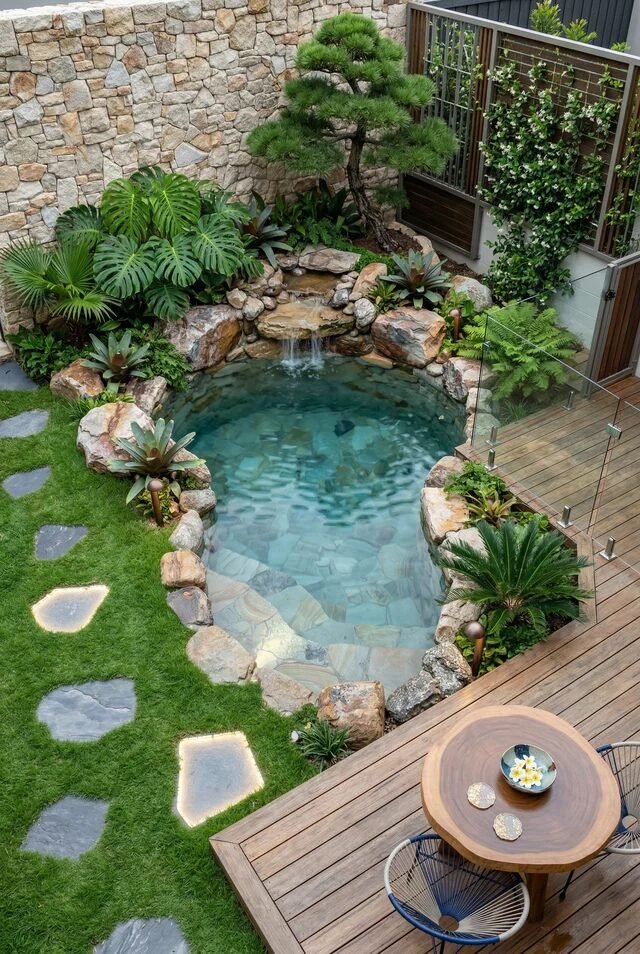
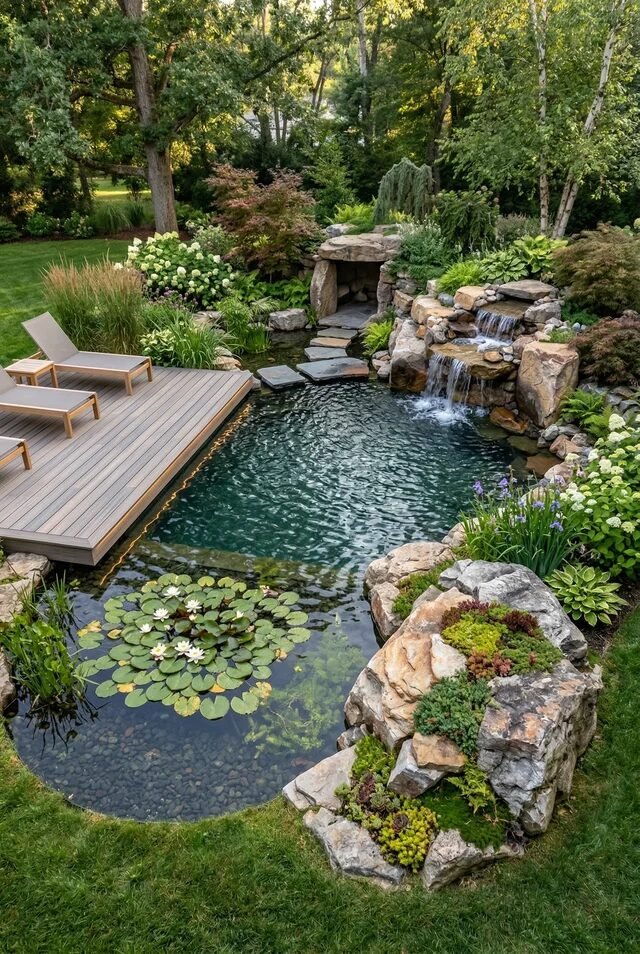
This is proof that awkward corners can have a glow-up. Instead of ignoring the edge of the yard, this design leans in hard. The pond becomes a focal point by being slightly elevated and framed with stone, which gives it presence without needing a massive footprint.
The surrounding elements are doing quiet but important work. That stone wall backdrop? It adds texture and makes the greenery feel richer. The small tree adds height, while the deck introduces a clean, modern contrast. Balancing rustic (stone) with refined (wood decking) is what keeps this from feeling too “garden center”.
If we’re recreating this, we’d start with shape. Keep it organic, not geometric. Then build your rock border with intention—cluster stones instead of spacing them evenly. Add a small waterfall for movement, even if it’s subtle. And here’s the underrated tip: edge lighting along the deck makes the pond feel integrated, not like an afterthought.
Symmetrical Garden Pond With Soft Cottage Energy
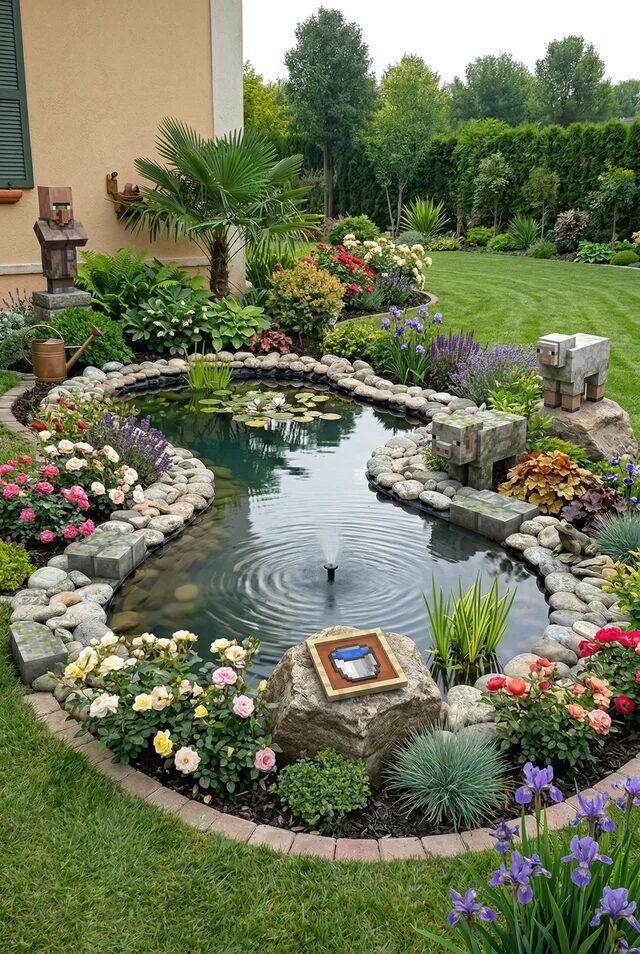
Okay, this one is for the “we romanticize everything” crowd—and we mean that in the best way. The design here leans into symmetry, but not in a stiff way. The circular pond anchors the space, while the surrounding flower beds mirror each other loosely, creating balance without feeling overly formal.
Color plays a big role. You’ve got soft pinks, purples, and greens working together, which keeps everything cohesive. The stone edging gives structure, while the flowers soften it. This balance between structure and softness is what makes cottage-style landscaping actually work instead of looking messy.
If we’re doing this ourselves, we’d pick a color palette first and stick to it (seriously, don’t freestyle this part). Layer plants by bloom time so something is always showing off. And add a small fountain like this—moving water keeps the pond from feeling stagnant both visually and literally. Bonus: it attracts birds, which is free entertainment.
Lush Secret Garden Pond With Cozy Pathway
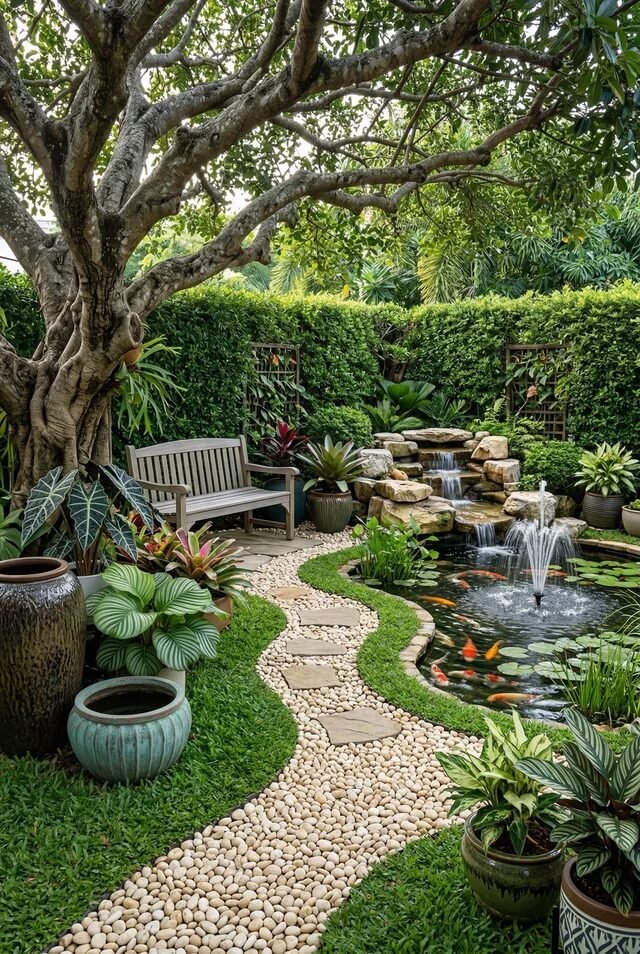
This one feels like you accidentally discovered it while wandering and now you’re emotionally attached. The winding pebble path is doing a lot of storytelling here. Curves create mystery—your eye wants to follow the path, which makes the space feel bigger than it is.
The planting style is intentionally dense, but not chaotic. Different leaf shapes and sizes create texture without relying on flowers. And that big tree overhead? Instant canopy. Vertical layering (ground plants, mid shrubs, tall trees) is what creates that immersive, tucked-away vibe.
If we’re recreating this, we’d start with the pathway first. Lay it out in a gentle curve, then build everything else around it. Use pots sparingly for variation, but keep materials consistent so it doesn’t feel cluttered. And here’s the underrated move: add a bench near the pond—because if you can’t sit and enjoy it, what are we even doing?
Japanese-Inspired Koi Pond With Zen Bridge Moment
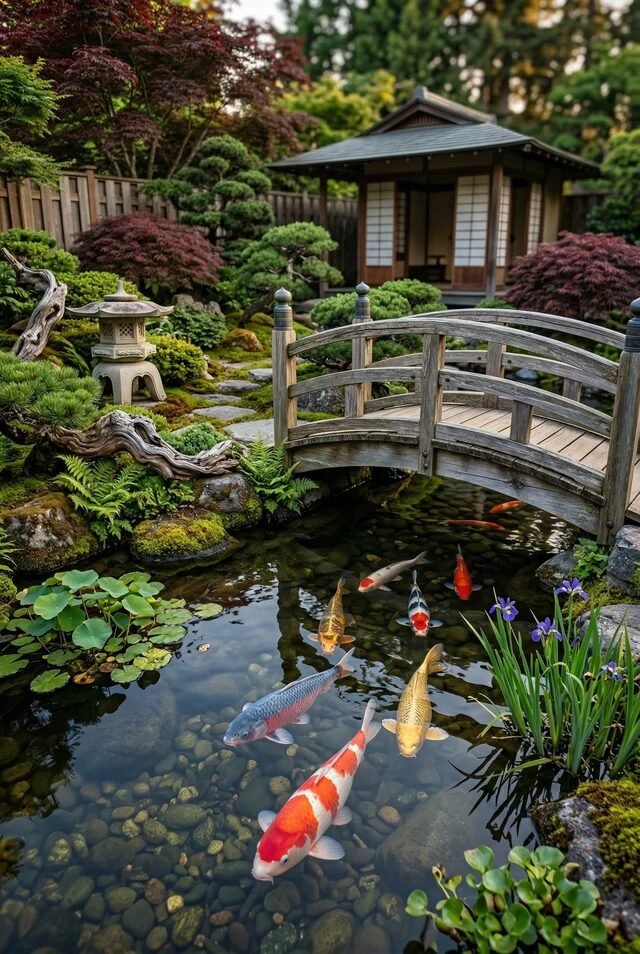
This is not just a pond—it’s a whole mood shift. The curved bridge instantly creates a focal point, but more importantly, it controls perspective. Bridges in garden design aren’t just decorative—they frame views and guide how we experience the space. Pair that with the pavilion in the background, and suddenly the pond feels like a destination, not just a feature.
The planting here is super intentional. You’ve got sculpted shrubs, layered maples, and mossy ground cover working together in a calm, restrained palette. Limiting color and focusing on texture is what gives Japanese-style gardens their signature serenity—no chaos, just quiet luxury.
If we’re recreating this, we need discipline (yes, even if we’re chaotic by nature). Stick to greens, deep reds, and natural wood tones. Keep water crystal clear because koi are the stars. And please don’t overcrowd—negative space is doing a lot of heavy lifting here.
Multi-Tier Waterfall Pond With Luxe Landscaping
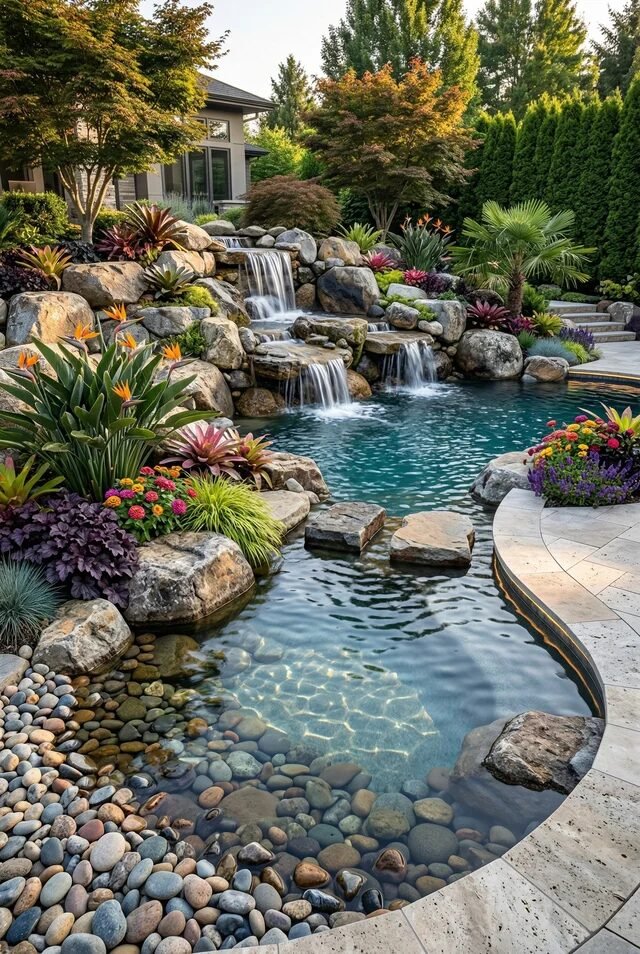
This one is giving “boutique hotel but it’s your backyard,” and we’re not mad about it. The layered waterfalls create both sound and visual rhythm. Repetition of cascading water elements adds movement while keeping the design cohesive, instead of looking like random rock piles.
The real star here is contrast. You’ve got rugged stone against polished patio curves, plus bold tropical plants next to softer ground covers. That push-and-pull is what makes it feel designed, not accidental. Mixing textures (spiky, leafy, smooth) keeps the eye engaged without needing extra decor.
If we’re building this vibe, start with your elevation changes first. Even a small slope can become a waterfall moment. Then plant in clusters, not singles—it looks fuller and more intentional. And don’t forget: clear water + visible pebbles = instant “expensive” energy, so filtration matters more than you think.
Jungle Retreat Pond With Hidden Lounge Escape
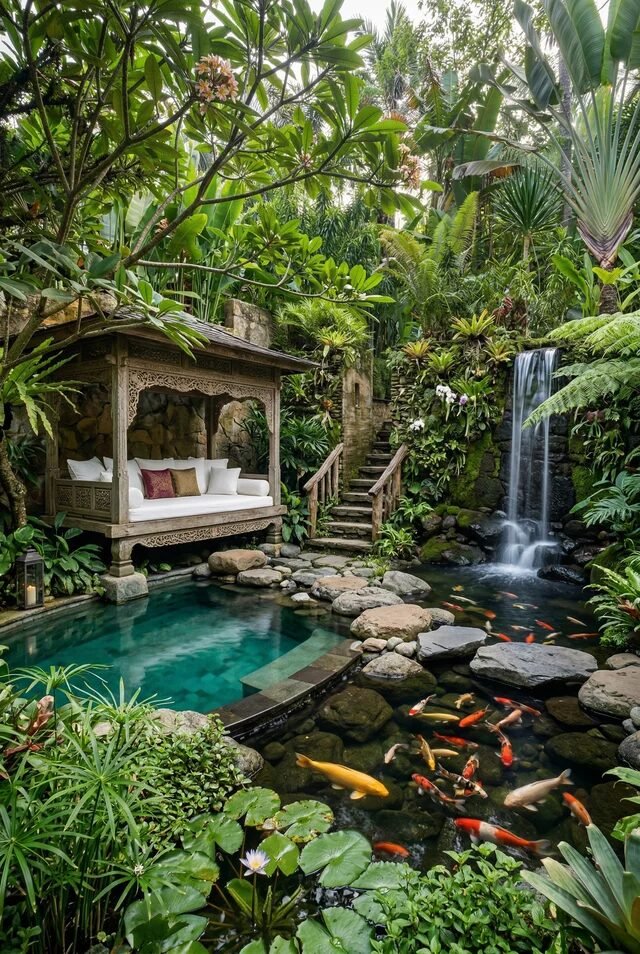
Okay, this is peak “we disappear here after a long day.” The design works because it creates immersion. Dense planting forms natural walls, making the pond feel tucked away and private, even if your neighbors are literally five steps away.
The lounge structure is genius placement. It sits slightly elevated, giving a view over the pond without blocking it. That’s a key principle: always consider sightlines—what you see when seated matters just as much as the layout itself. The waterfall adds movement, but it’s also positioned off-center, which keeps things feeling organic.
To recreate this, go heavy on vertical layering. Think tall palms, mid-height shrubs, then low water plants. Use stone sparingly so it doesn’t compete with greenery. And here’s the big one: humidity-loving plants near water thrive naturally, so let the environment do the work instead of fighting it.
Meandering Stream Pond With Cottage Garden Layers
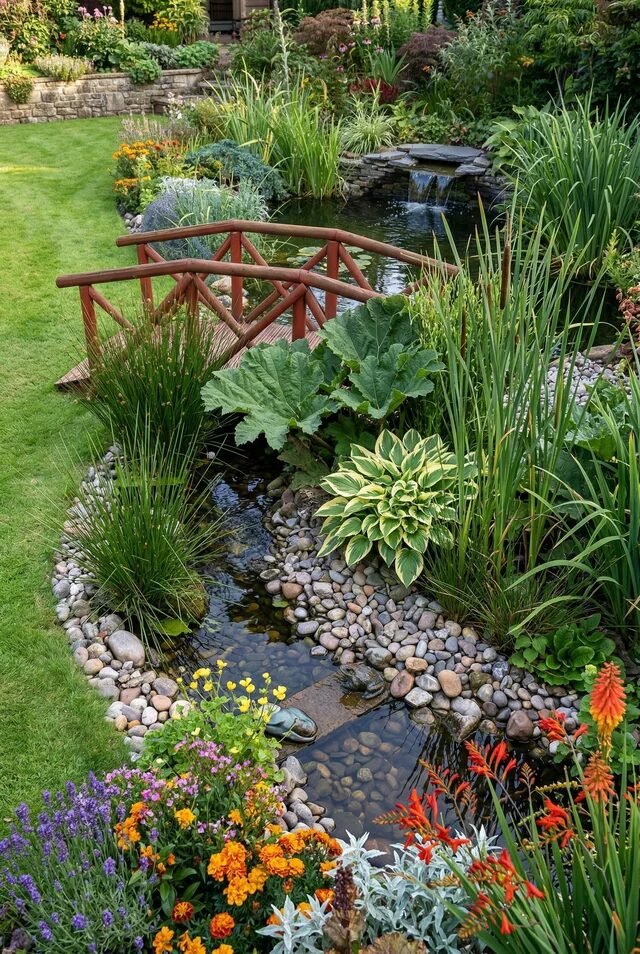
This one feels like a storybook side quest and honestly, we’re going. The winding stream design is doing something very clever. Curved water features visually extend space, making even small yards feel bigger and more dynamic.
Planting here is intentionally abundant. You’ve got grasses, florals, and leafy textures all layered together, but it works because of repetition. Colors and plant types reappear along the stream, creating rhythm instead of chaos. Consistency in planting is what keeps “lush” from turning into “overgrown mess”.
If we’re recreating this, we’d design the stream path first—gentle curves only, no sharp turns. Add a small bridge for structure and charm. Then layer plants by height and bloom timing. And don’t forget edging—a mix of pebbles and larger stones keeps the stream looking natural but contained.
Compact Pond With Vertical Garden Drama
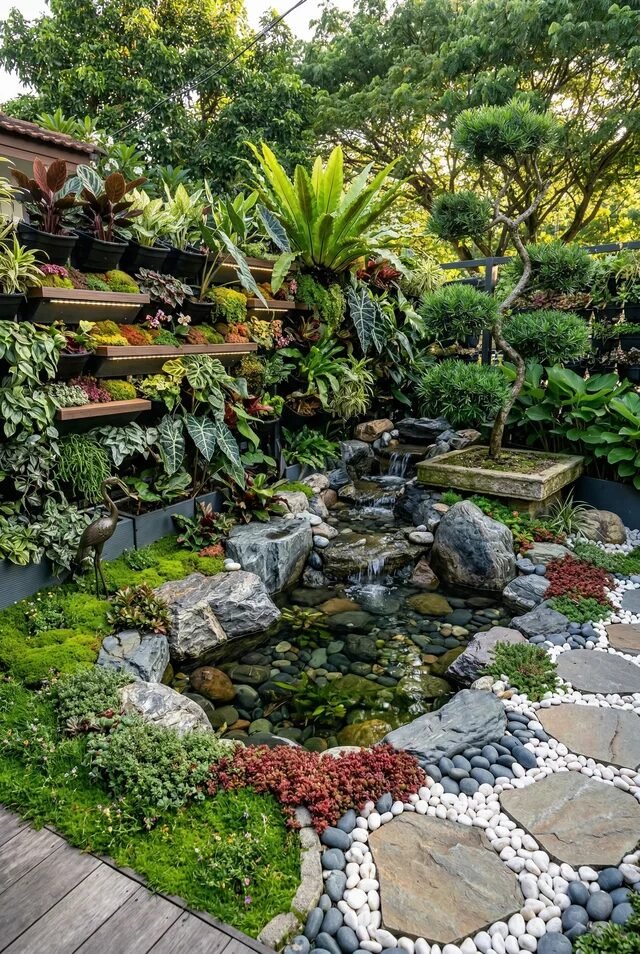
Small space? No problem. This setup proves we can go big on impact without needing a huge yard. The vertical plant wall is the hero here. When horizontal space is limited, going vertical adds depth, texture, and that “wow” factor instantly.
The pond itself is relatively simple, which is actually smart. It balances out the complexity of the wall. Too many focal points = visual chaos. Good design knows when to be extra and when to chill, and this nails that balance perfectly.
If we’re recreating this, invest in a sturdy vertical system (trust, sagging planters are not the vibe). Mix trailing and upright plants for dimension. Keep your pond edges clean with contrasting stones for definition. And pro tip: a small waterfall feature adds sound, making the space feel way bigger than it actually is.
A Well-Designed Pond Quietly Steals The Show
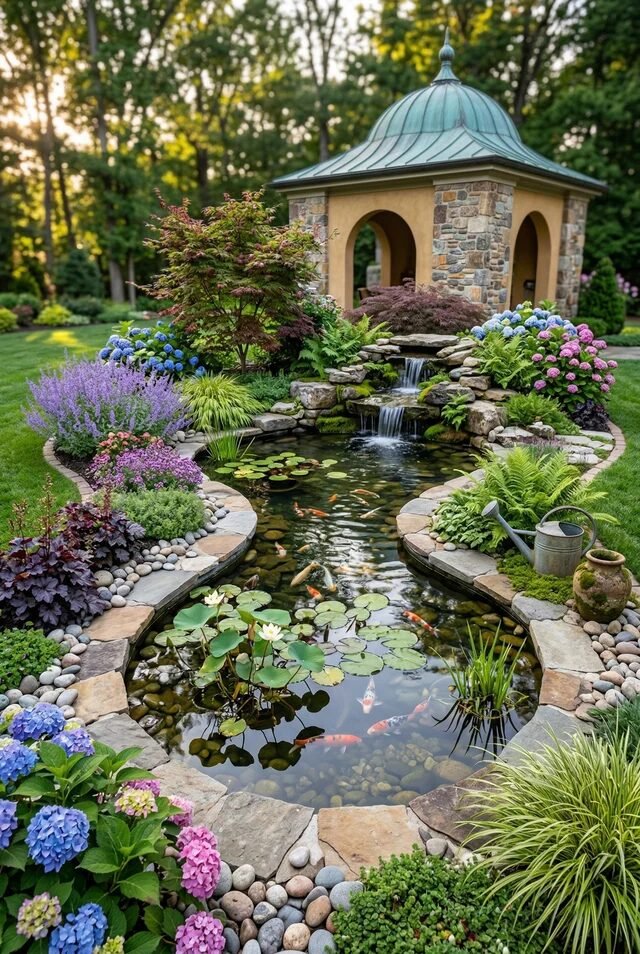
Here’s the thing—great pond landscaping doesn’t scream for attention, it pulls you in. It’s subtle, layered, and a little addictive. The reason these designs work is because they balance contrast and cohesion at the same time. Hardscape meets soft planting, still water meets movement, structure meets organic chaos—and somehow it all clicks.
If we take anything from these ideas, it’s this: don’t rush the composition. Start with the shape and flow, then build outward with intention. Repetition in materials and plants keeps everything grounded, while focal points like waterfalls or bridges add personality. Every element should either guide the eye, anchor the space, or soften it—no freeloaders allowed.
And honestly? The best ponds feel lived-in, not overdesigned. Let plants grow in, let textures age a little. Because when it’s done right, your pond doesn’t just sit in your yard—it becomes the reason you actually go outside.