
Black Dining Room Rules Nobody Mentions Before You Pick Up the Paintbrush
Painting a dining room black sounds like a dare, and honestly, that is half the appeal. People picture a cave with a table in it. What actually happens is closer to the opposite: the walls fall back, and everything you put in front of them starts to glow.
The rooms below prove it in very different ways. Some lean on brass and glass, some on rattan and oak, and one barely bothers with black paint at all. What they share is a handful of decisions about light, texture, and contrast that any dining space can borrow.
So think of this as a walkthrough of how dark rooms get built, not a shopping list. We will point out what makes each one work, where people tend to slip, and what you can try this weekend without repainting the whole house.
Rattan Warmth Against Matte Black Walls
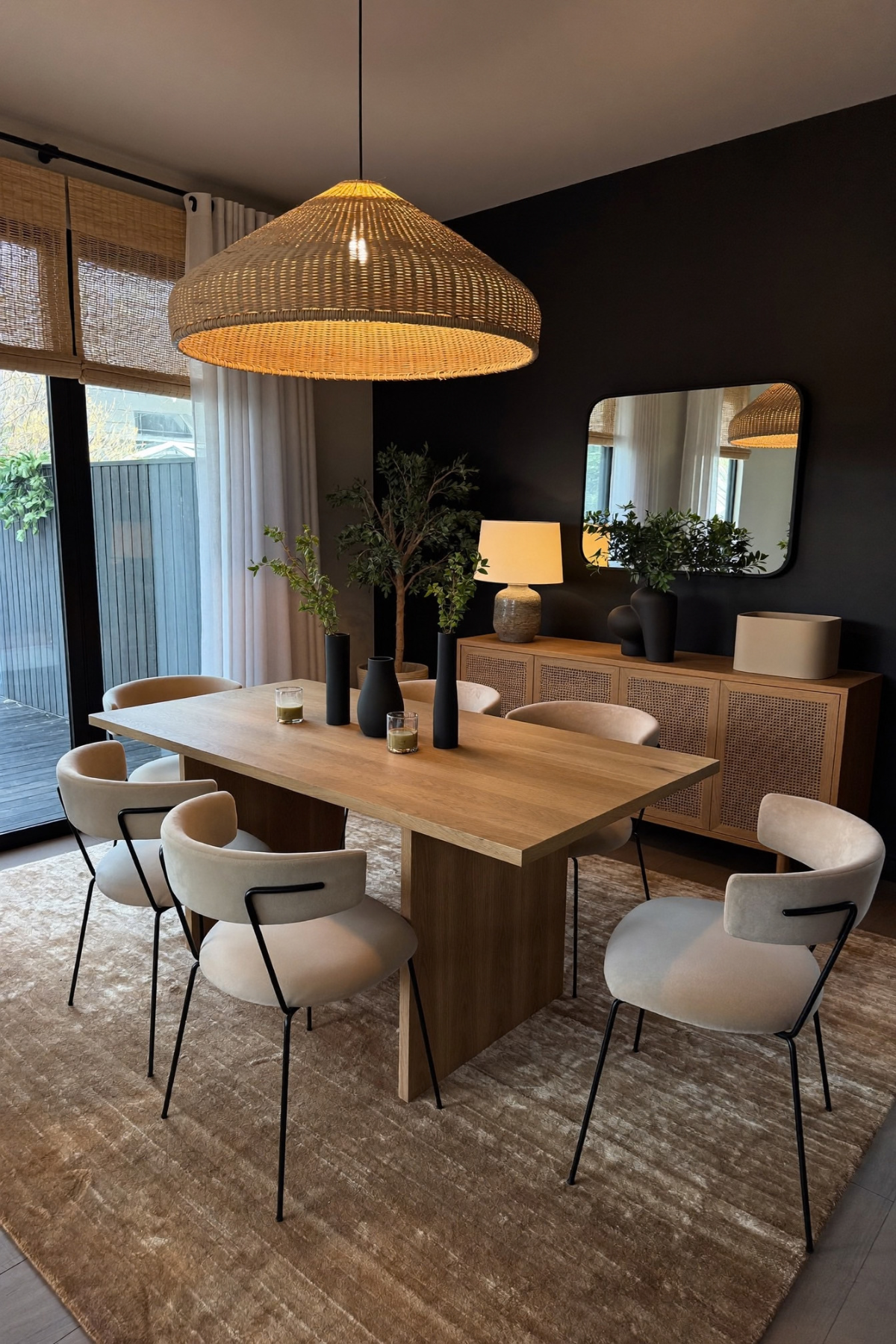
Start with the pendant, because it does the heavy lifting here. An oversized woven shade over the table throws amber light up and out, and against a matte charcoal wall that glow looks almost like a lantern. Pick a shade wider than feels sensible. In a dark room, small fixtures simply disappear.
Then repeat the weave somewhere else so it reads as a decision. Here it returns in the cane sideboard doors and the bamboo blinds, which ties everything together without matching a single piece. Natural texture is what keeps a dark wall from feeling flat, so aim for at least three woven or grainy surfaces at different heights.
Chairs in soft cream velvet stop the palette from turning heavy, and slim black metal legs echo the mirror frame. Add two or three matte black vases holding leafy branches and you have a centerpiece that costs almost nothing. Put the pendant on a dimmer and the room is basically done.
Gold Sunburst Mirrors Steal the Wall
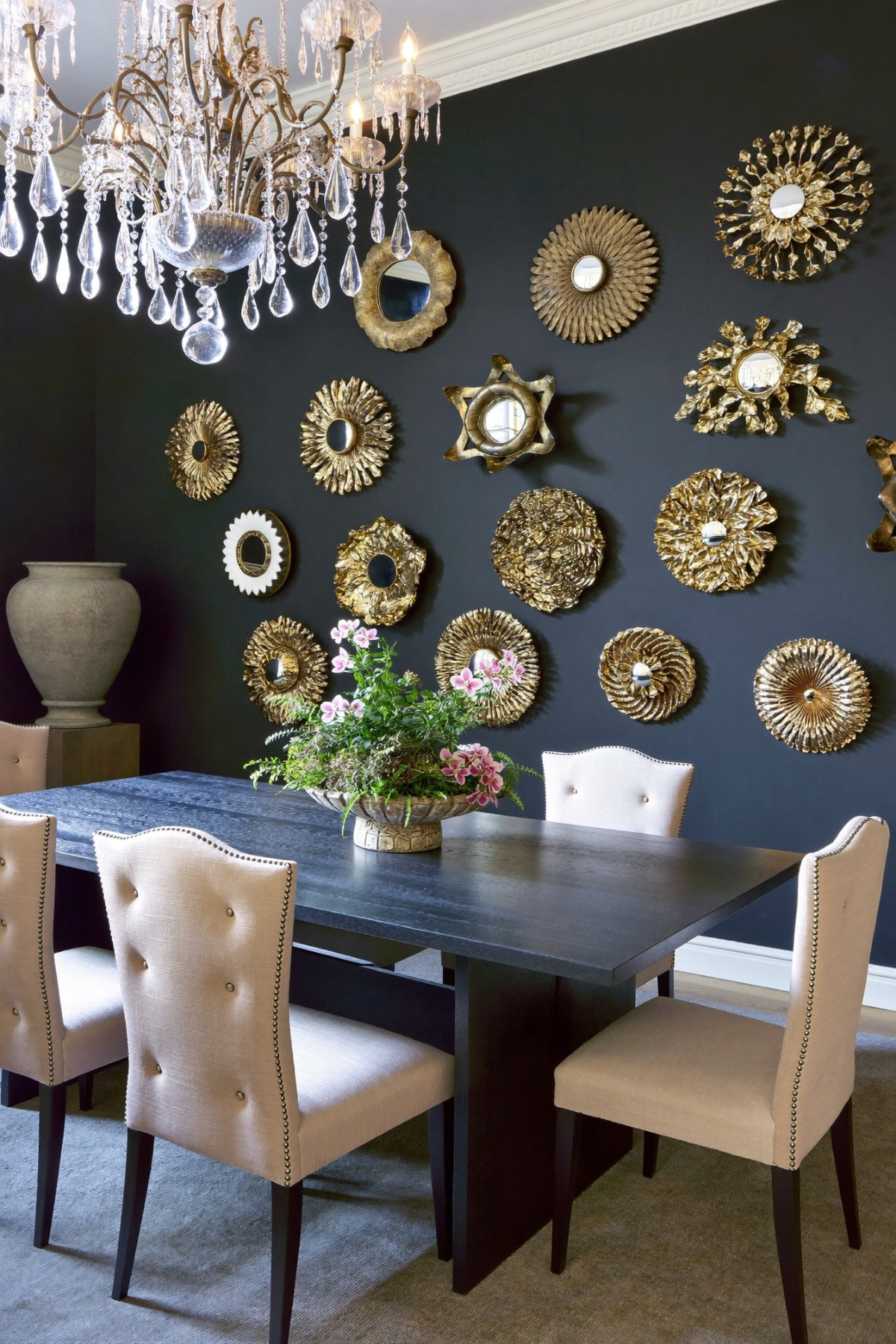
Here is a wall that refuses to be quiet. Nearly twenty small convex mirrors in hammered gold frames float across black paint, each a slightly different size and shape, and none of them lined up in a grid. That looseness works because every frame shares one metal finish.
The rules for a cluster are simple. Keep the gaps between pieces roughly even, let a few sit closer together, and mix diameters so the eye keeps moving. Repeating one metal tone across mismatched shapes is what turns a pile of finds into a composition. Flea markets are your friend here, and a can of gold spray paint can unify pieces that almost match.
Below it all, tufted linen chairs with nailhead trim and a crystal chandelier bring old-world polish, while a dark wood table keeps things grounded. A loose bowl of pink geraniums and ferns softens the metal. Hang the mirrors at seated eye level, since that is where your guests will be looking.
Lit Shelving That Glows After Sunset
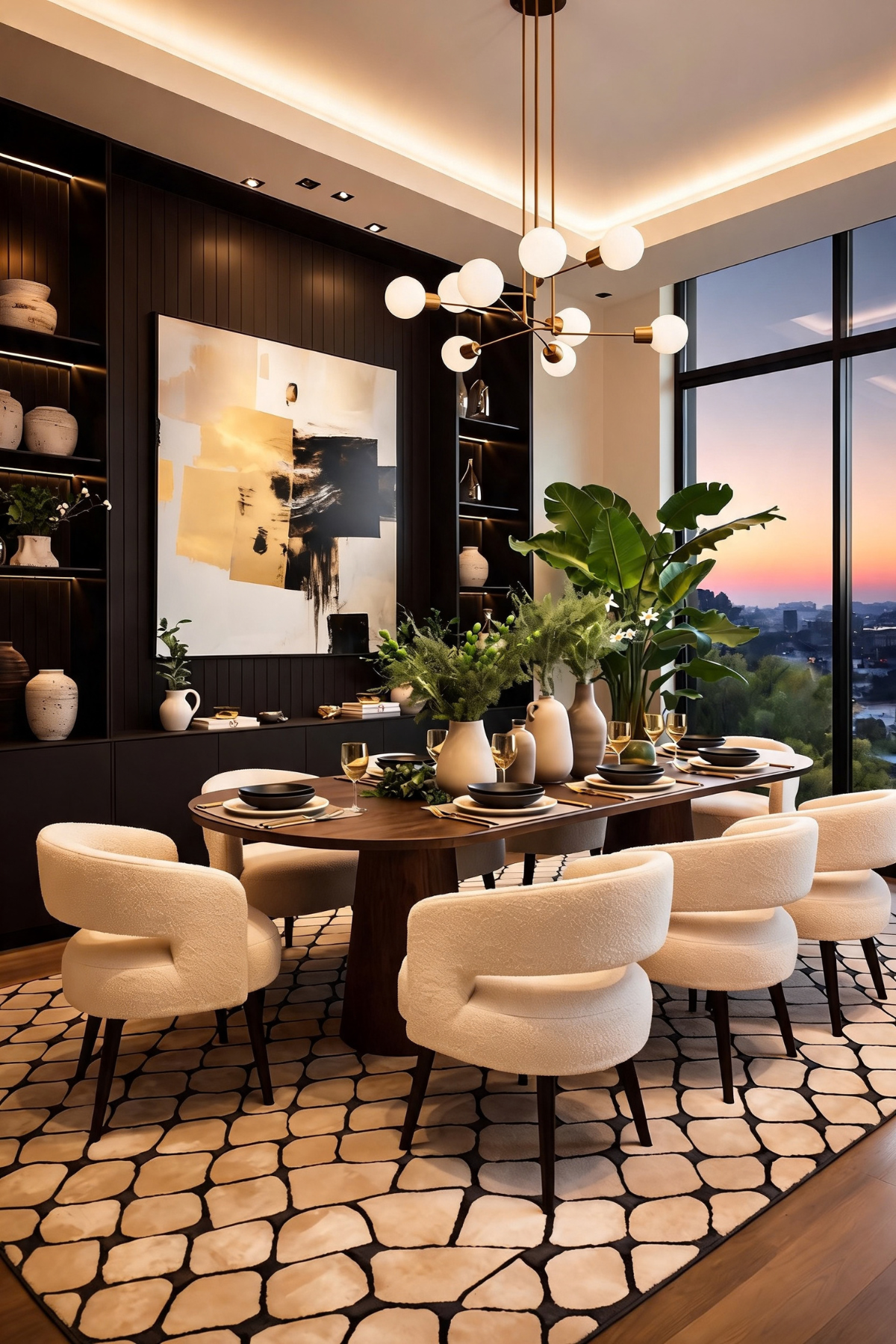
Layered lighting is the quiet trick behind this room. Warm strips run under every shelf, a hidden cove glows around the ceiling edge, and a globe chandelier adds a third source at table height. Because no single light does everything, the dark slatted cabinetry looks rich instead of heavy.
Fill shelves the way this room does: chalky ceramic pots, a few books lying flat, one small plant, and plenty of empty space. Leave roughly a third of every shelf bare so the lighting has something to fall on. Off-white and stone tones pop against dark wood far better than colorful objects ever will.
Boucle chairs in cream add a soft, rounded counterpoint to all those straight lines, and the pebble pattern rug gives the floor its own rhythm. You do not need a custom build to get close. Plug-in LED strips under floating shelves are cheap, and one big abstract canvas fills the gap between them nicely.
Go Fully Dark, Ceiling Included
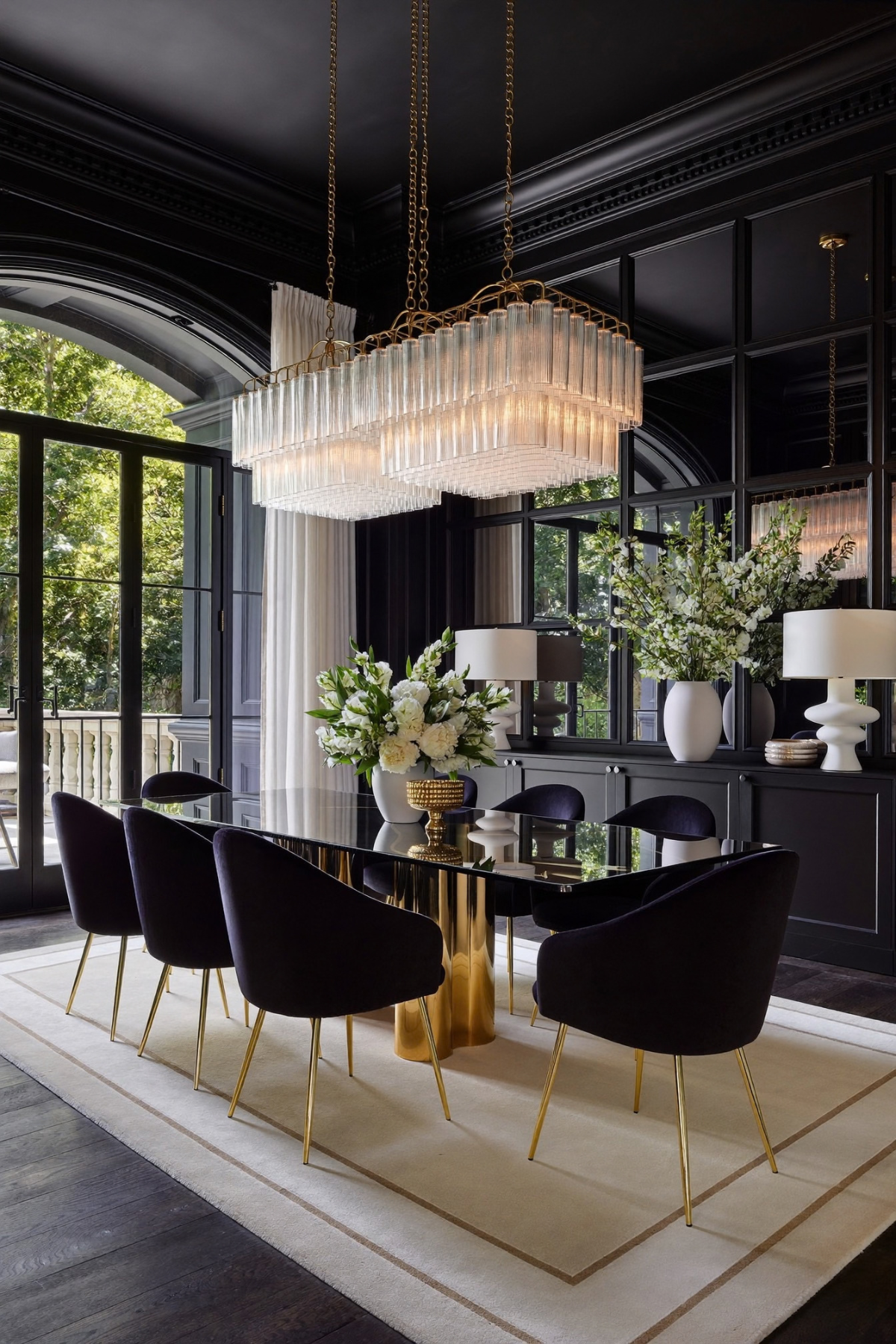
Black walls under a white ceiling make a room feel like a box with a lid on it. This dining room goes all the way: ceiling, crown molding, arched door frames, and paneled cabinets share one inky shade. The result reads as a single continuous volume instead of a set of separate surfaces.
Contrast then arrives from other places. A mirror-topped table on a brass base, gold chair legs, a long ribbed glass chandelier, and a cream rug with a slim border all catch light. Choose one shade of black for everything architectural, then let metals and pale textiles handle the sparkle.
Mirrored panels on the far wall double the garden view coming through the French doors, and that matters more than it sounds. A dark room needs somewhere for the eye to escape. Sheer white drapes help, and big vases of white blooms finish the job. Semi-gloss on the trim gives a subtle sheen.
Moody Florals on a Round Table
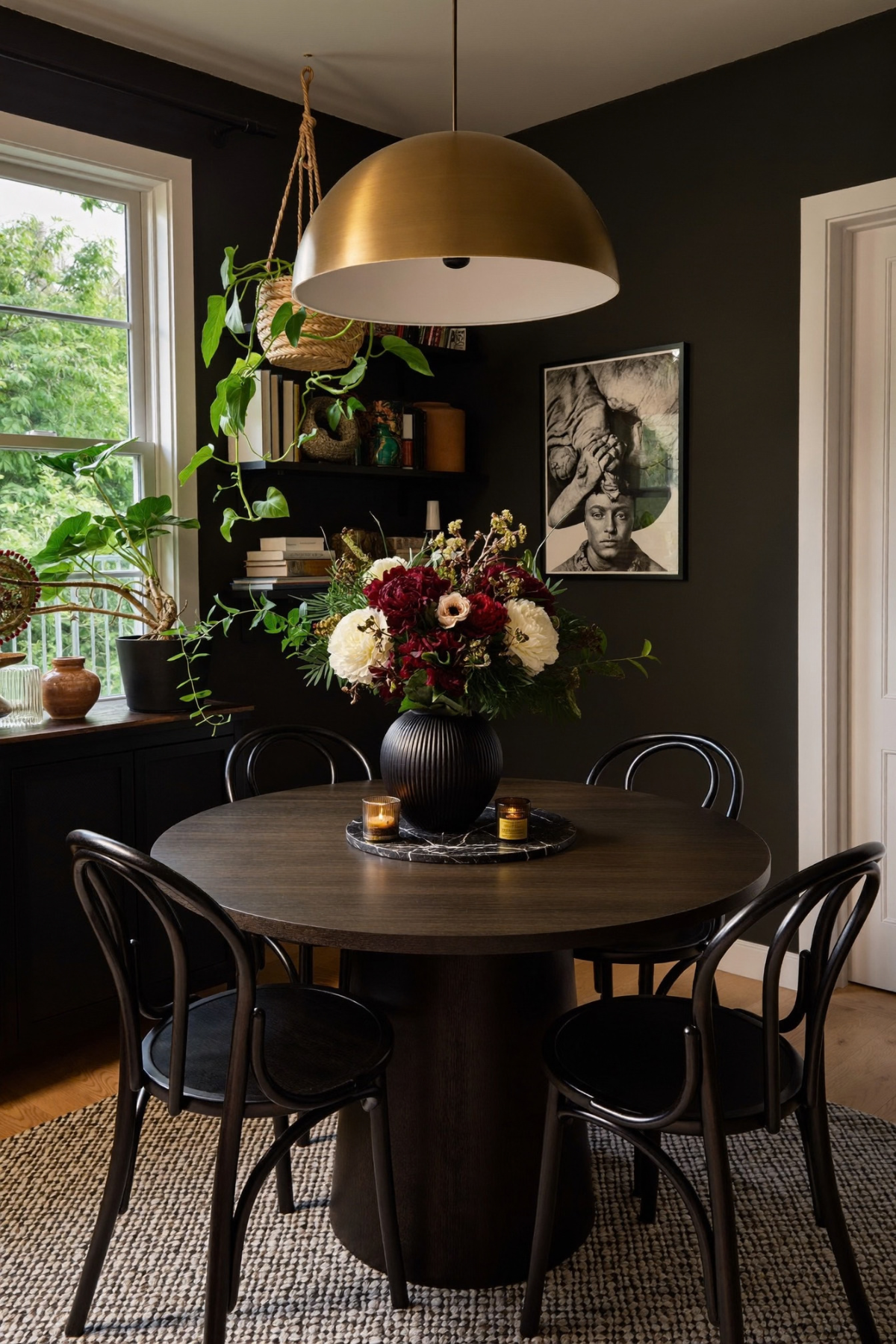
Look at the burgundy peonies first. Deep red, ivory, and a touch of blush against a blackened wall is the kind of contrast painters have loved for centuries, and it costs one grocery store bouquet. Dark blooms in a ribbed black vase anchor the palette while the pale ones pull it back out.
A round pedestal table changes how a small dining nook feels. There are no corners to bump, conversation flows easier, and the base hides in shadow so the top seems to float. Pair it with bentwood chairs, whose thin curves keep a black scheme from feeling bulky. Slender silhouettes are how dark furniture fits into a tight space.
A brass dome pendant supplies the warm highlight, a woven basket planter softens the window corner, and a jute rug grounds the whole set. Slide a marble tray under the vase, add a couple of candles, and the table looks styled even before anyone sits down to eat.
Dark Wood Bookcases Do the Work
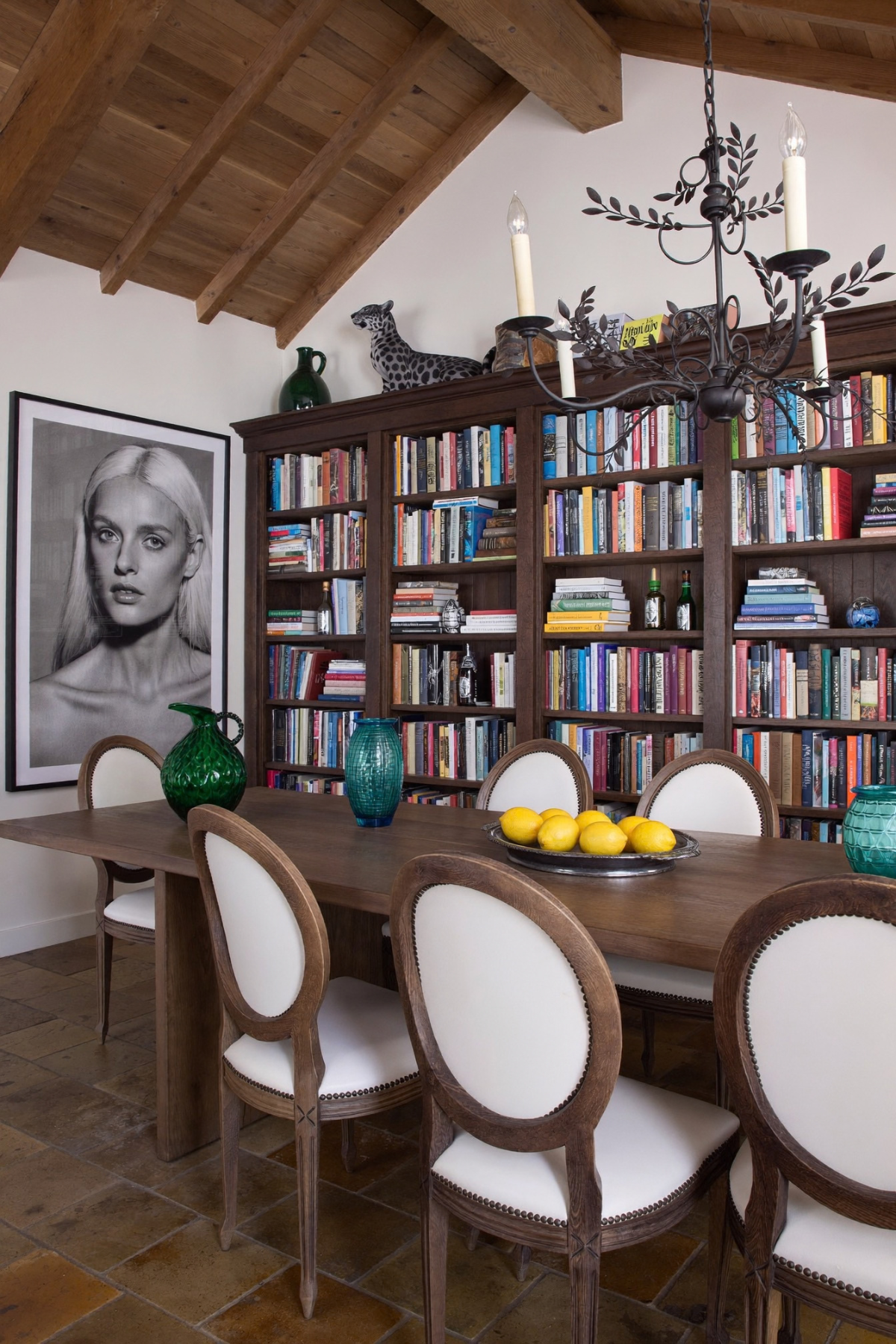
This one skips black paint entirely and still delivers the drama. A huge walnut toned bookcase fills one whole wall, so the darkest thing in the room is also the most interesting. Rustic ceiling beams above and a black iron chandelier with tiny leaf details carry that depth upward.
Books are underrated decor. Notice how the spines create bands of color while a few stacks lie sideways to break the rhythm. Mix vertical rows with horizontal stacks so shelves look lived in rather than arranged. Emerald and teal glass jugs on the table pick up the blues and greens from the spines, which is how you make color feel planned.
Round backed chairs in white leather with nailhead trim stand out crisply against all that wood, and a giant black and white portrait on the plaster wall gives the eye a calmer place to rest. A bowl of lemons adds one hit of yellow. Cheap, cheerful, and it works.
Shiplap, Fireplace, and a Rough Table
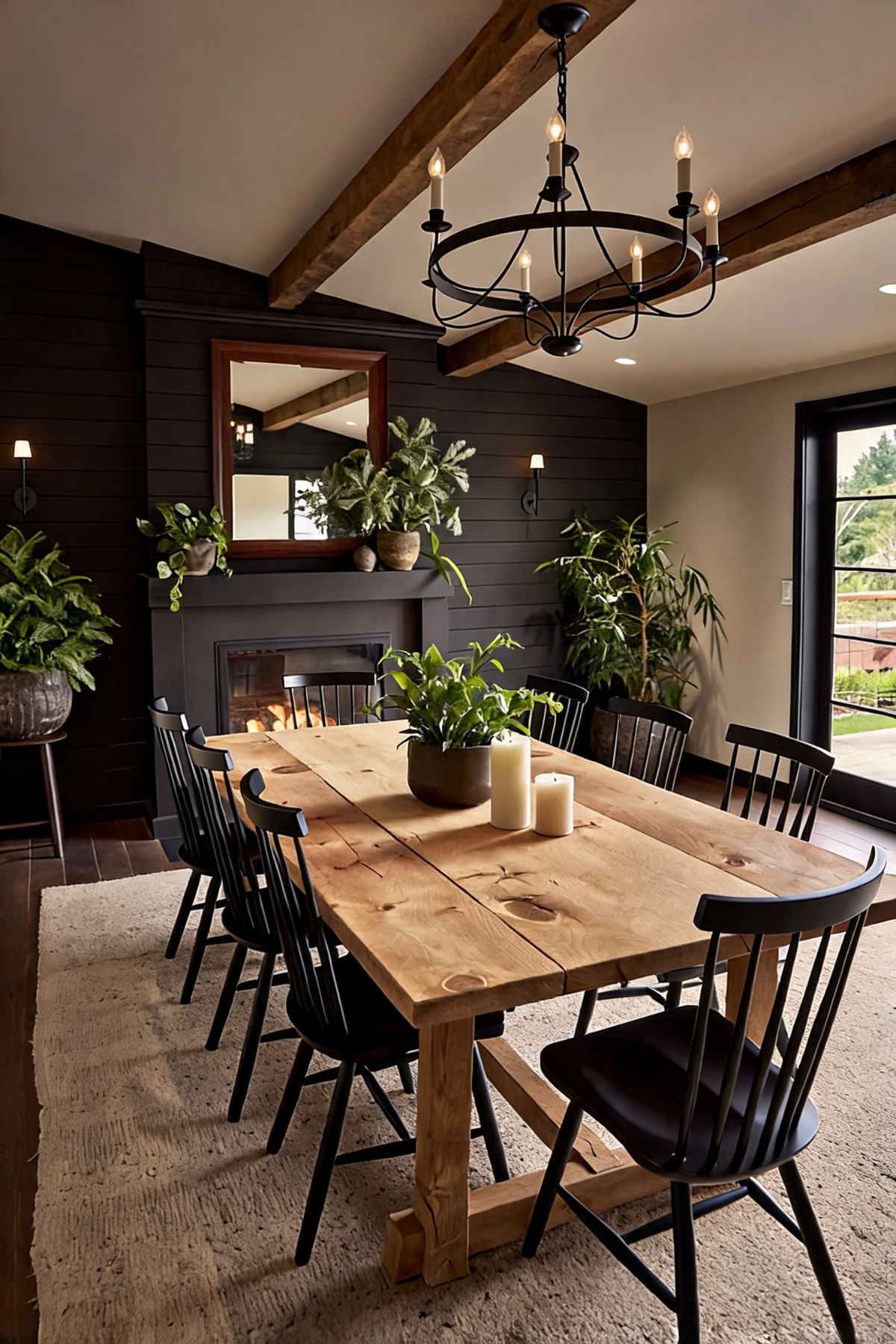
If you already have horizontal shiplap, paint it black before you think about anything else. The shadow lines between boards give a dark wall built-in texture, and a matte finish hides the small flaws a glossy coat would highlight. This room adds a charcoal fireplace surround, so the whole end reads as one big feature.
The table is the counterweight. A rough oak slab with visible knots and cracks brings honey tones that black walls make look even warmer. Let one large wooden piece stay raw and imperfect, since dark rooms need something that feels alive. Black spindle chairs repeat the wall color and keep the scene calm.
Ferns and leafy plants in heavy pots fill the corners, and a wrought iron chandelier with candle bulbs ties in with the beams overhead. A mirror above the mantel bounces daylight back across the room. Chunky cream candles keep the table relaxed, and a shaggy neutral rug gives boots a soft landing.
Paneled Walls That Whisper, Not Shout
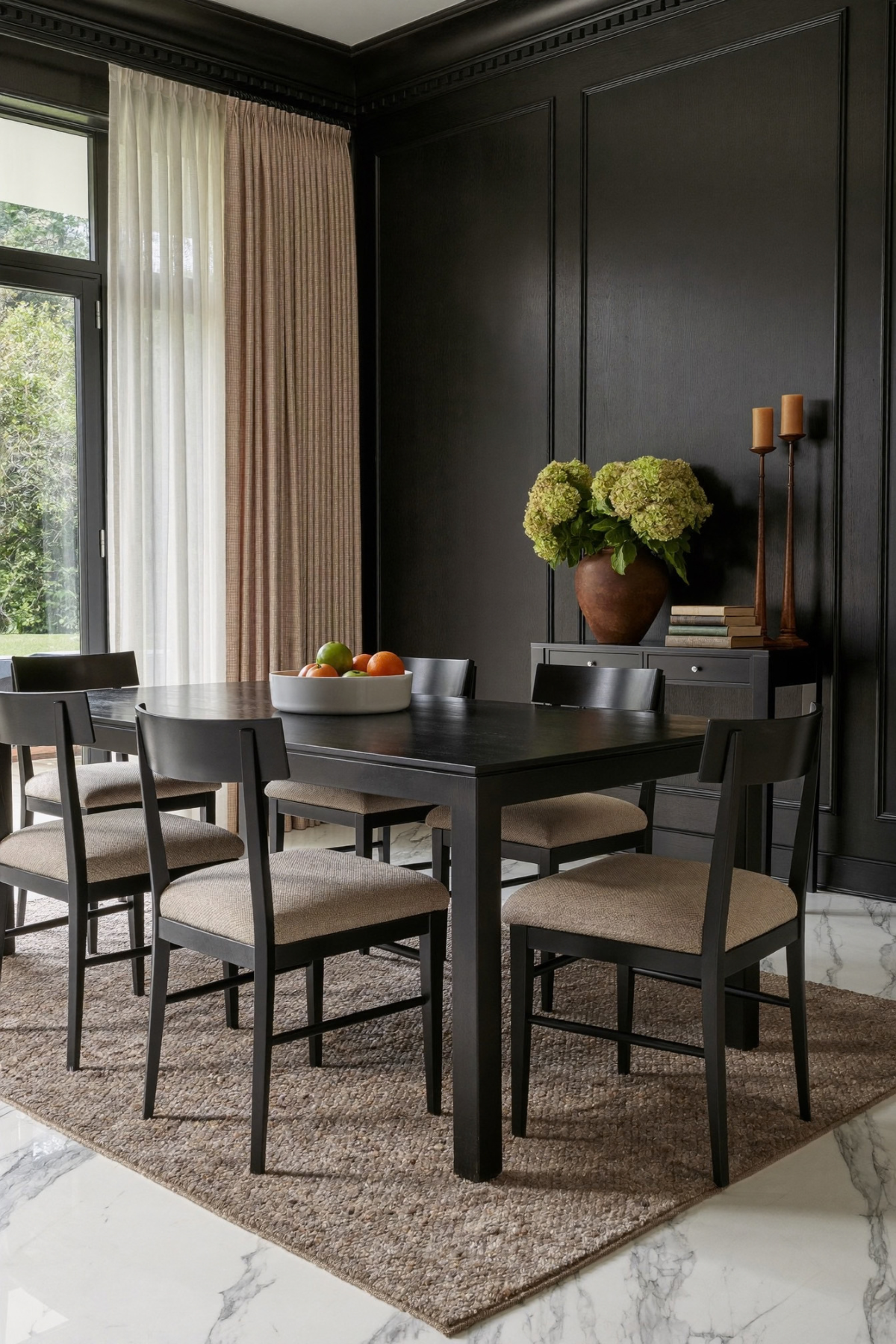
Tone on tone is the quiet cousin of the black room. Walls, table, chairs, and console are all black or close to it, yet each has a different grain and finish, so they separate just enough to read as individual pieces. Raised molding panels add shadow lines without a single extra color.
Warmth comes from a few well placed extras: a terracotta urn, wooden candlesticks in burnt orange, and an armful of dried green hydrangeas. Choose one earthy accent color and repeat it two or three times, never more. The curtains do a similar job, pairing a linen sheer with a rusty striped panel beside it.
Underfoot, a chunky jute rug sits on white marble, which keeps the floor bright and stops the room from swallowing you whole. Woven seats make the chairs friendlier than a solid black set would be. A bowl of citrus is all the tablescape this room needs, and a stack of old books adds the rest.
Black Marble and Brass Glam
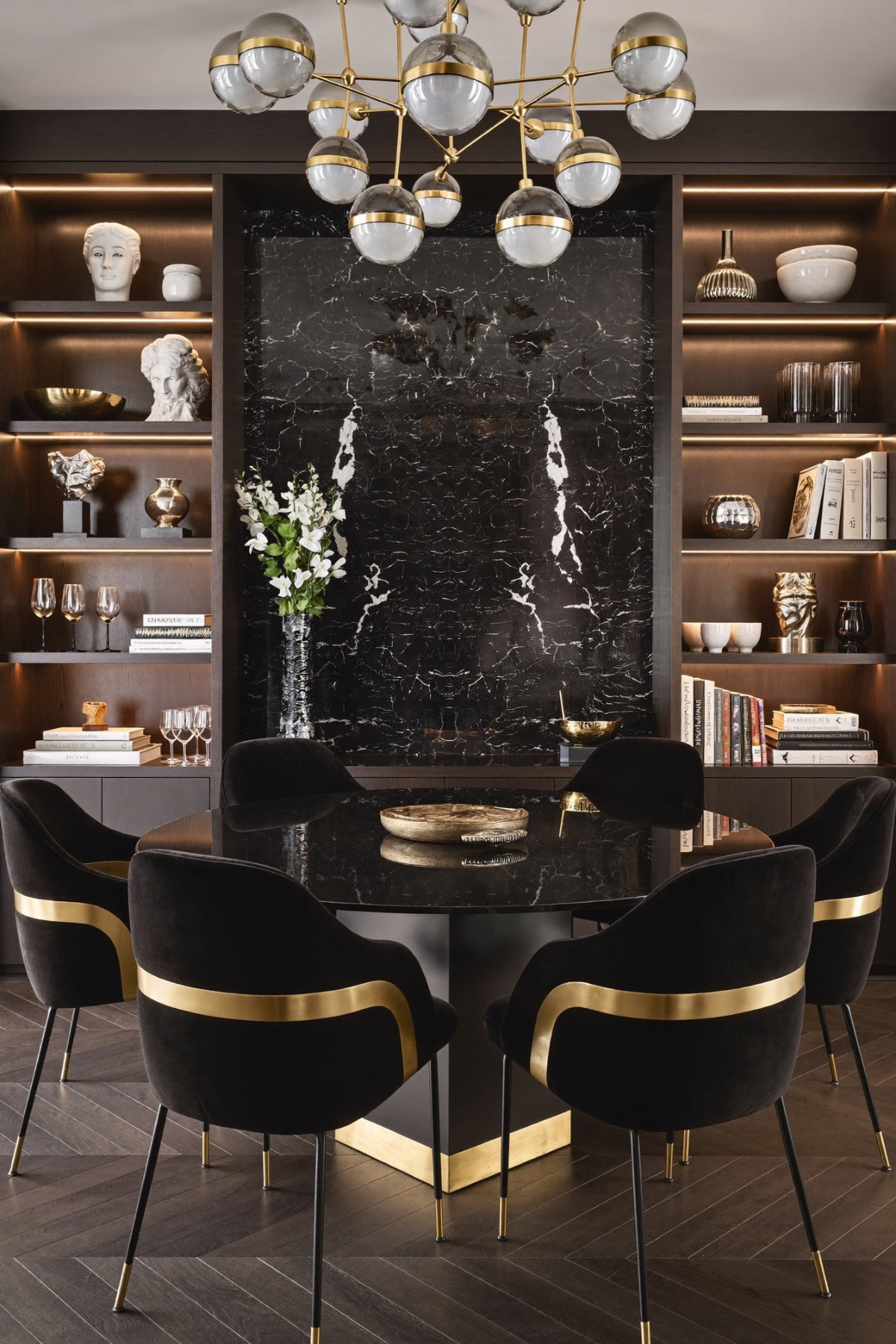
Borrow the gold stripe if nothing else. Those thin brass bands wrapped around black velvet chair backs are a small detail, but they link the chairs to the chandelier, the shelf accents, and the gilded base under the table. Metallic touches work best when they repeat like a drumbeat.
A big slab of veined black marble is the showpiece, framed by walnut shelves lit from beneath. If real stone is out of budget, peel and stick marble film on a recessed panel gets you a similar look. Keep shelf styling sparse and sculptural: a plaster bust, a brass bowl, a few art books, and some stemware.
Globe chandeliers with gold collars add sparkle overhead, while a herringbone floor in dark wood keeps pattern interest low and steady. White orchids in a textured vase give a fresh, living contrast. They are the only bright thing in the whole composition, which is exactly why they stand out.
Mix Patterns Against One Black Wall
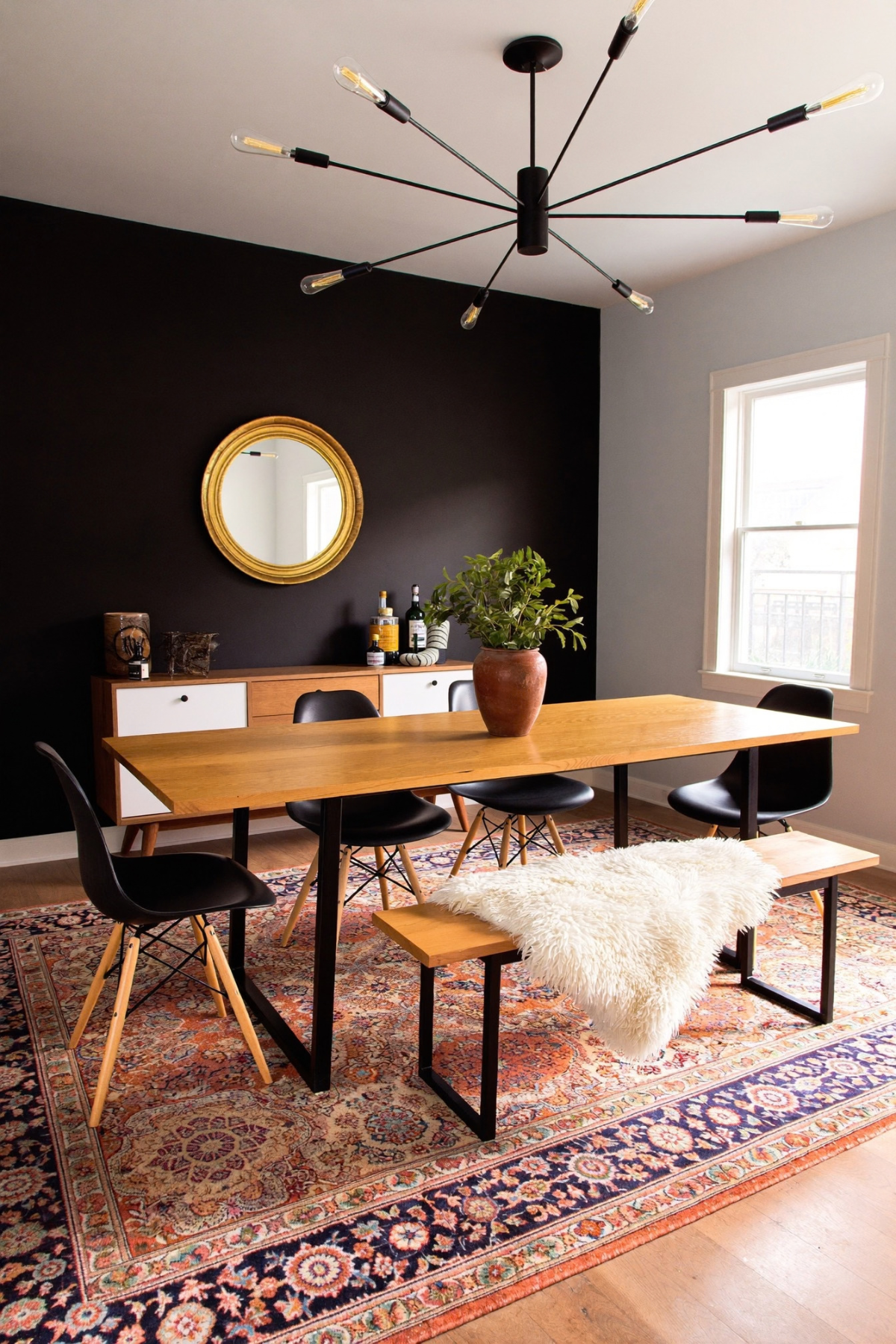
Not ready to commit a whole room? This one proves a single black wall can carry a dining space. Choose the wall behind the sideboard, since that is what everyone sees while seated, and leave the rest soft gray. It is a cheap experiment and easy to repaint if you hate it.
The Persian rug does the loud work, with rust, navy, and cream tangled together in a way that would fight a busy wall but behaves beautifully beside solid black. A patterned rug and a plain dark wall are best friends, as long as the rest of the furniture stays simple. Molded shell chairs and a slim oak table keep the mood light.
Over the sideboard, a gold circle mirror hangs like a spotlight, a terracotta vase holds green branches, and a sheepskin tossed over the bench adds a soft surprise. Above it all, an oversized starburst fixture with vintage filament bulbs pulls the eye upward. A few bottles on the sideboard finish the picture.
Dark Backdrops Make Every Season Look Better
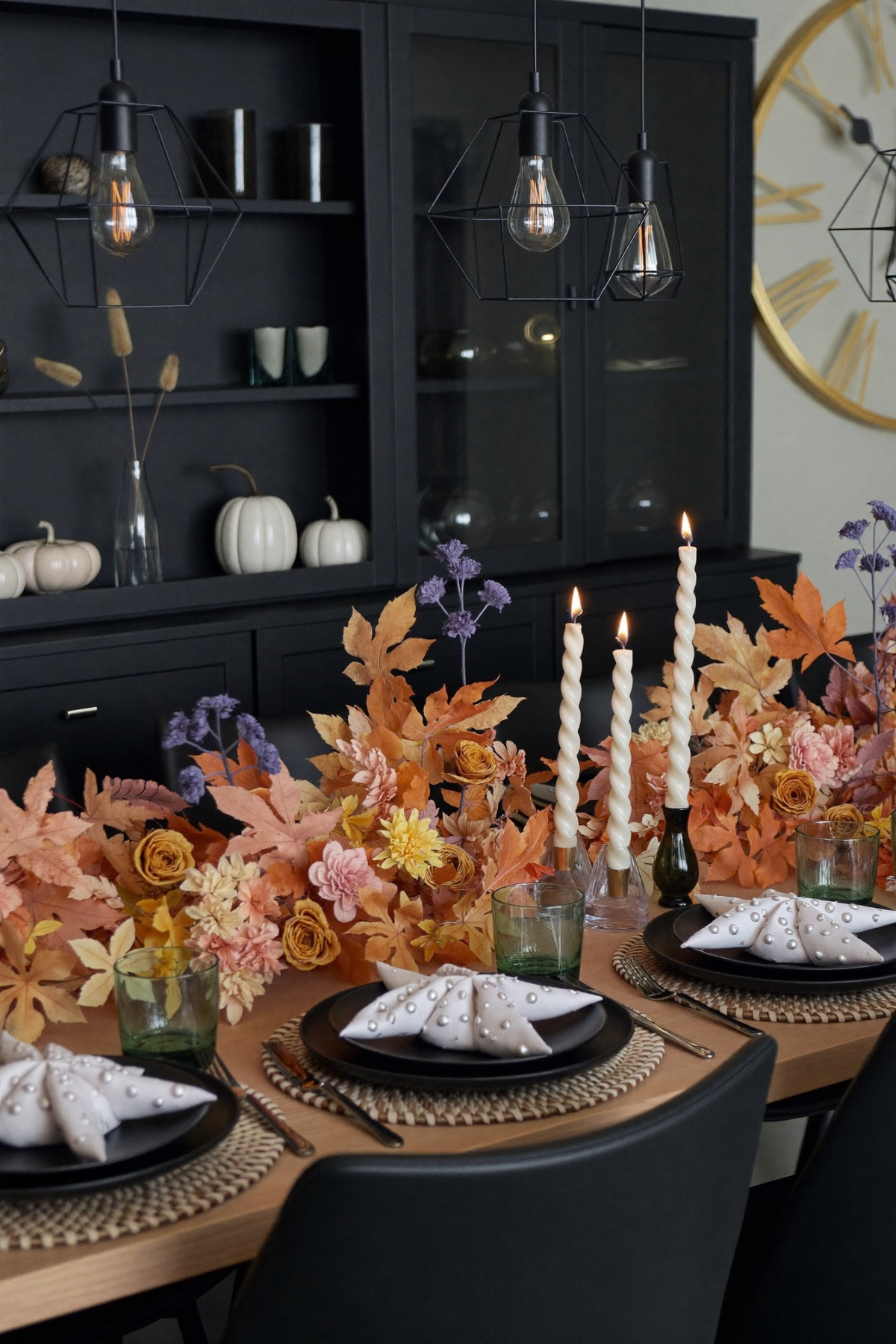
Seasons change, and a dark dining room handles it better than a pale one. Take a table full of amber leaves, blush blooms, and twisted cream candles. On a white wall it would be pretty, but against a black hutch it looks almost lit from within.
That is the real gift of a dark space. It gives you a permanent stage, and you swap the props whenever you feel like it. Pumpkins in September, pine in December, tulips in April. Cage pendants and a big gold clock add just enough edge to keep the scene from turning too sweet.
So start small if you need to. Paint one wall, buy one warm lamp, and set the table with something that makes you smile. Adjust from there. Rooms like these get built over time, and the first coat is honestly the scariest part.