
What Actually Makes a Houseplant Corner Feel Personal Instead of Staged
We’re going to be honest: a room without a plant in it always feels like it’s missing a sentence. Not because plants are trendy, but because they change how a space behaves. Light bounces differently, sound gets softer, and the air feels less stagnant, which is partly science and partly vibes.
What we love most about plant-heavy interiors is how forgiving they are. You don’t need a design degree or a big budget, just a windowsill, a few pots that don’t fight each other, and the willingness to let a corner look a little wild. Some of the best rooms we’ve seen started with one sad pothos.
So we pulled together a handful of doable directions, ranging from moody accent walls to sunlit shelving to that one corner nobody’s styled yet. Each one is built around a principle you can actually apply, not just admire. Let’s get your space breathing easier.
Let Dark Walls Make Plants Pop
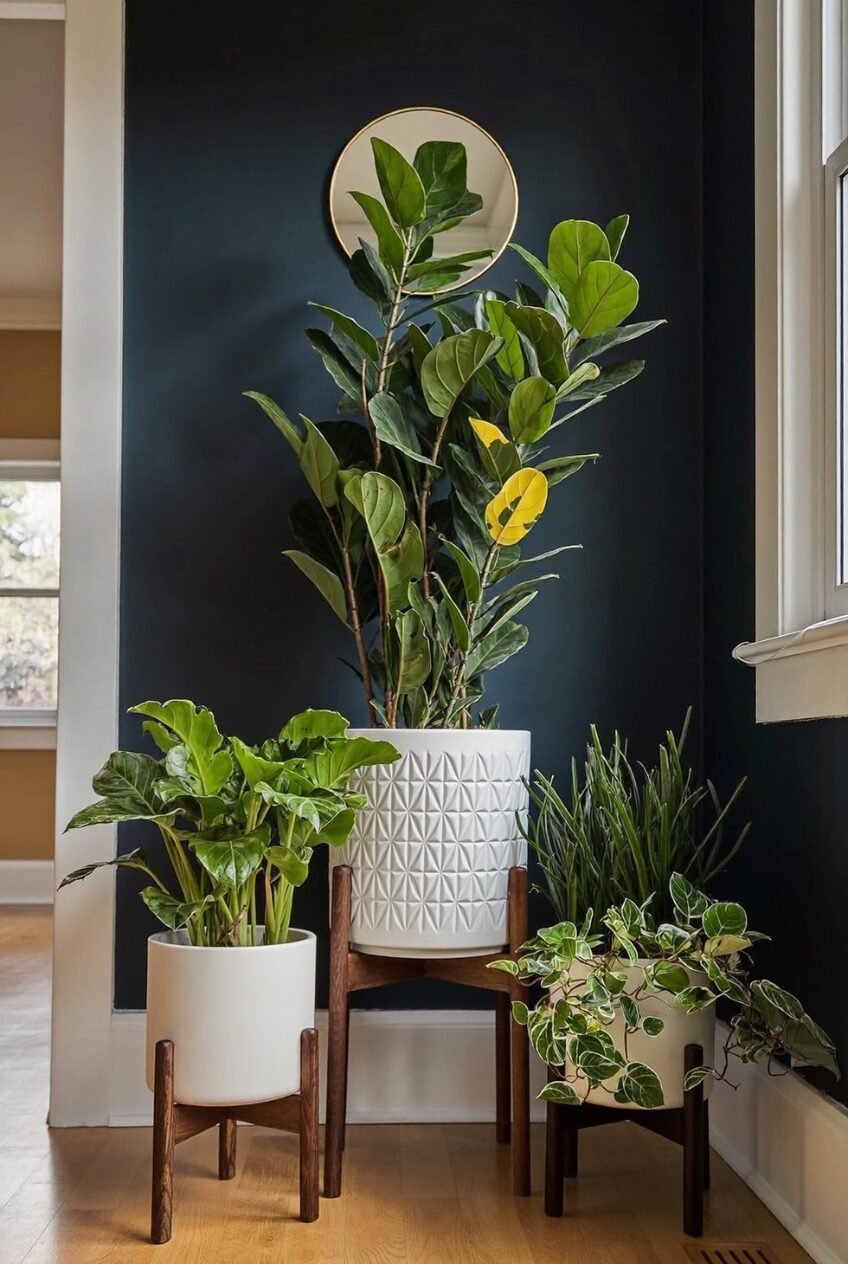
Dark paint gets a bad reputation for making rooms feel small, but put a leafy plant in front of it and watch that theory fall apart. The deep navy here works like a stage backdrop, every leaf edge reads with way more contrast than it would against white. A fiddle leaf fig, with its glossy leaves, was basically made for this kind of moment.
The mid-century wooden plant stands are doing quiet but important work too. Lifting plants off the floor on tapered wood legs adds visual rhythm, so instead of one green blob you get a staggered lineup. The round brass mirror above ties the grouping together by reflecting light into a wall that would otherwise swallow it.
If you want this look, start with one dark accent wall, not the whole room, and pick plants with structural leaf shapes rather than wispy ones. Light-colored planters are non-negotiable here since they’re what creates that pop against the dark backdrop. A small round mirror hung above the tallest plant finishes things off.
Fairy Lights Make Plants Glow
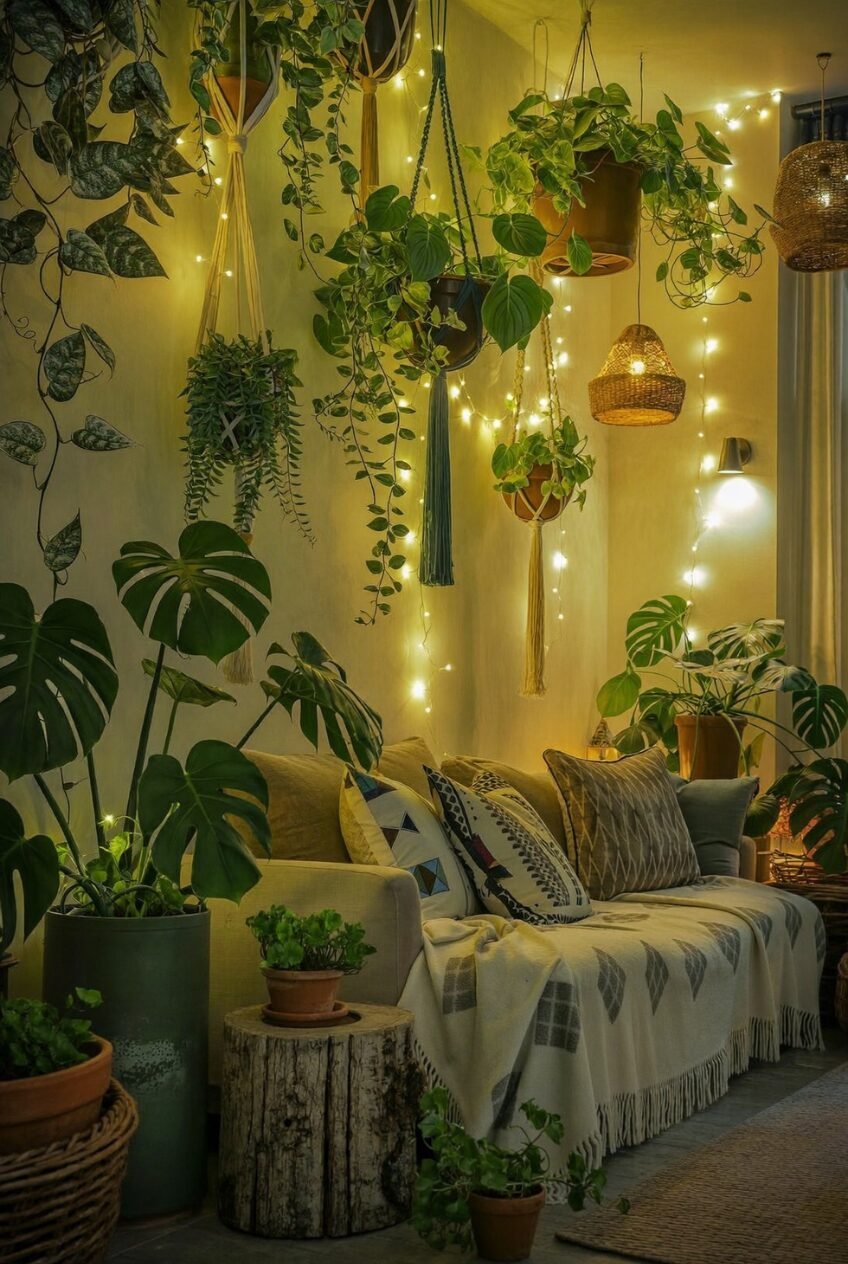
Picture coming home after dark and instead of flipping on a harsh overhead light, you’re sitting under a canopy of trailing pothos lit up in warm fairy light glow. That’s the entire appeal here, and it’s an underrated way to make a living room feel like a hideout rather than a place you exist in between errands.
Macrame hangers at staggered heights are what make this work visually. Varying the drop length of each hanging planter keeps the eye moving instead of landing on one flat row of pots, and the fairy lights woven between them catch on leaf edges in a way regular lamps can’t replicate. The patterned throw pillows and chunky knit blanket add warmth so the corner doesn’t feel like a greenhouse.
This is one of the more budget-friendly looks to recreate. Battery-powered string lights, a handful of macrame hangers, and pothos or philodendron cuttings will get you most of the way there. Hang everything at uneven heights, dim the main lights, and let the green do the rest of the talking.
Windowsills Are Already Display Shelves
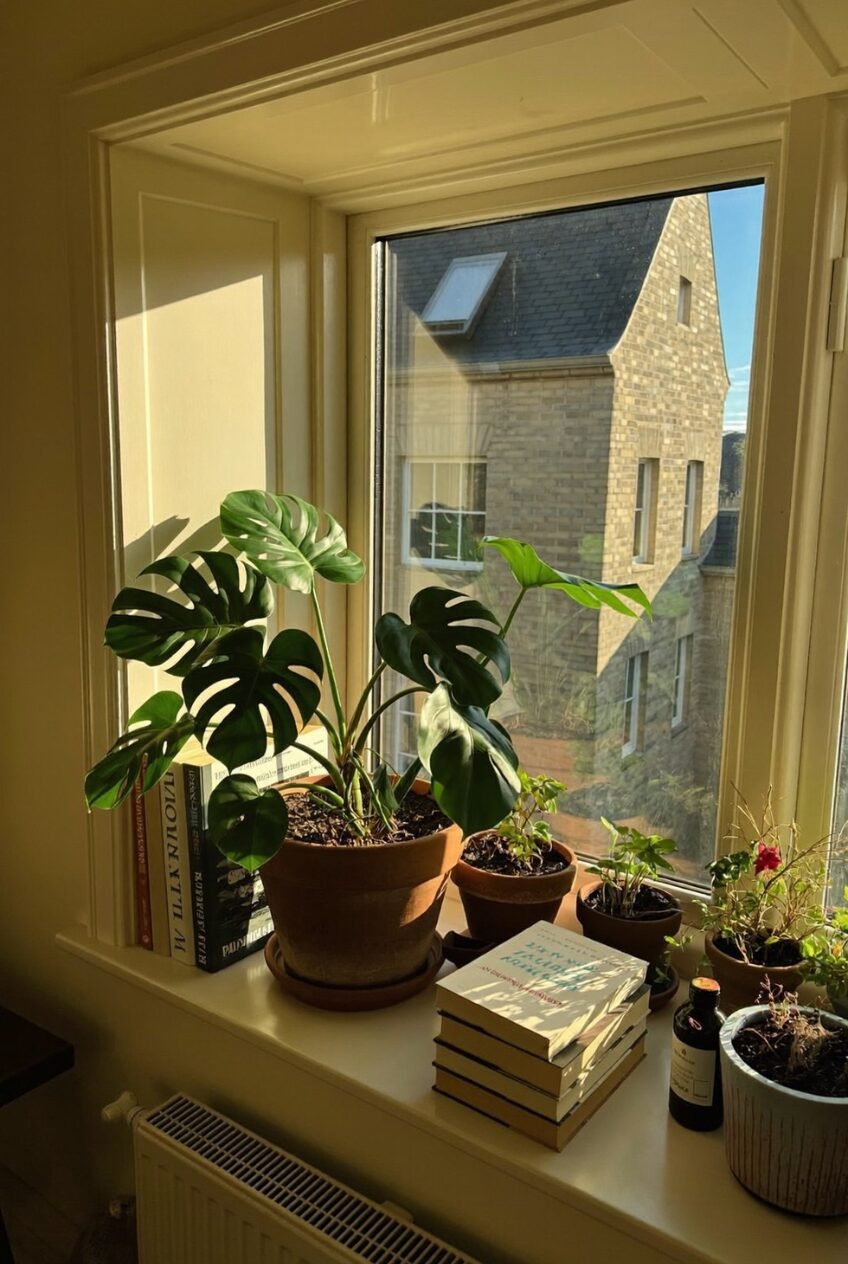
There’s a version of this that happens by accident in basically every plant-owning household: you put a monstera near the window because that’s where the light is, and somehow it turns into the best-looking corner in the room. That’s not luck, that’s just what direct sun does to leaf color and shadow play, and this windowsill is proof.
We’re drawn to how unfussy the styling is. A terracotta pot, a small stack of books, one slightly chaotic bottle of something on the side. Nothing here was arranged for a photo, and that’s exactly why it works. The afternoon light hitting the monstera leaves creates natural drama that no styling trick could fake.
To get this in your own home, find your sunniest windowsill (south or west-facing is ideal) and resist over-curating it. One statement plant like a monstera, a couple of smaller pots for texture, and a stack of whatever books you’re actually reading. Terracotta pots are doing a lot of heavy lifting here since they age beautifully and never compete with the plant for attention.
Hexagon Shelves Fix Small Plants
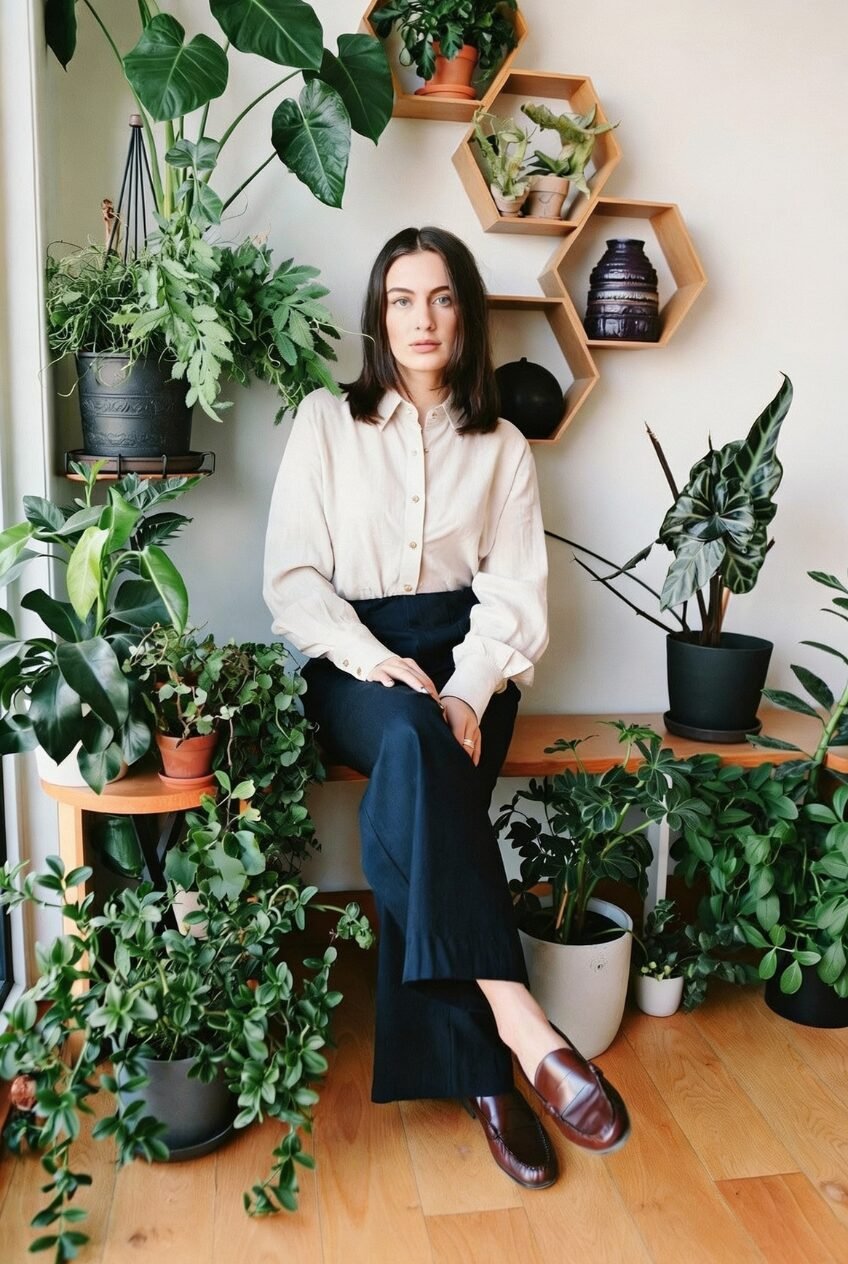
Small plants have a sizing problem. Put a tiny succulent on a big shelf and it disappears. Put it on the floor and it gets lost behind its bigger neighbors. The honeycomb-style hexagonal shelving here solves that by giving each small pot its own little frame, almost like a gallery wall but for plants instead of art.
What’s smart about the staggered hexagon layout is that it creates depth without needing floor space, which matters a lot if your room is already crowded with larger floor plants like the trailing pothos and schefflera surrounding the bench in this shot. Every plant, no matter how small, gets to be a focal point instead of filler.
If you’ve got a wall that’s doing nothing, hexagonal or honeycomb shelf sets are inexpensive and easy to install in a staggered pattern. Mix in a small ceramic vase or two between the pots so it doesn’t read as purely functional. Smaller leafy varieties like syngonium or peperomia work best here since they won’t outgrow their little frame too fast.
Built-In Alcoves Suit Trailing Vines
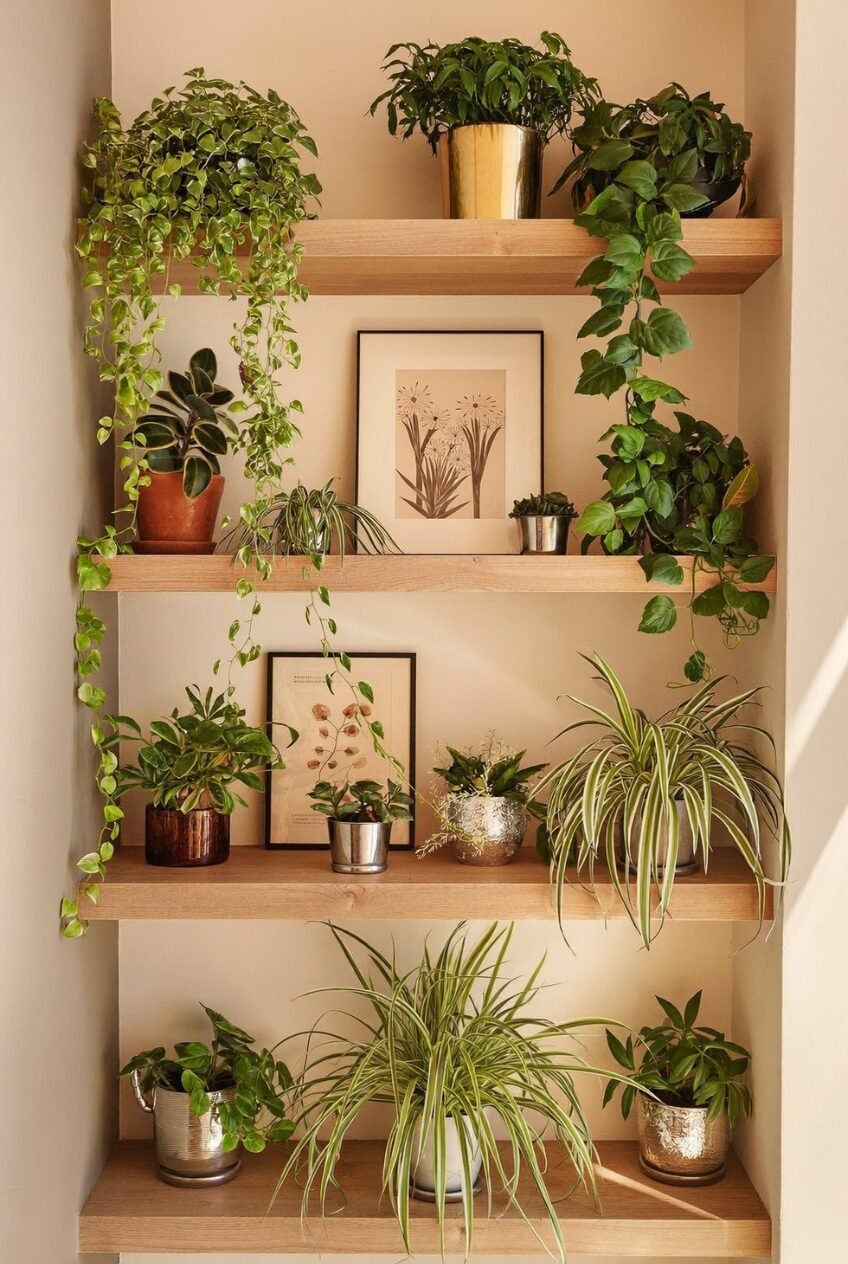
Not every house has a built-in shelving nook, but if yours does, this is basically the blueprint for using it right. The warm beige backdrop keeps the focus on the plants instead of fighting with them, and the four-shelf layout gives enough vertical room for trailing pothos to actually trail instead of getting trimmed back constantly.
We particularly like the mix of textures happening here: glossy ceramic pots next to rough terracotta, a framed botanical print breaking up the green, and spider plants on the lower shelf adding that spiky contrast against all the heart-shaped pothos leaves above. Layering different leaf shapes is what keeps a dense plant wall from looking flat.
Recreating this without a built-in nook just means picking a narrow stretch of wall and installing floating shelves at staggered heights, four if you can manage it. Put your trailing varieties on the top shelves so the vines have room to grow downward, and tuck one piece of framed art in the middle to give your eyes a place to rest.
A Sculptural Stand Replaces Furniture
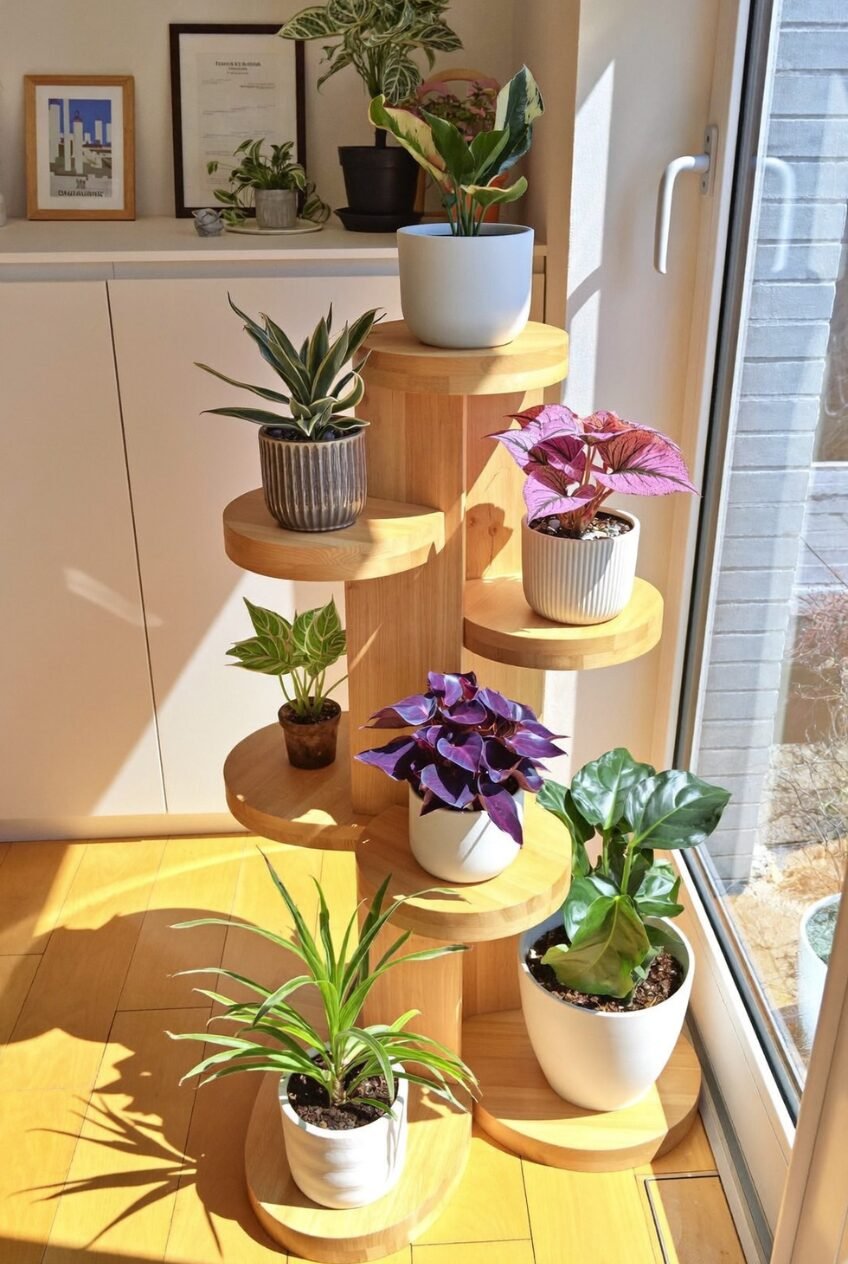
Plant stands usually get treated as an afterthought, something you grab off a clearance rack to lift one pot a few inches. This cantilevered wooden stand flips that completely. Its spiraling round platforms function as actual furniture, the kind of piece you’d notice even with the plants removed.
Because each tier sits at a slightly different height and angle, it naturally invites a mix of plant types rather than five of the same thing. Snake plant, caladium, syngonium, dracaena, they’re all here, each one getting its own little stage instead of blending into a uniform row. A stand with varied tier heights does the styling work for you.
This kind of piece is worth seeking out secondhand or from a furniture maker rather than mass-market retailers, since the design only works if the tiers are genuinely staggered. Once you have it, resist the urge to match your pots. The visual interest comes from variety, white ceramic next to a ribbed stone-look planter next to plain terracotta.
Ground Level Deserves Plants Too
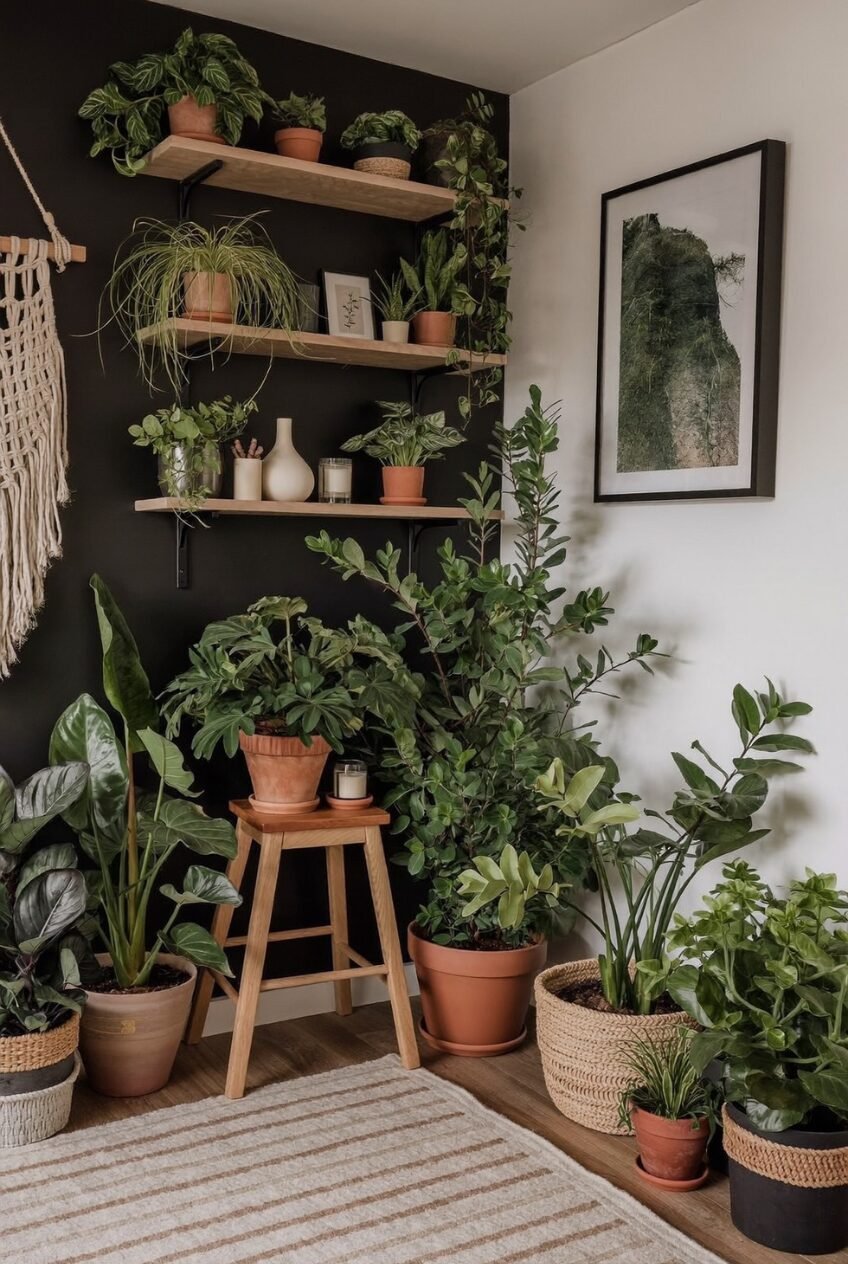
Most plant styling advice obsesses over shelves and eye-level groupings, but this corner makes a strong case for the floor. A cluster of large specimens, including what looks like a ZZ plant and a fiddle leaf fig, sit directly on the ground in terracotta pots and a woven basket planter, anchoring the whole room.
The dark wall above with its simple wooden bracket shelves keeps things from feeling bottom-heavy, holding smaller trailing plants and a single framed print. Splitting your greenery between floor and shelf height is what gives a room actual depth instead of one flat band of plants at eye level. The striped jute rug underneath adds a neutral base that doesn’t compete with all the green.
To pull this off, start at the floor with your largest plants, woven baskets hide ugly nursery pots well and add texture for free. Then add simple bracket shelves above, not too many, and let smaller plants spill over the edges. A wooden stool holding one extra pot is a cheap trick for adding height variation without buying another plant stand.
Hang One Plant From the Ceiling
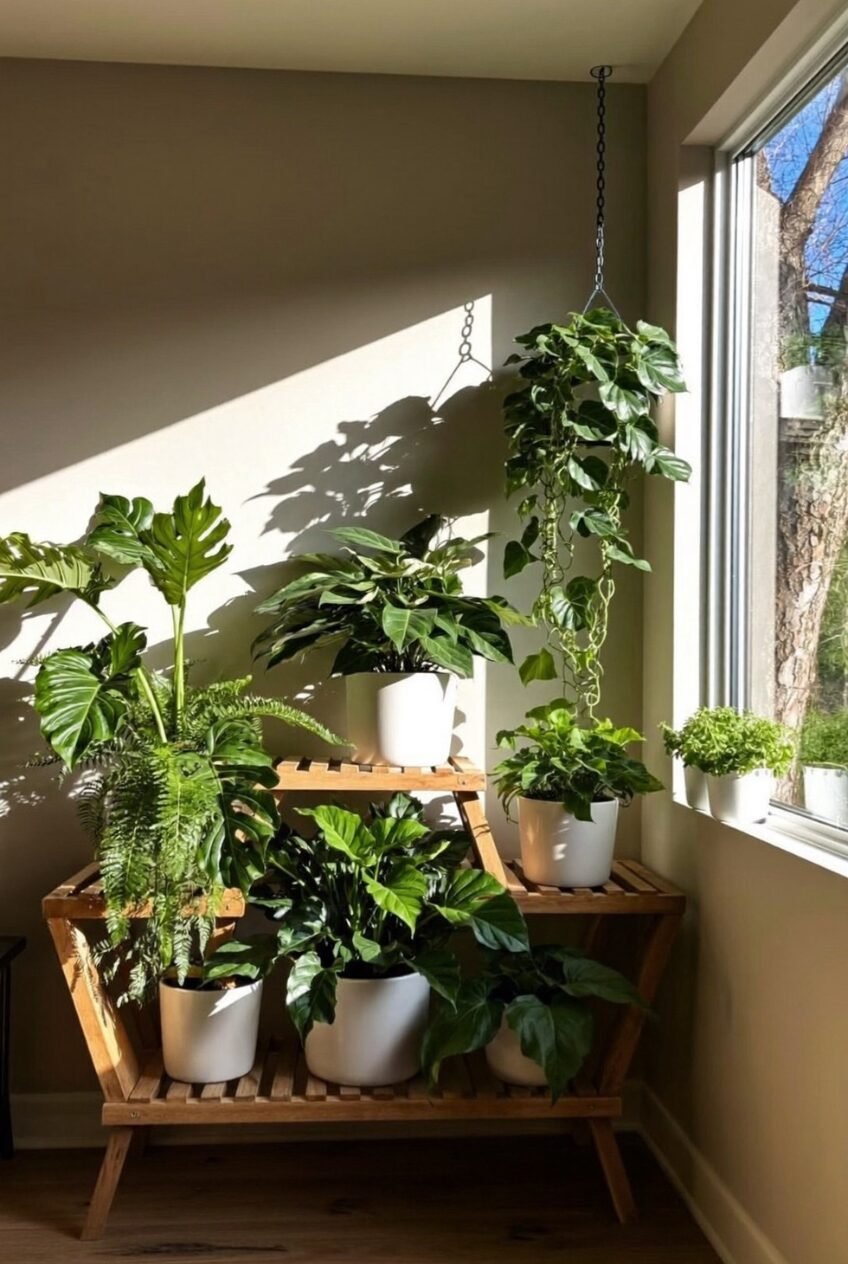
There’s something about a single plant suspended from a ceiling chain that does more visual work than five plants crowded on a shelf. In this sunlit corner, a trailing pothos hangs at just the right height to catch the window light, dangling independently from the slatted wooden stand below it loaded with ferns and philodendrons.
We think the ceiling hook is the real star of this setup, and it’s the part people skip because it feels like more effort. A single hanging plant at the right height draws the eye upward and makes a small corner feel taller than it actually is. Combined with the two-tier stand beneath, you get plants working at three different heights in one compact footprint.
A basic ceiling hook and a sturdy chain (rated for the pot’s weight once watered, not just dry) is all the hardware you need. Position it near a window so the trailing vine gets backlit through the day, then build the rest of the corner underneath with a simple slatted stand for your medium-height plants.
Corners Are Not Wasted Space
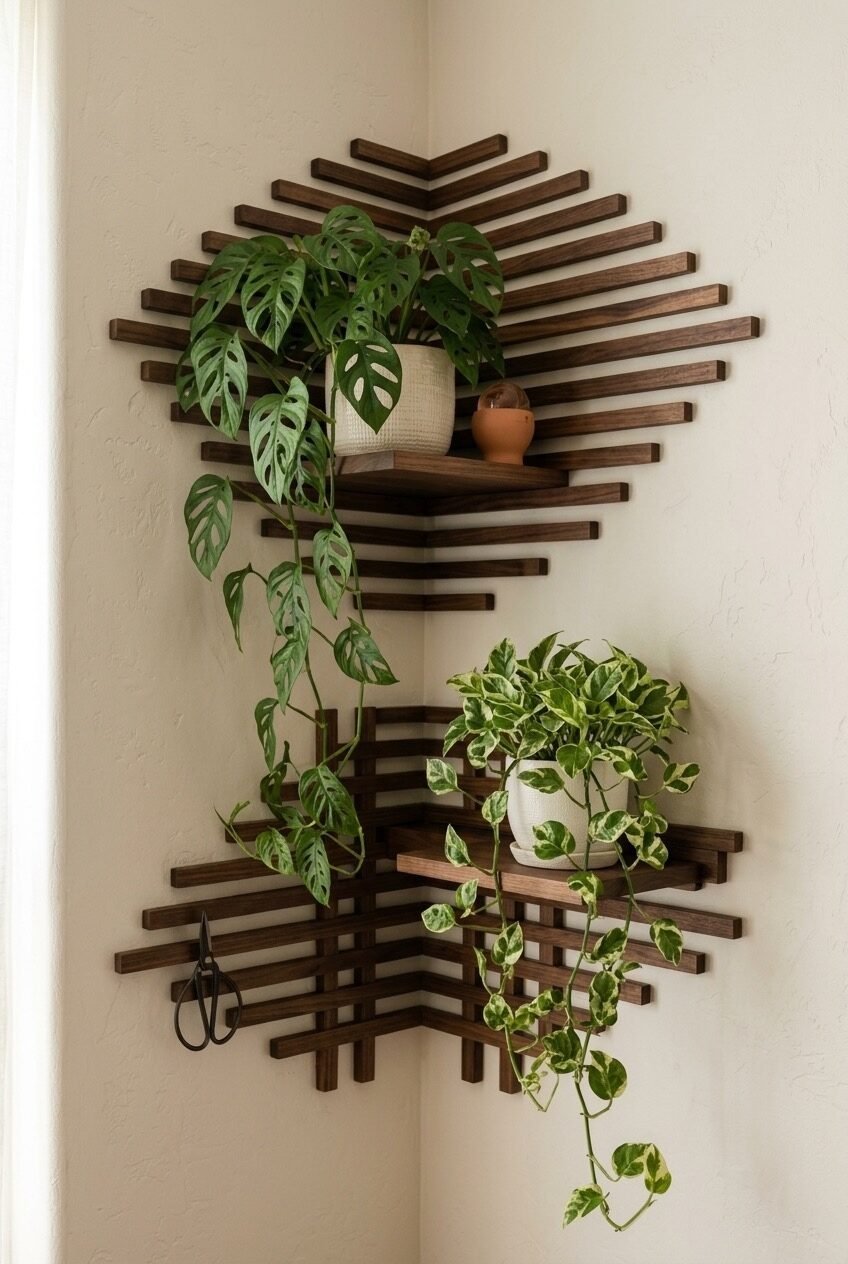
Room corners are the most underused real estate in any home, usually just empty space or a forgotten lamp. This geometric wooden shelf system, built from layered slats in a sunburst pattern, turns a dead corner into the most interesting architectural feature in the room, plants included.
What makes this work is that the shelf design itself has personality before a single leaf is added. A monstera adansonii and a variegated pothos cascade down from two small platforms, their vines trailing along the dark wood slats in a way that echoes the angular grain pattern, not just the plants. The hardware here is doing as much visual storytelling as the plants are.
You don’t need custom millwork to borrow this idea. Corner shelf units with angular or fanned designs exist at varying price points, and even a simple pair of floating corner shelves at staggered heights gets you most of the effect. Choose trailing plants specifically for corner shelving since the vines need room to cascade along both adjoining walls, not just hang straight down.
Colorful Pots Become the Statement
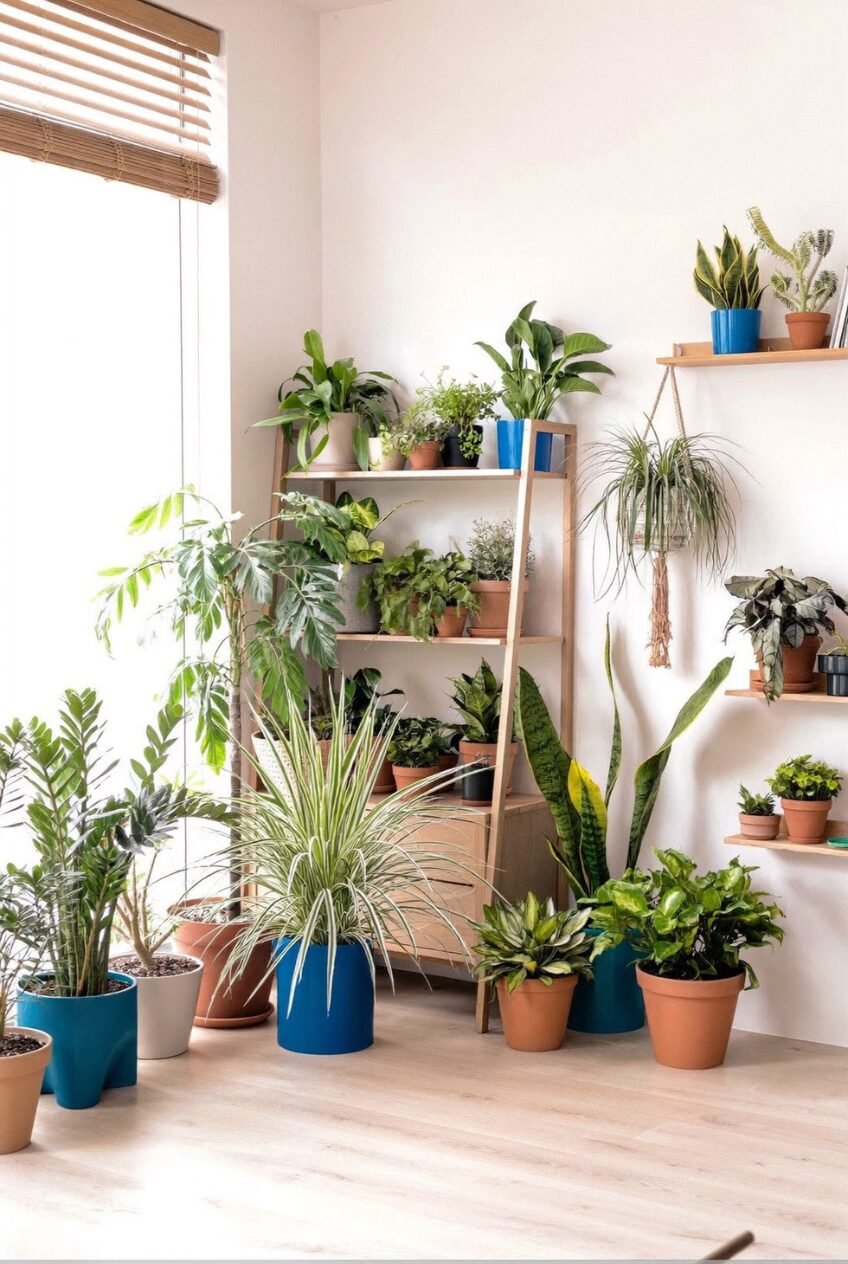
White walls and a wooden ladder shelf are about as neutral a starting point as you can get, which makes the choice to use bold blue and terracotta planters here feel deliberate rather than accidental. Against all that bright space, the pots themselves become the design statement instead of just functional containers.
It’s a smart move for anyone nervous about committing to bold paint or wallpaper. Swapping a plain pot for a saturated blue one is reversible, cheap, and instantly changes the personality of a plant grouping. Color on the planter does the same job as color on a wall, with way less commitment. The mix of blue, terracotta, and white pots keeps it from feeling like a single matching set, which would look a bit sterile.
If your space leans neutral or rental-beige, this is the easiest entry point. Pick one accent color, a deep cobalt blue works well, and use it on two or three larger floor pots while letting the rest stay terracotta or white. A tiered shelf unit in the background keeps smaller plants organized so the colorful pots stand out.
A Few Plants In, Your Whole Room Changes Shape
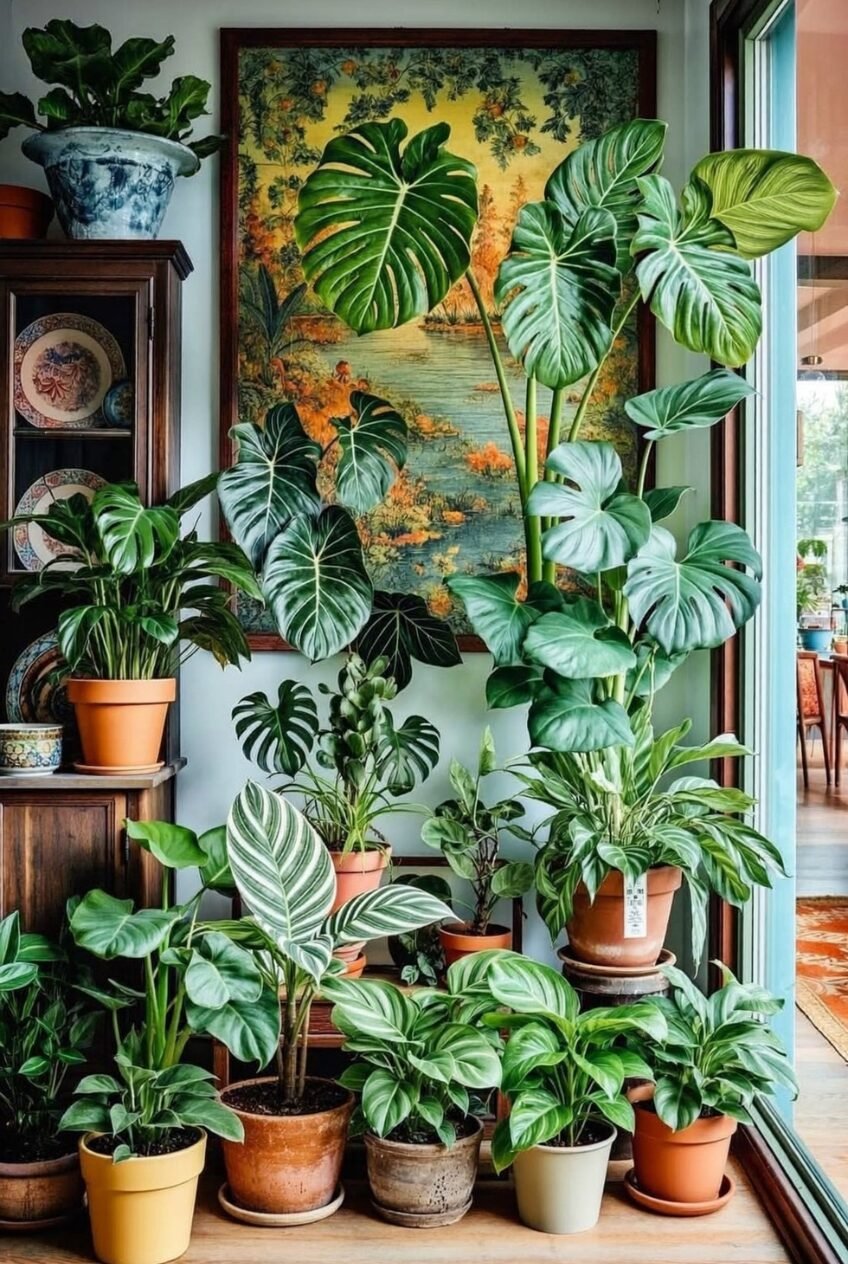
If there’s one thing this roundup proves, it’s that there’s no single correct way to bring plants into a home. Some corners lean moody and dark, others are flooded with light, and a couple are barely styled beyond letting the plant exist near a window. All of them work, which is the reassuring part.
We’d rather you walk away with one idea you’ll actually attempt than several you’ll just bookmark. Maybe that’s hanging a single pothos from the ceiling, maybe it’s finally using that dead corner, maybe it’s swapping one plastic pot for a terracotta one. Small changes compound faster than people expect with plants.
Spaces like this tend to feel more alive, less staged, the longer you live with them. Plants grow, lean toward light, occasionally drop a leaf out of spite. That imperfection is part of the charm. Start with one corner, one shelf, one windowsill, and let the rest unfold.