
Western Living Room Decor That Ages Well Instead of Dating Itself in Five Years
Western decor has a reputation problem. Done carelessly, it tips into theme-park territory — too many horseshoes, too much barn wood, everything screaming cowboy at full volume. But done with any real attention to material quality and restraint, it produces some of the most grounded, character-rich living rooms you’ll find anywhere. The difference between the two versions is usually a matter of how many things are trying to say the same thing at once.
What makes western design genuinely work is its material honesty. Leather that looks used. Wood that shows its grain. Stone that came from somewhere. Textiles with actual indigenous geometric history rather than a fast-fashion approximation of one. These are materials that age well and improve with use, which gives western rooms a quality that trend-forward spaces often can’t hold onto.
The spaces and details ahead range from full ranch-style living rooms to single accent pieces that introduce western character without overtaking a room. We’ve tried to break down what’s actually happening in each one — the design logic, the material choices, what makes it work — so you can take what’s useful and leave the rest.
Cowboy Hat Vases as Wall Art
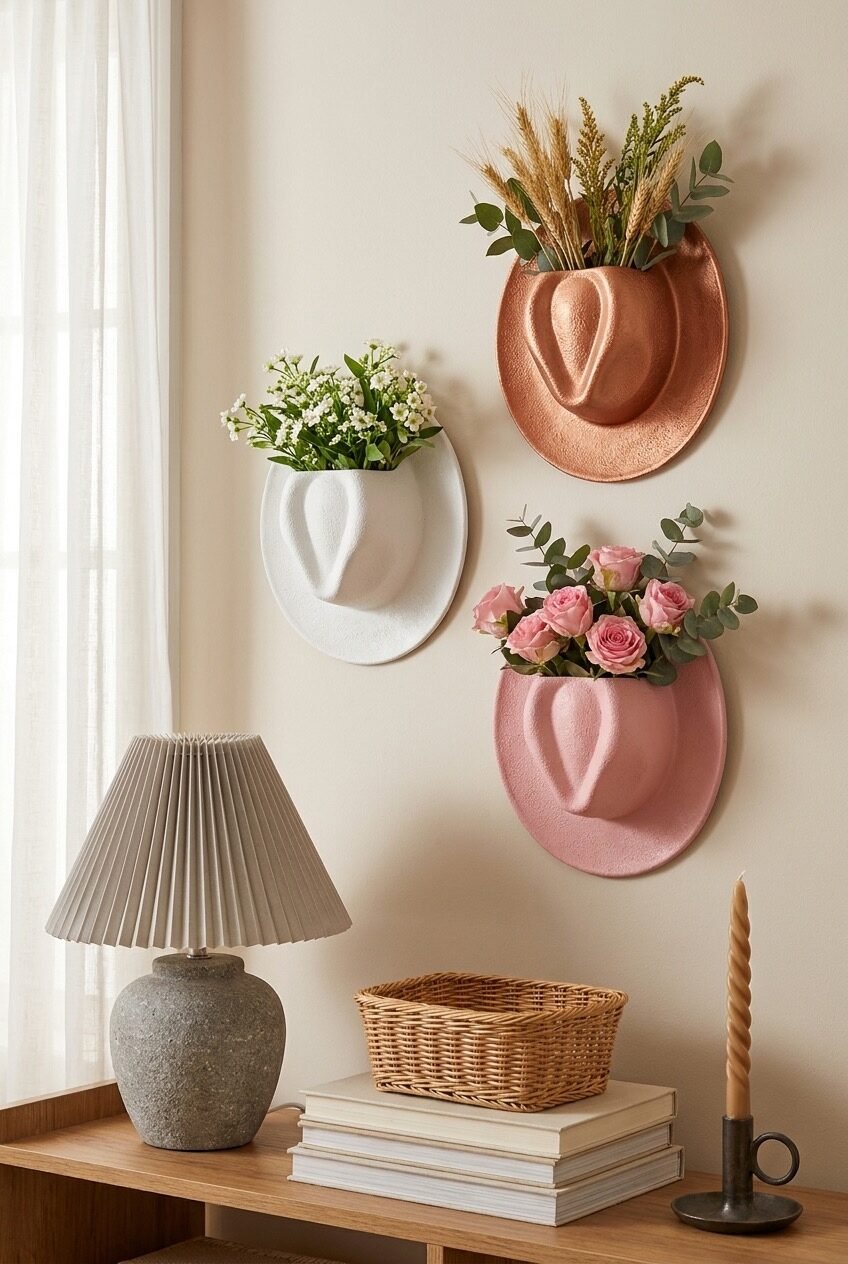
Three ceramic cowboy hat wall planters — one white, one copper-finished, one pink — hung at staggered heights and filled with fresh and dried botanicals. The immediate read is whimsical, but the execution here is controlled enough that it works as genuine wall art rather than novelty decor. The key is treating the hats as vessels first and western references second: they’re hung with the same consideration you’d give a set of ceramic wall sconces or planters, occupying a composed arrangement rather than a random scatter.
The color choices are doing specific work. White and copper are traditional enough to feel intentional; the soft pink introduces a fresher, more contemporary western sensibility that’s been gaining ground over the last few years — less saloon, more desert sunrise. Each hat holds a different botanical: dried wheat stems and eucalyptus in the copper one, white wildflowers in the white, pink roses in the pink. Matching the botanical tone to the vessel color is a small detail that reads as considered.
For a similar arrangement, ceramic cowboy hat planters are widely available through Etsy shops and western home goods retailers. Hang them with standard picture hooks rated for the weight of a watered plant. The console table below — styled with a stone-base lamp, stacked books, a wicker tray, and a single taper candle — keeps the base of the composition grounded and residential rather than decorative-display.
Modern Western With Skull Chandelier
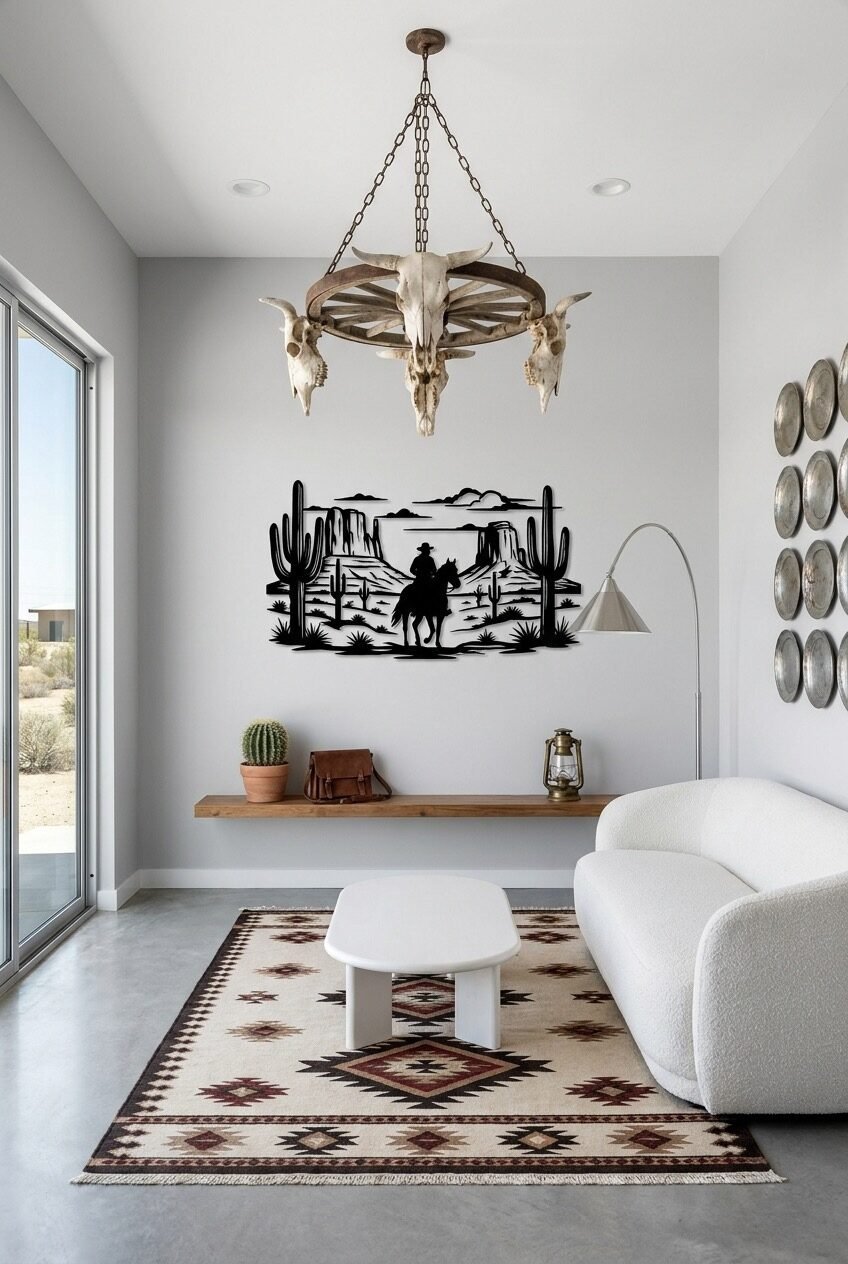
White walls. Polished concrete floors. A rounded white boucle sofa with a white pedestal coffee table. This is a modern, almost minimal room — and then you look up and see a wagon wheel chandelier fitted with longhorn skulls, and hanging on the wall a large-scale black metal cutout of a cowboy on horseback amid desert cactus. The contrast is the whole point.
Western elements land hardest in contemporary rooms because the visual gap between the rustic reference and the clean modern backdrop creates genuine tension. When everything in a room is already dark, aged, and rough-textured, adding an antler chandelier feels predictable. When a bone-white skull hangs from a wagon wheel above a cloud sofa in a grey-concrete room, it stops the eye in a way that straightforward western rooms rarely manage.
The Navajo-patterned kilim rug in burgundy and cream anchors the floor without softening the overall sharpness of the room. A single floating shelf holds a potted cactus and a leather satchel — minimal props that reinforce the desert theme without cluttering it. The silver decorative plates on the right wall add a metallic element that bridges the contemporary furniture and the rustic chandelier. For anyone building a similar modern-western hybrid, the ratio to aim for is roughly 70% contemporary, 30% western statement pieces.
Leather and Wood Abstract Wall Art
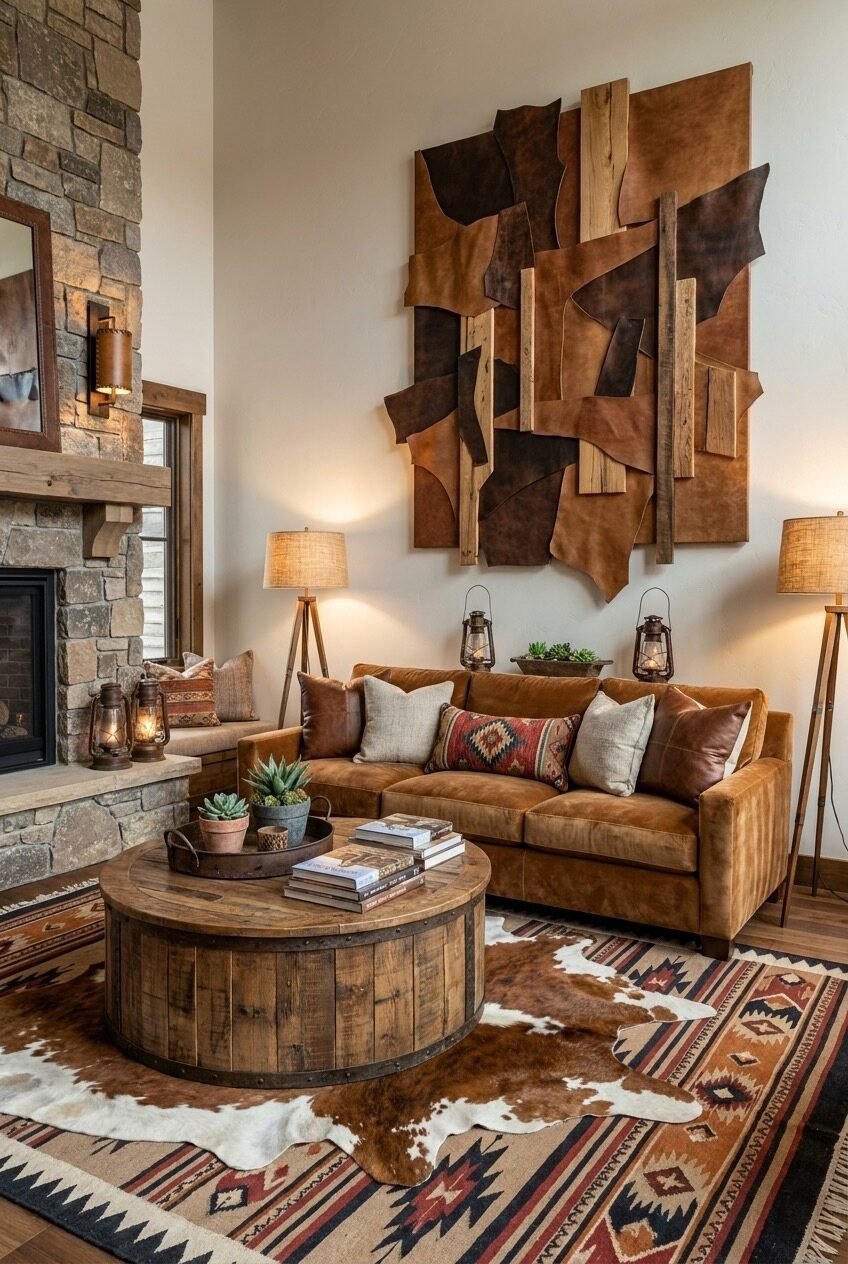
Commission or source a large-scale mixed-media wall piece made from irregular leather scraps and reclaimed wood planks assembled into an abstract composition — that’s the centerpiece of this room and arguably the most distinctive single decor decision in this entire post. It reads as contemporary art from across the room and as western craft material up close, which is a rare combination to achieve.
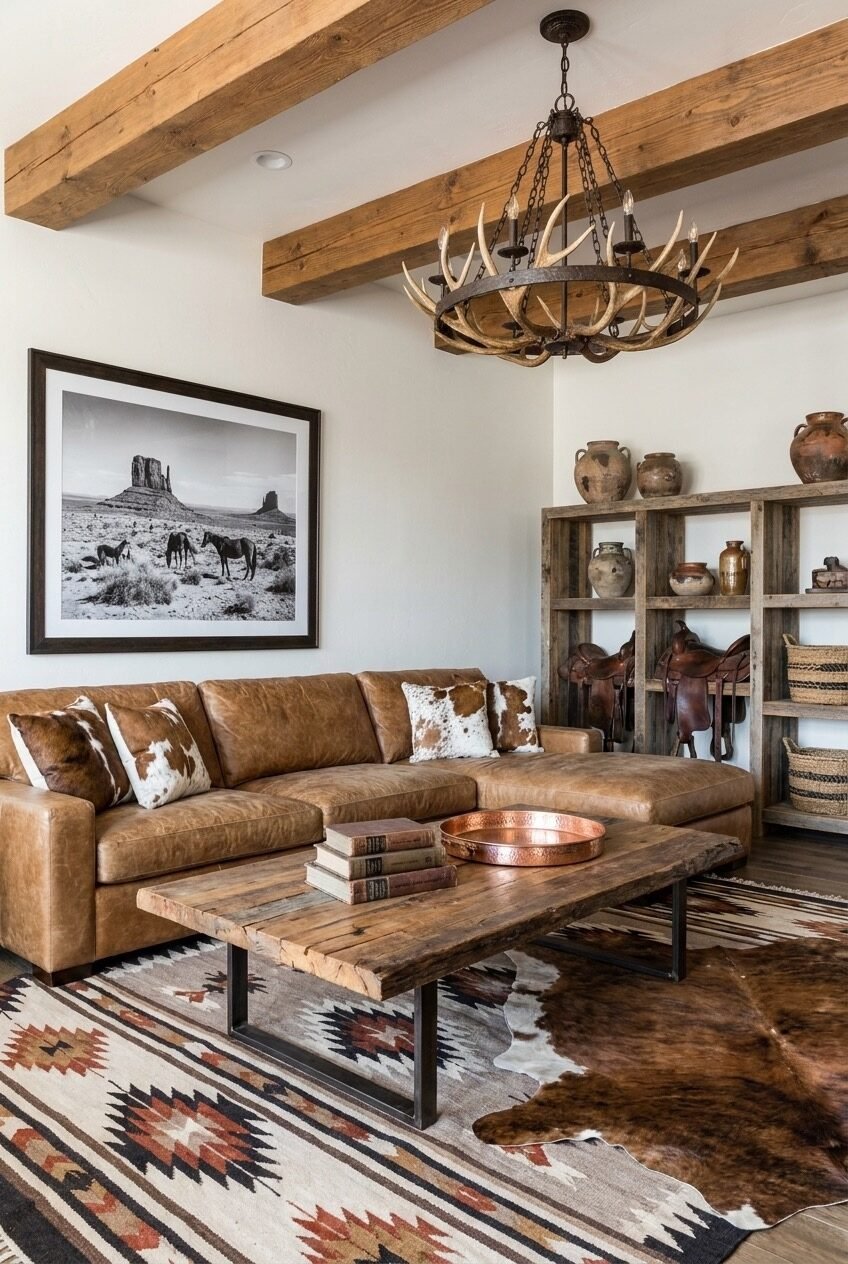
The rest of the room operates in full western mode: a leather sofa in deep cognac with southwestern-print cushions, a round drum-style coffee table in banded reclaimed wood with iron hardware, kerosene lanterns as accent lighting on the coffee table and fireplace hearth, a cowhide rug layered over a southwestern kilim, and a stacked-stone fireplace with a rough-hewn wood mantel. Every element is warm, textured, and materially honest.
The layered rug arrangement — kilim underneath, cowhide floating on top — is one of the most practical tips in western decorating. A cowhide alone can look stark and trophy-ish on a plain floor; placed over a patterned textile, it becomes one texture among many rather than a statement in isolation. Tripod floor lamps with linen shades on both sides of the sofa provide warm ambient light that suits the dark leather and aged wood tones. Succulent plants in terracotta pots on the coffee table tray add the only living green note in an otherwise earth-dominated palette.
Cowboy Boot Planter as Tabletop Accent
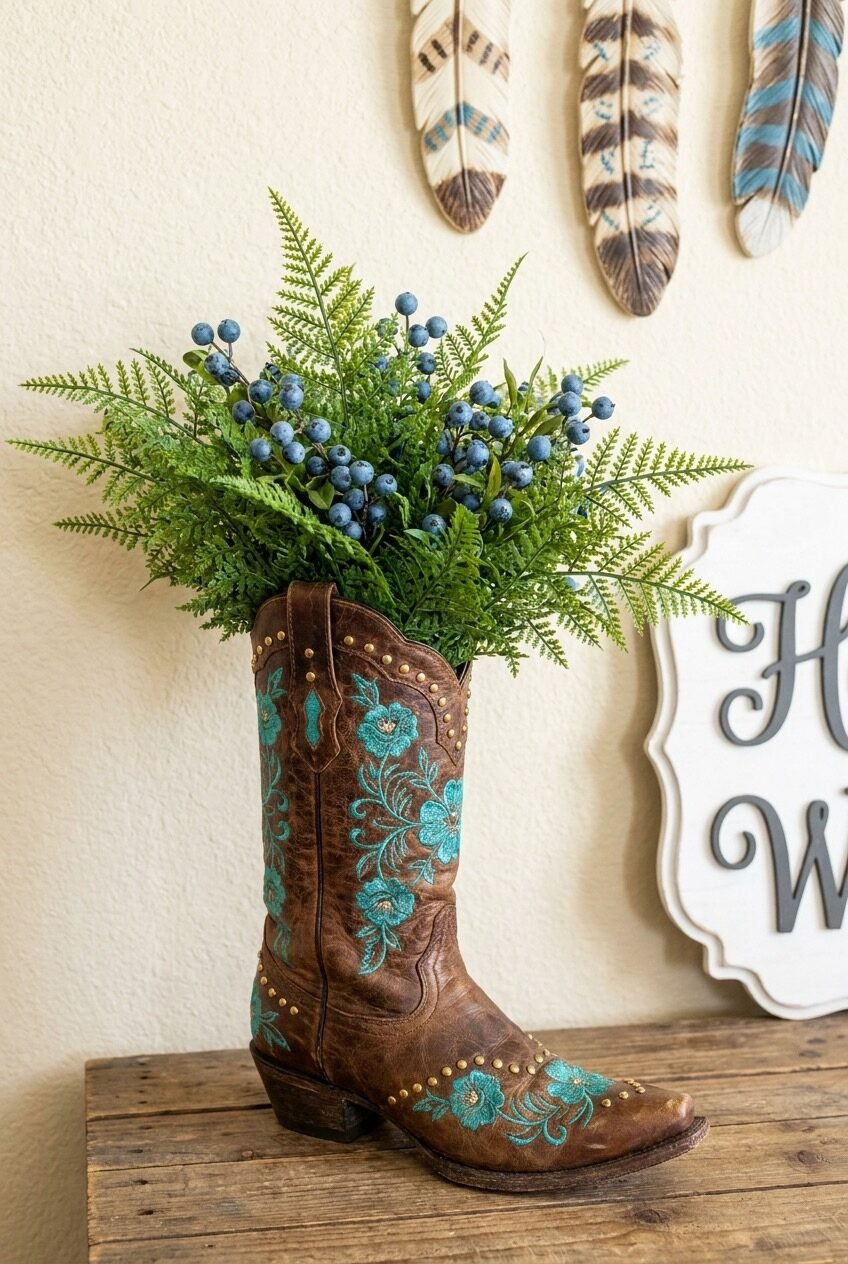
An embroidered leather cowboy boot — brown with turquoise floral stitching and brass studs — used as a planter for ferns and berry stems on a rough-cut wood console surface. Behind it, three painted wooden feathers hang on the wall in natural tones with turquoise detail. A white decorative sign sits to the right. This is a vignette, not a room, but it’s worth studying because it demonstrates how western styling works at the smallest scale.
The boot-as-vase is a classic western decorating move, and it earns its place here specifically because the boot has genuine visual quality — the embroidery detail, the metallic studs, the worn leather. A plain brown boot doing the same job would read as a prop. When the object itself is interesting enough to be worth looking at, repurposing it as a vessel feels like a discovery rather than a decoration decision.
For a similar tabletop moment, source boots from antique markets, estate sales, or western wear shops rather than buying purpose-made ceramic boot vases. The age and wear on real boots adds authenticity that ceramic replicas lack. Fill with hardy greenery that doesn’t need frequent watering — ferns with supplemental watering every few days or high-quality artificial botanicals in realistic green tones. The turquoise detail in the embroidery connects to the painted feathers above, creating color cohesion across the vignette without requiring any additional accent pieces.
Brown Velvet Sofas and Western Gallery Wall
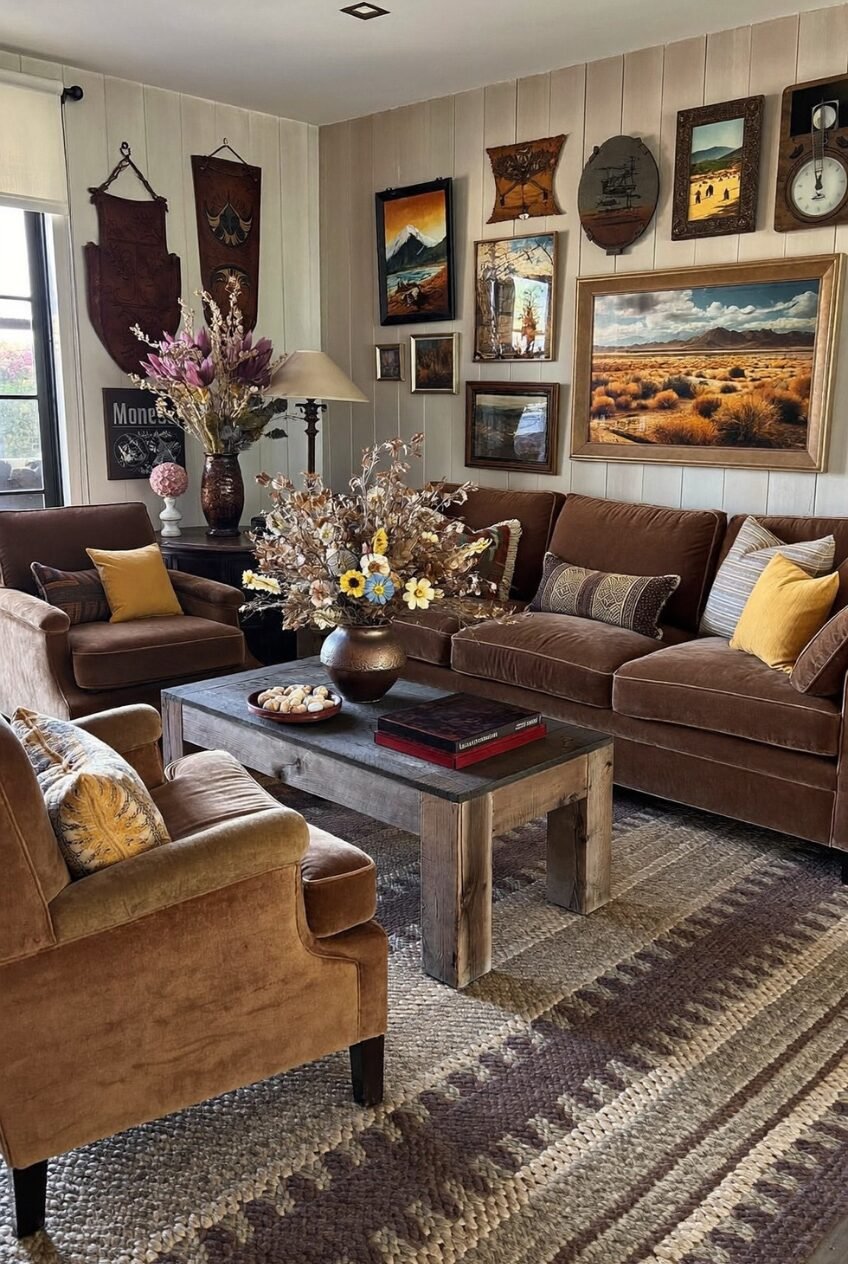
Deep chocolate brown velvet on three seating pieces — a full sofa, a loveseat, and an armchair — fills this paneled room with a richness that leather couldn’t quite achieve at this color depth. Against white shiplap walls, the brown is particularly strong, creating a contrast that makes the furniture read as deliberate statement pieces rather than safe choices. Mustard yellow throw pillows on each piece provide the warm accent color that stops the room from feeling heavy.
The gallery wall is where the western character lives. A large framed landscape of an amber desert plain sits at center-right; surrounding it are oval portrait frames, carved wooden objects, a decorative clock, and what appears to be a leather shield or ceremonial piece. The arrangement is dense and asymmetrical, the kind of wall that accumulates over years rather than getting installed in an afternoon. That quality — of things gathered rather than purchased as a set — is difficult to manufacture but worth pursuing.
A reclaimed wood coffee table with a weathered grey finish sits at the center, and it’s the right call for this room. A polished or metal table would conflict with the warmth of the velvet and the worn quality of the gallery pieces. The dark grey tone creates contrast with the warm brown without introducing a competing color. A large floral arrangement in a dark vase on the table brings height and a slightly unexpected softness to a room that’s otherwise operating in heavy, saturated tones throughout.
Dark Plaster Walls and Chesterfield Leather
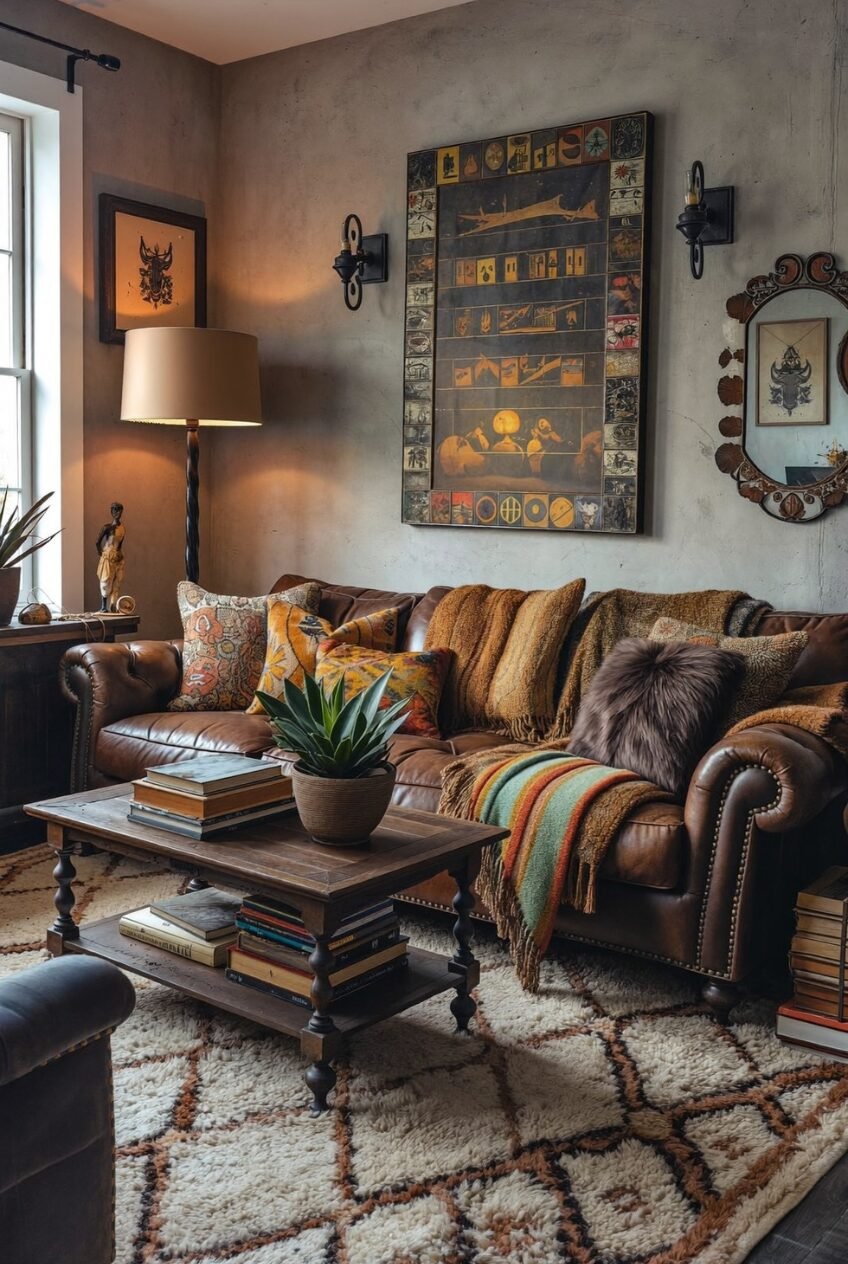
Rough plaster walls in a greyed-taupe finish — the kind of texture that’s somewhere between old adobe and urban loft — set an unusual backdrop for a room that’s otherwise pulling squarely western. A tufted brown leather Chesterfield sofa with brass nailhead trim dominates the seating area, piled with layers of cushions and throws: southwestern print, amber fur, striped Pendleton-style blanket, botanical-print pillow. The layering is thick enough to look lived-in rather than styled.
The large artwork above the sofa is a flattened decorative board painted with iconographic western symbols — horses, stars, sun motifs — in a tiled grid pattern with an aged border. It’s more folk art than fine art, which suits the rough plaster wall behind it perfectly. Pairing raw, textured wall surfaces with folk art objects is a reliable way to achieve a western interior that reads as collected rather than decorated.
A dark-turned-wood floor lamp with a warm amber shade provides the primary light source, supplemented by whatever natural light comes through the single window. In a room this dark and material-dense, warm bulb temperatures (2200-2700K) are essential — cooler light would drain the richness from the leather and throw the plaster texture into harsh relief. The Moroccan-style shag rug in cream with rust geometric pattern bridges western and global textile traditions in a way that adds depth without straying too far from the room’s overall direction.
Southwestern Bench in a Modern Setting
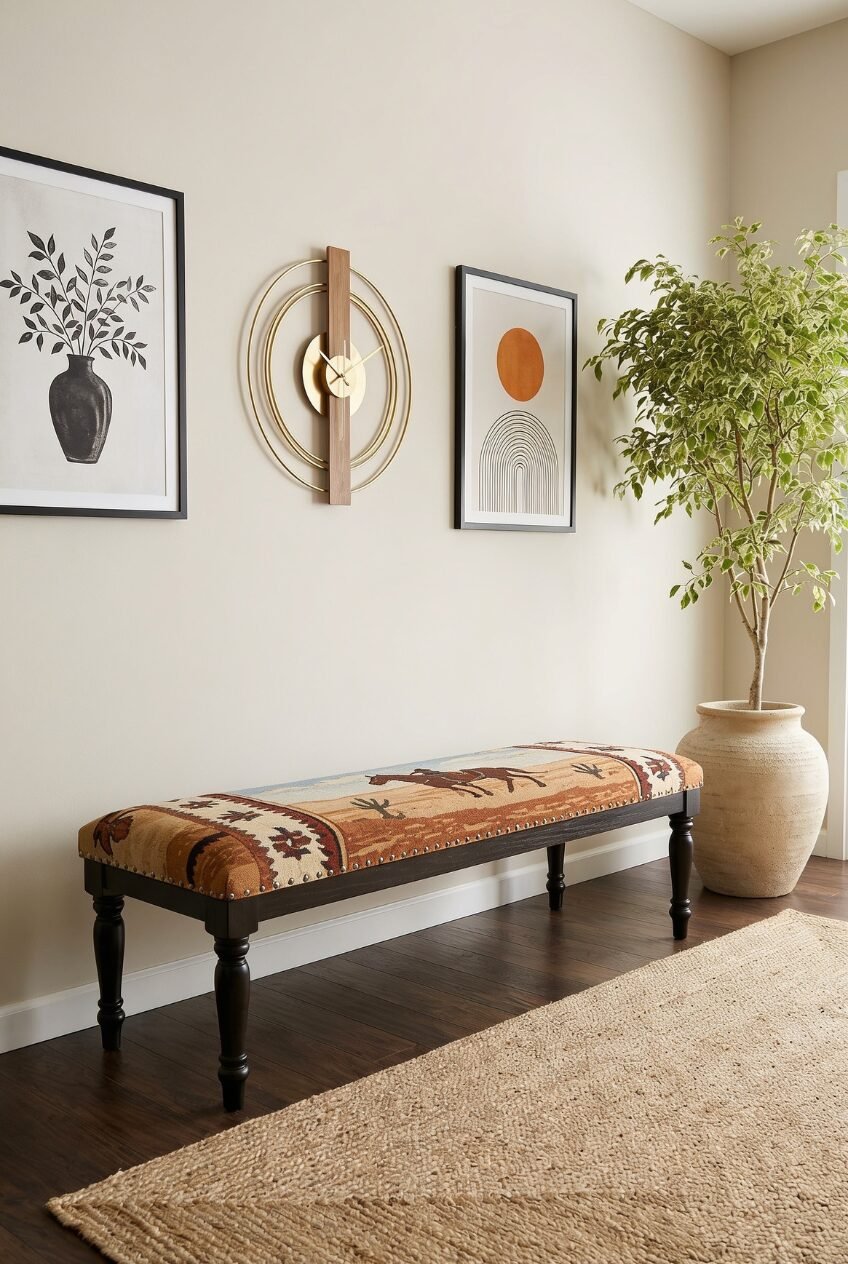
A upholstered bench with a southwestern-print fabric top — depicting a cowboy on horseback, desert cacti, and geometric border patterns in rust, sand, and cream — sits on ebonized turned legs in a clean, neutral room. The contrast between the classical leg profile and the western textile is what makes it interesting. Neither element would be remarkable on its own; together they produce something that reads as genuinely considered.
The wall arrangement above it pairs a modern geometric wall clock in walnut and brass with two framed prints — one a botanical ink drawing, one a minimalist orange-circle-and-arch composition. None of these are western references, which is the point. A southwestern-print bench in a room full of other western objects becomes part of the theme; the same bench in a mostly contemporary room becomes an accent that carries the whole western story without requiring anything else to support it.
For sourcing, southwestern upholstered benches are available from western home goods retailers and occasionally from Etsy woodworkers who do custom upholstery. The turned leg profile in a dark finish is an important detail — the contrast between formal furniture construction and folk textile is what gives this piece its character. A large woven jute rug underneath, a substantial potted fiddle leaf fig in the corner, and warm wood floors complete the space without adding more visual information than the bench can hold.
Colorful Kilim Rug Under Teal Velvet
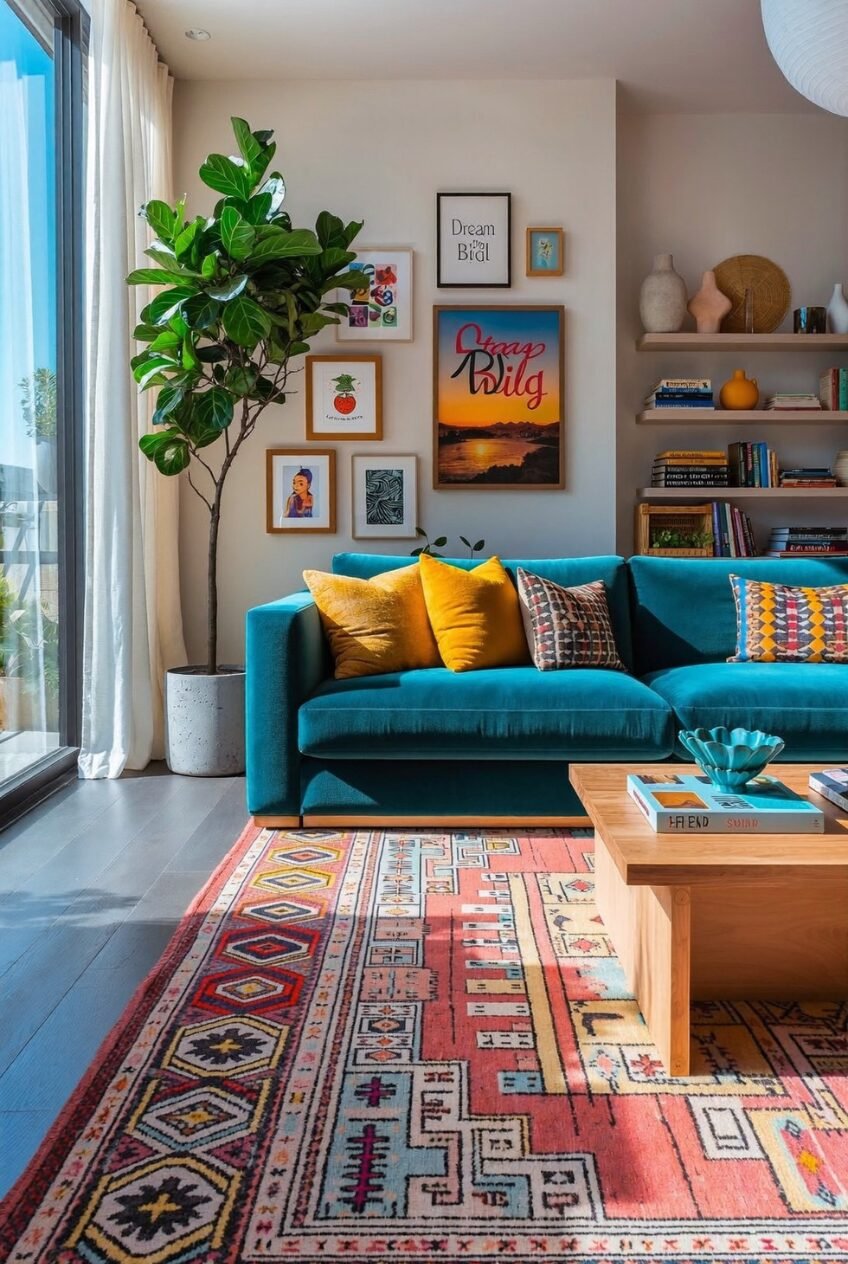
A teal velvet sofa on a vivid southwestern kilim rug in coral, cream, and multicolor geometric patterns — this is western decor pushed through a contemporary color sensibility that most traditional ranch-style rooms wouldn’t risk. The kilim pattern is authentically southwestern in its motif structure, but the coral ground and the teal upholstery combination skips the expected brown-and-rust palette entirely.
The gallery wall behind the sofa is informal and personal — a mix of typographic prints, small illustrations, and a sunset landscape poster — assembled without rigid grid alignment. Nothing on the wall is overtly western except the general spirit of the sunset image. The floating shelves to the right, styled with white ceramic vessels and a woven disc, maintain the contemporary tone that prevents the kilim from pulling the room toward full western territory.
The principle at work here is using a southwestern textile as a color foundation rather than a theme statement. The rug’s geometry is present and recognizable, but because the furniture color is unexpected and the wall art is eclectic, the room doesn’t read as a western room — it reads as a colorful contemporary room that happens to have a kilim on the floor. That’s a more versatile and arguably more sophisticated way to engage with southwestern textile traditions than building an entire room around them.
Classic Ranch Room With Cowboy Rug
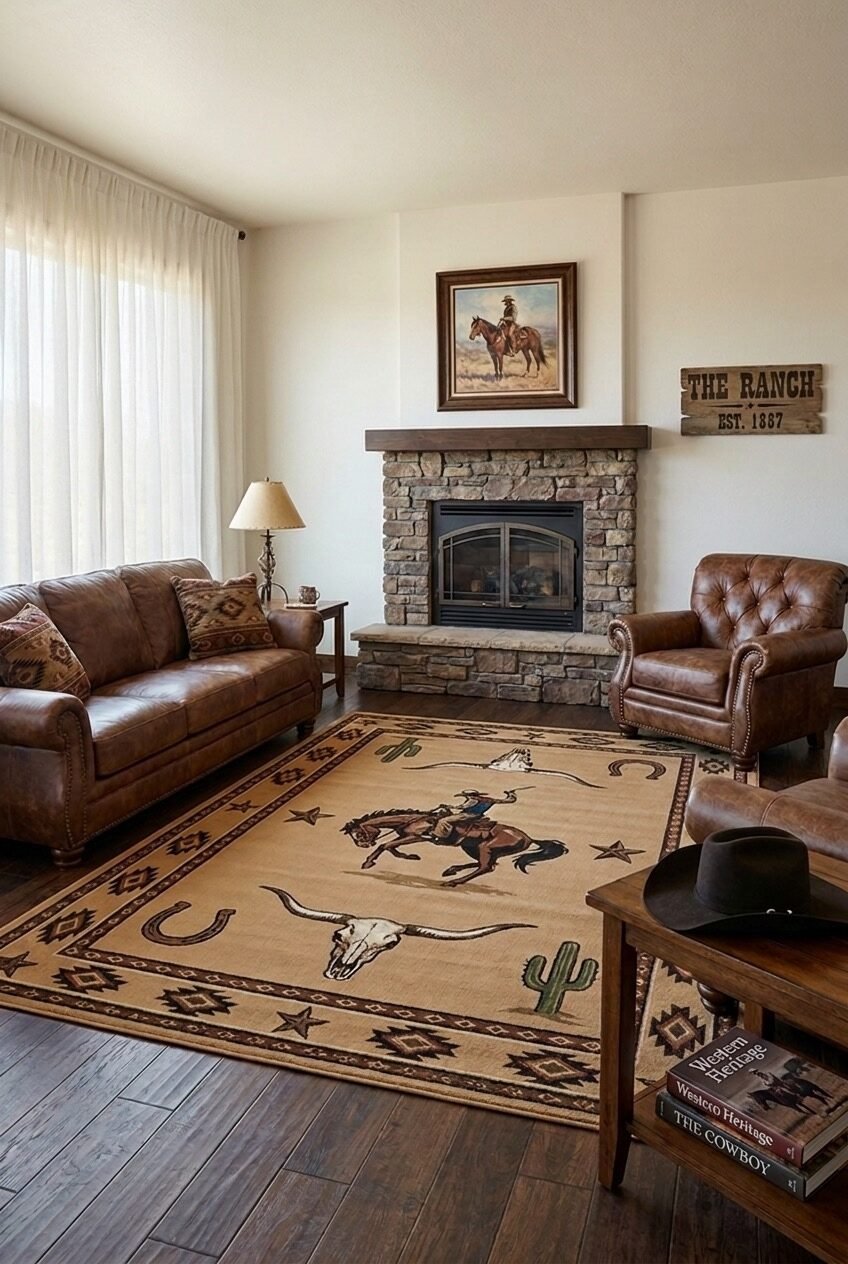
Pull up a leather sofa and armchair around a stone fireplace, hang a painted cowboy-on-horseback oil above the mantel, and lay down a rug with bronco riders, longhorn skulls, horseshoes, and lasso motifs on a sand-colored ground — and you have a room that makes no apologies for its direction. This is the straightforward version of western living room decor, and it works because every element is quality-made and properly scaled.
The figural western rug is the room’s biggest commitment and its clearest statement. Rugs of this type — with specific iconographic western imagery rather than just geometric patterns — require the rest of the room to stay relatively calm to avoid tipping into caricature. This room manages that balance by keeping the furniture in two consistent leather pieces, the walls in plain white, and the window treatments in simple cream curtains. Nothing competes with the rug for attention.
A wooden ranch sign reading “The Ranch Est. 1887” on the right wall, a dark-shaded table lamp on a side table, and a cowboy hat left casually on the coffee table are the only additional western touches. The hat in particular is worth noting — an actual worn hat placed as a prop rather than a decorative object feels more authentic than a framed poster of one. On the practical side, figural western rugs of this quality are available through specialty western home furnishing retailers and are worth the investment over cheaper printed alternatives, which tend to look flat and synthetic from any distance.
Carved Sideboard With Illustrated Western Art
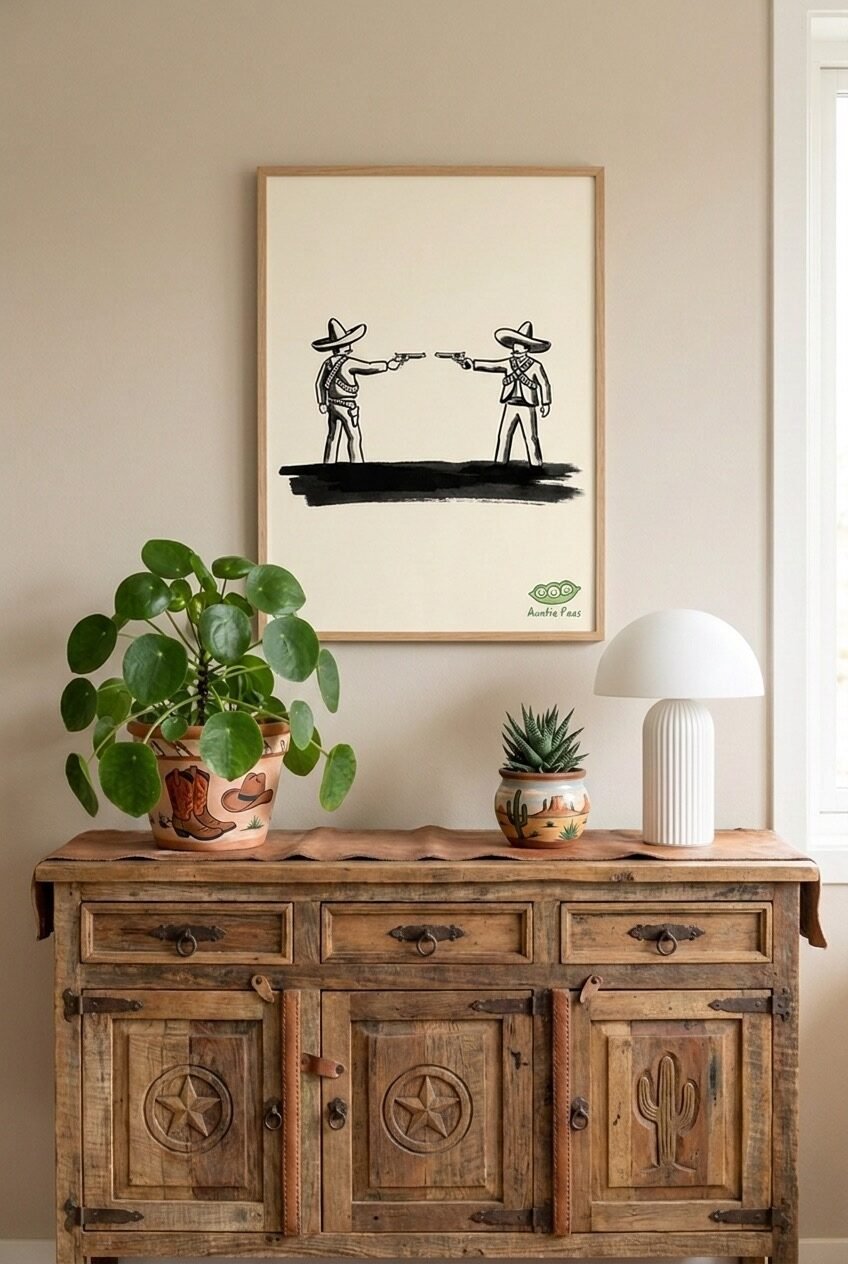
A heavily carved wooden sideboard with star-shaped reliefs, cactus motifs, and iron ring-pull hardware sits below a simply framed illustration of two confronting gunslingers — line-drawn, graphic, slightly wry. The pairing of the densely carved folk furniture with the minimal contemporary illustration style creates an unexpected dialogue that’s more interesting than either piece would be in a more predictable context.
On top of the sideboard: a pilea plant in a terracotta pot painted with cowboy boots and hat motifs, a small aloe vera in a southwestern landscape-painted pot, and a ribbed white dome lamp. The plant pots are the most deliberate charm in this composition — painted terracotta is a low-cost way to introduce western detail at small scale without requiring any permanent design decisions. The white lamp provides the contemporary counterweight that stops the carved sideboard from looking like it belongs in an antique store rather than a living room.
For anyone sourcing carved Mexican or southwestern wooden furniture, look for pieces with genuine hand-carved detail rather than machine-pressed pattern — the depth and slight irregularity of hand carving is what gives this sideboard its presence. The illustration above it is available through print-on-demand art platforms; the line-art gunslinger style has become genuinely popular in contemporary western interiors as a more graphic, less sentimental take on the tradition. Framed in a simple natural wood frame on a warm cream wall, it reads as editorial rather than decorative.
Western Decor Works Best When It Looks Like It Belongs
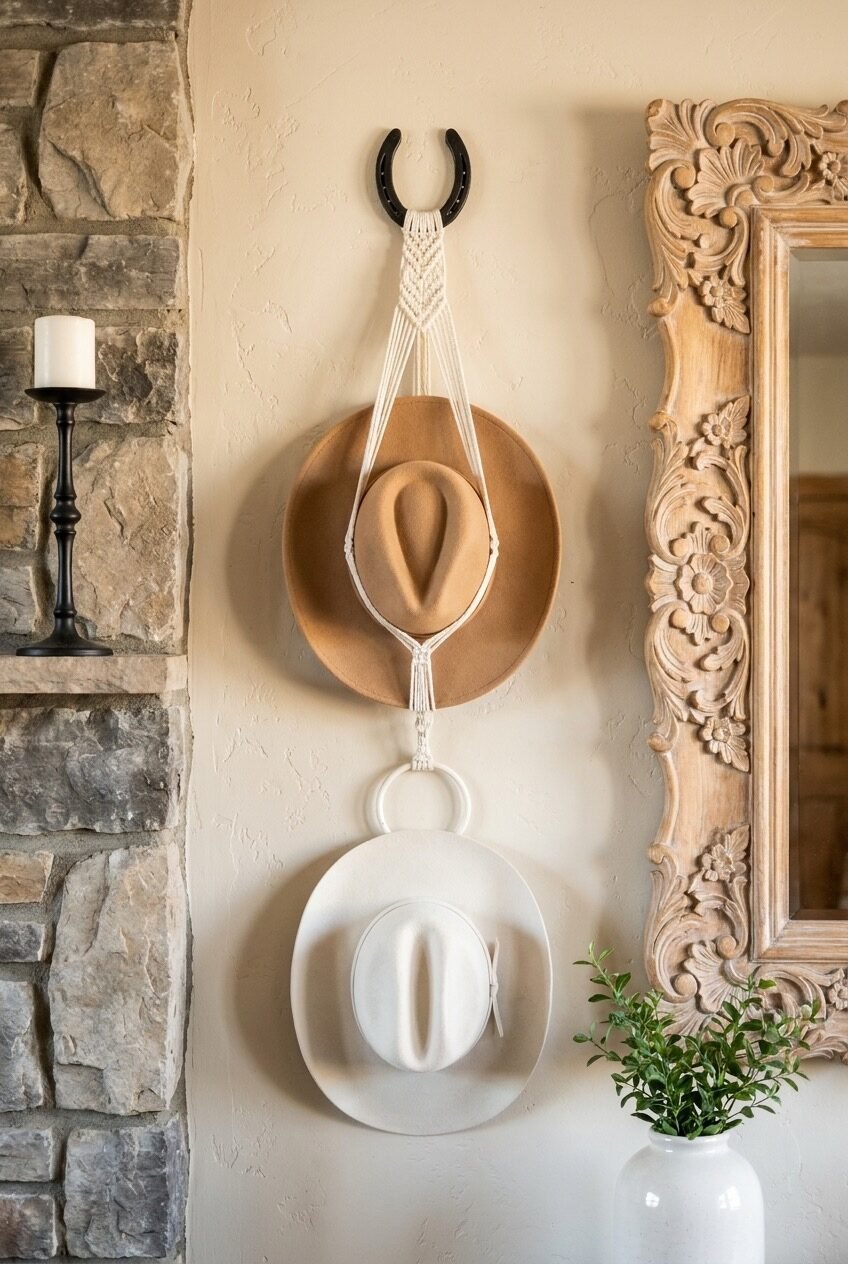
The rooms and details in this post cover a wide range — from full ranch-mode living rooms with leather everything and cowhide rugs to single accent pieces that bring a quiet western note into an otherwise contemporary space. What holds the best of them together is that the western references feel like they grew out of the room rather than got dropped into it. A carved sideboard that’s clearly lived somewhere for decades. A boot used as a planter because someone actually wore it first. A rug with real geometric history rather than a mass-market imitation of one.
The practical version of that observation is: prioritize quality and authenticity in the pieces that will get the most visual attention, and let the supporting elements stay simple. One genuinely good leather sofa with a worn patina will carry a room further than five pieces of budget furniture with western-themed throw pillows. One real kilim with legitimate age and hand-knotted texture means more than a printed version of the same design.
Western living room decor is also one of the easier styles to build gradually rather than all at once. Start with the rug or the main furniture piece, then add material layers — a throw, a lantern, a piece of wall art — over time. Rooms that accumulate over years tend to have a quality that fully assembled rooms rarely achieve, and western design, more than most, rewards that patience.