

Reading Ten Different Fall Living Rooms for the Details Worth Stealing
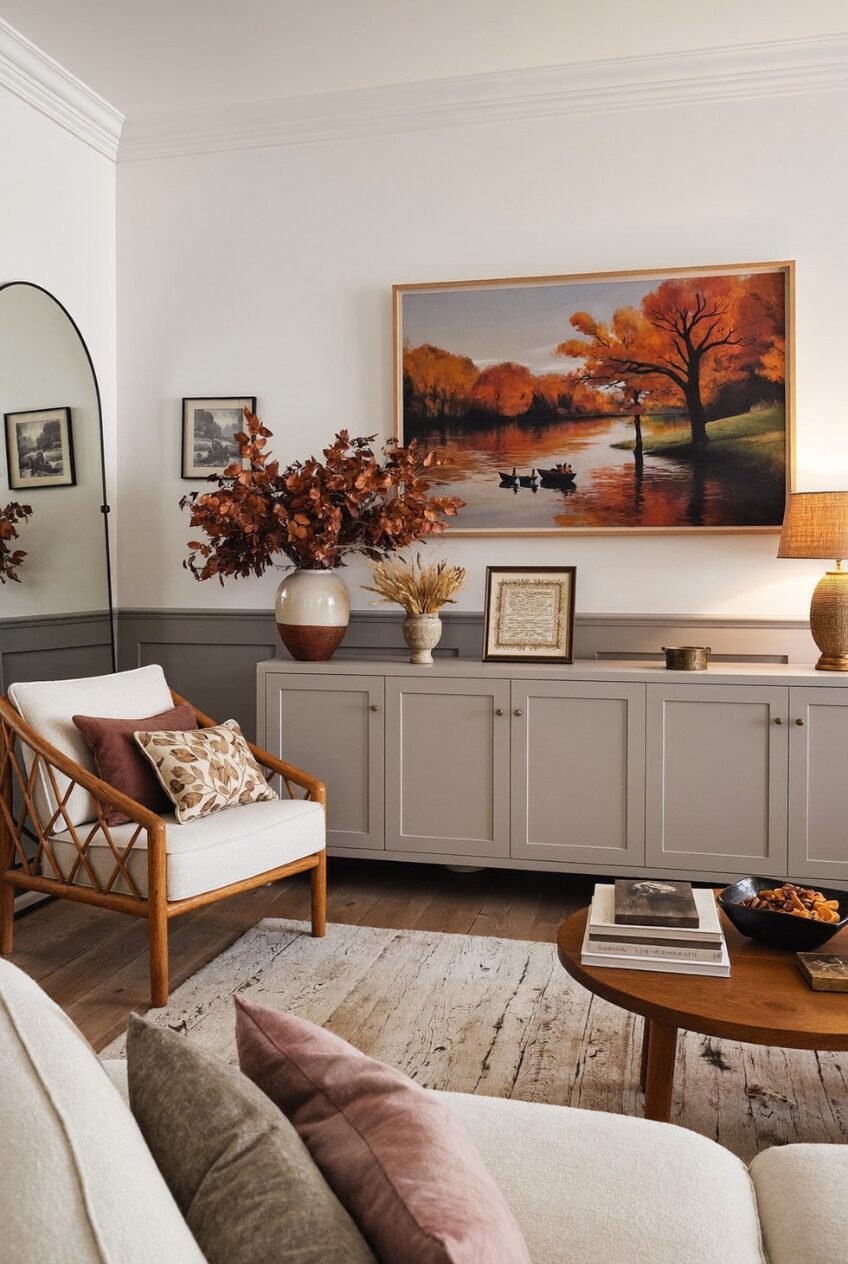
There’s a specific kind of joy in walking into a living room that finally smells like cinnamon and looks like it too. Fall decorating gets treated like a side project, something you squeeze in after the real seasonal stuff, but the living room is where everyone actually sits, so it deserves first pick of the warm tones and texture changes.
We’re walking through ten different living rooms that each handle the season differently, from quiet and tonal to loud and a little theatrical. Some lean into pumpkins stacked three high, others barely mention Halloween and just focus on amber light and dried branches. Both are valid. Neither is more correct than the other.
What ties them together is restraint with the right kind of excess. Every space below adds warmth without losing its bones, which honestly is harder to pull off than people think. Grab whatever’s closest to your own style and steal from there.
Layer Pumpkins Like a Centerpiece
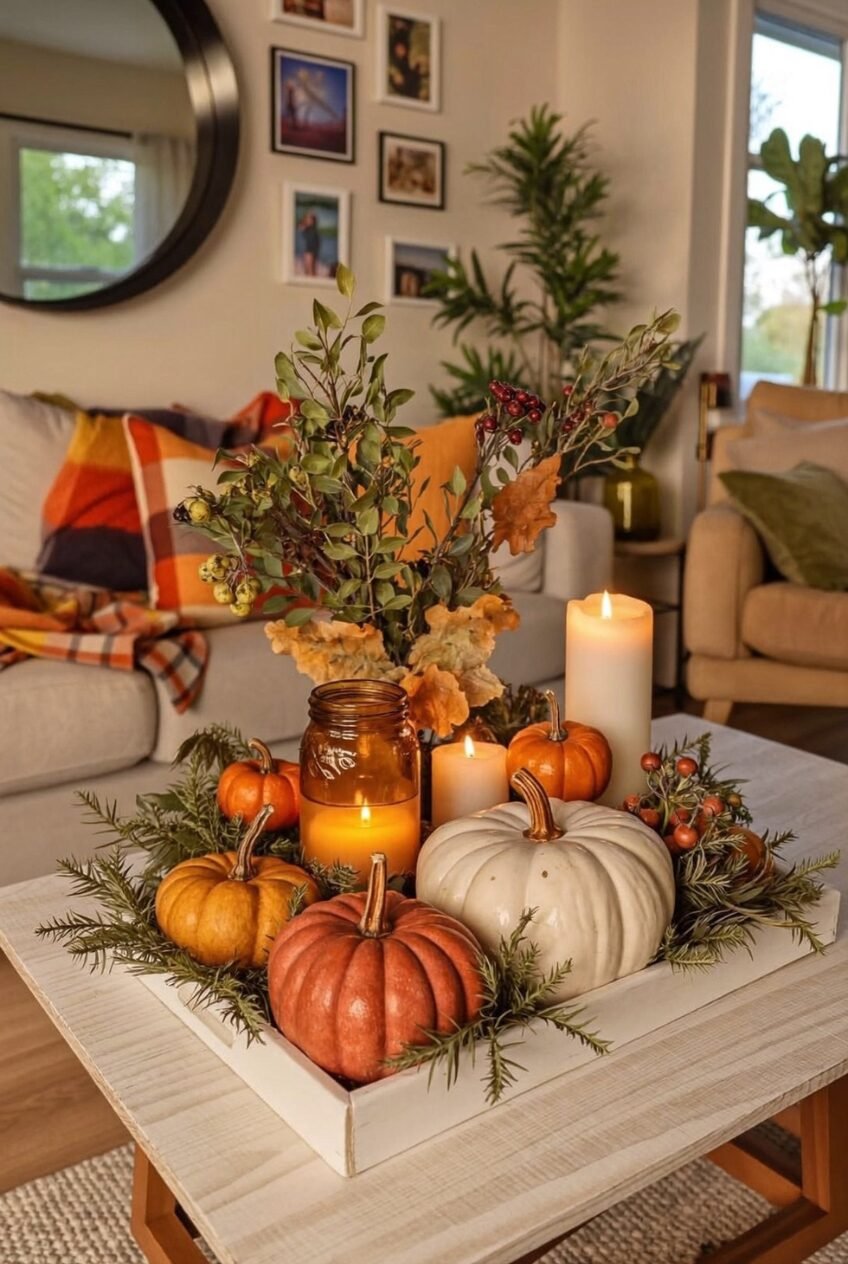
Most people grab one pumpkin, plop it on the coffee table, and call it done. This setup proves that grouping does the actual work. A mix of white, orange, and natural-toned pumpkins sits inside a low wooden tray, surrounded by greenery and two lit candles, and suddenly it reads as a real arrangement instead of a leftover decoration.
The greenery matters more than people give it credit for. Without those sprigs of pine and berries tucked between the pumpkins, you’d just have orange shapes sitting on wood. With them, the eye has somewhere to travel, and the whole thing feels layered instead of flat. Height variation is doing a lot of quiet work here too, since the tall candle next to the shorter pumpkins keeps things from reading flat.
If you’re recreating this, start with a tray so everything has a boundary. Mix at least three pumpkin sizes, tuck in a candle or two, and fill gaps with whatever greenery you already have lying around.
Let One Painting Set the Mood
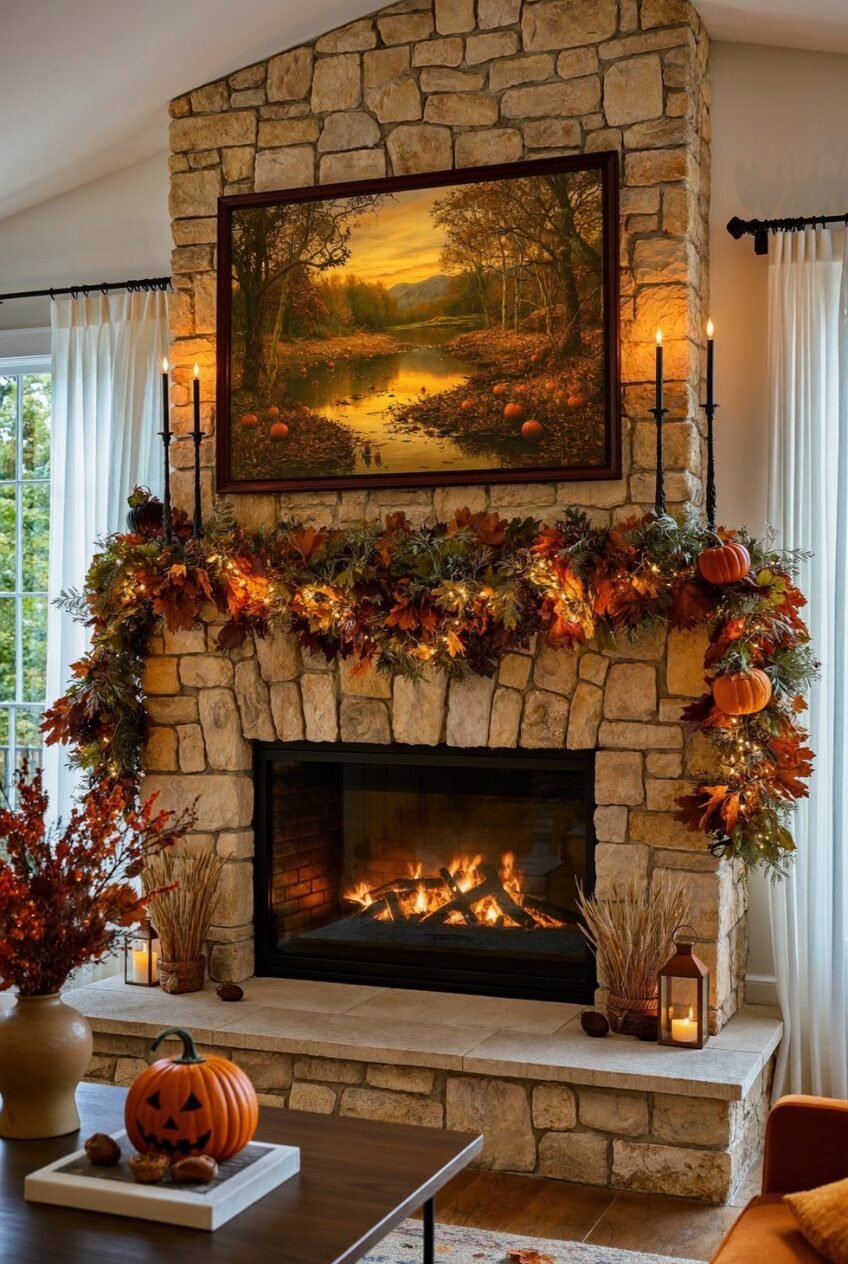
We’d argue this fireplace works because of one decision: the artwork above it does almost all the emotional heavy lifting. A glowing autumn landscape, painted in warm golds and rust, sits like the room’s thesis statement, and everything else, the garland, the candles, the single jack-o-lantern, just supports that mood rather than competing with it.
Stone fireplaces can swallow decor whole if you’re not careful, but draping a garland with fairy lights woven through dried leaves softens that hard texture without hiding it. The black candlesticks flanking the painting add a sharp note that keeps the warmth from tipping into saccharine. That contrast is the part worth stealing.
For your own space, pick one large piece of art as your anchor before adding anything else. Build outward with a single garland style, repeat dark metal accents at least twice for cohesion, and resist the urge to add a second focal point.
Let a Wreath Be the Main Event
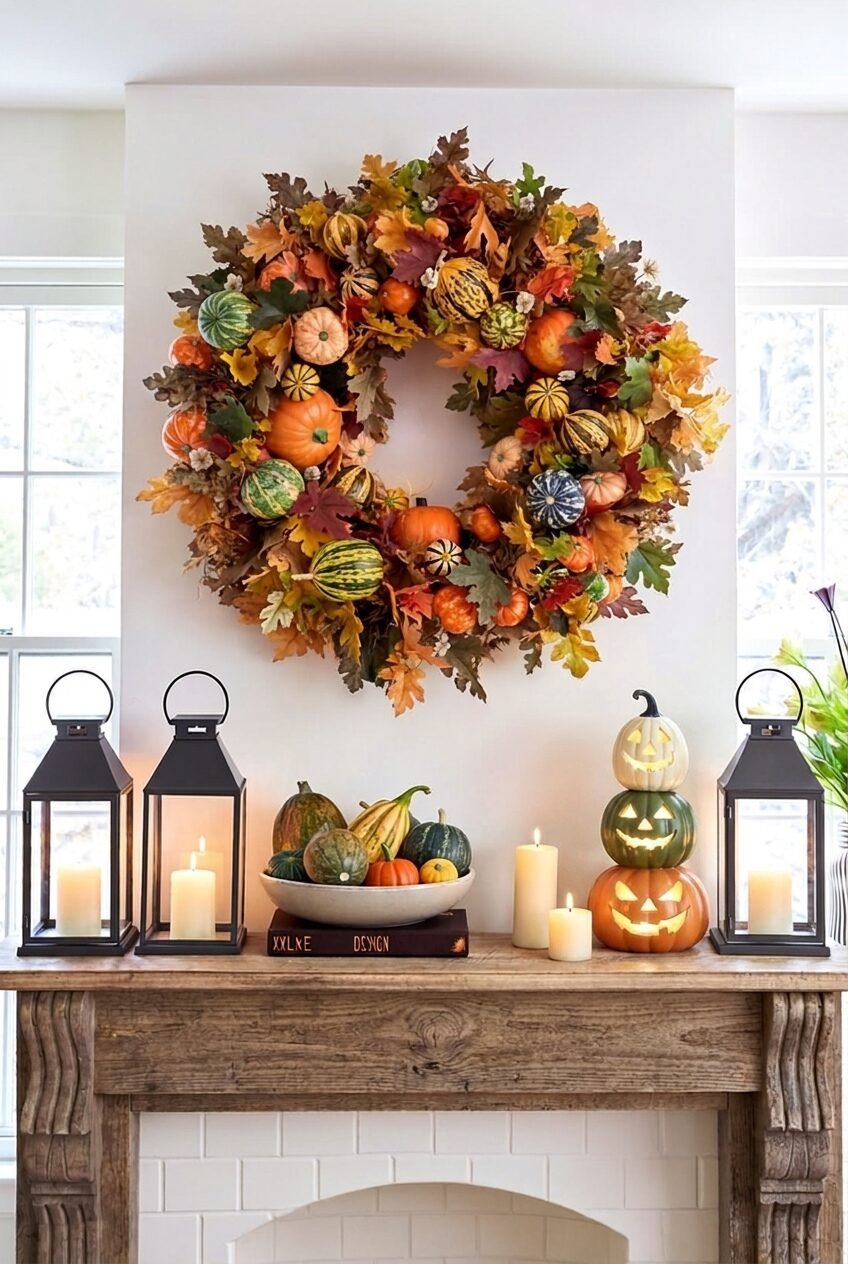
Wreaths usually get banished outside, hung on a front door where you only see them for three seconds before heading to your car. Bringing one indoors and oversizing it changes the entire equation. This wreath, dense with gourds, pumpkins, and layered leaves in every shade of fall, becomes wall art that happens to be three-dimensional.
Scale is the whole trick here. A small wreath on an interior wall looks like an apology, while a large one, the kind that takes up real visual space above a mantel, reads as a real design choice. Flanking it with matching black lanterns on either side gives the eye a symmetrical resting point, which keeps something this textural from feeling chaotic.
If you want to try this, look for a wreath at least 24 inches across before bringing it indoors, since anything smaller will look stranded on a big wall. Pair it with simple, repeated objects below so the wreath stays the star.
Bring In Texture With Dried Stems
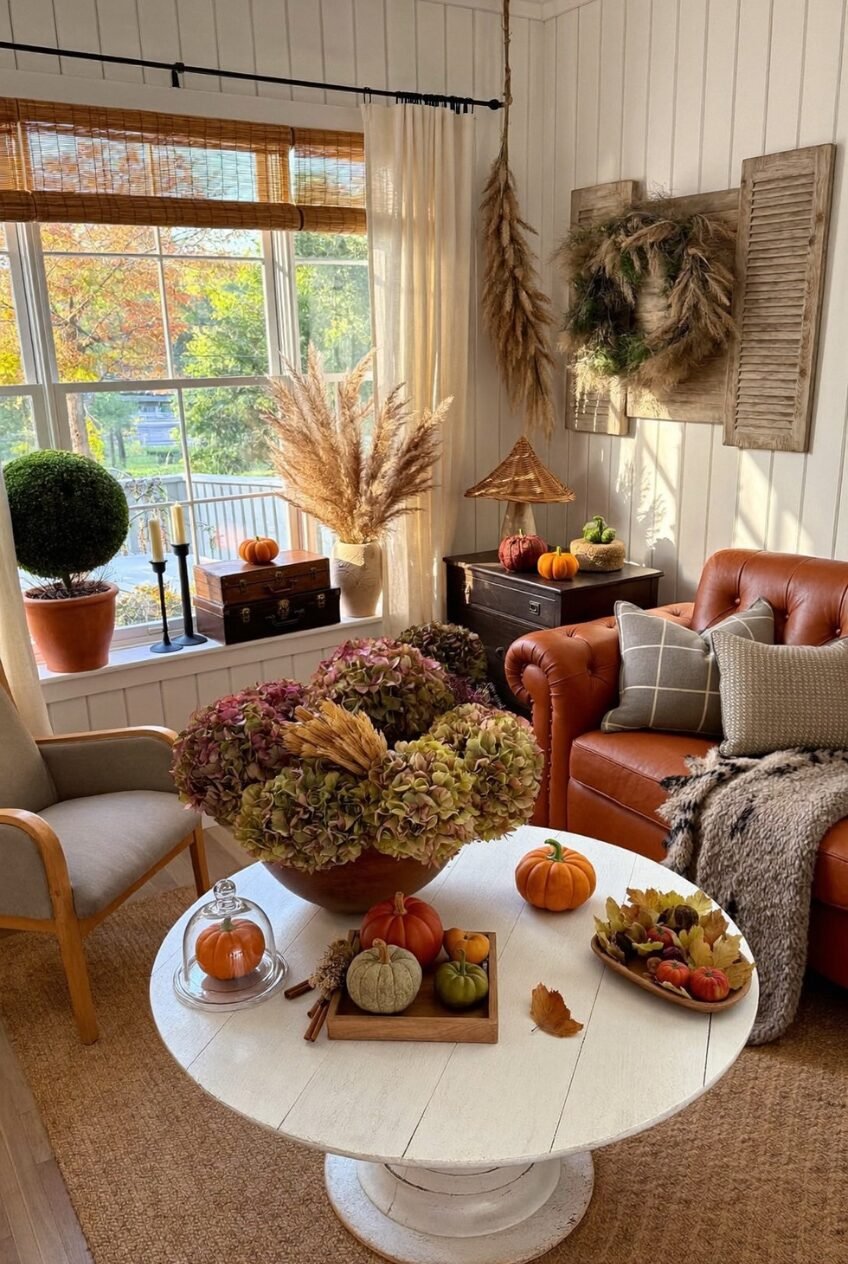
Pampas grass gets a lot of attention, but this corner shows what happens when you let dried botanicals do more than one job at once. Tall pampas stems lean against the window, a smaller wreath made of dried grasses hangs against old wooden shutters, and a bowl of dried hydrangea sits heavy and soft on the round table below. None of it is fresh, and none of it needs to be.
What makes this work is the total commitment to a muted, sun-bleached palette. There’s no orange pumpkin jumping out to break the mood. Every texture, from the woven lampshade to the linen curtains, stays in the same tonal family, which is a quieter way to decorate for fall.
We’d recommend this for anyone who finds bright pumpkin displays a bit much. Source dried pampas grass, a few dried hydrangea heads, and some wheat stems, then group them at varying heights near a window where afternoon light can catch the texture.
Keep Themed Decor Light and Playful
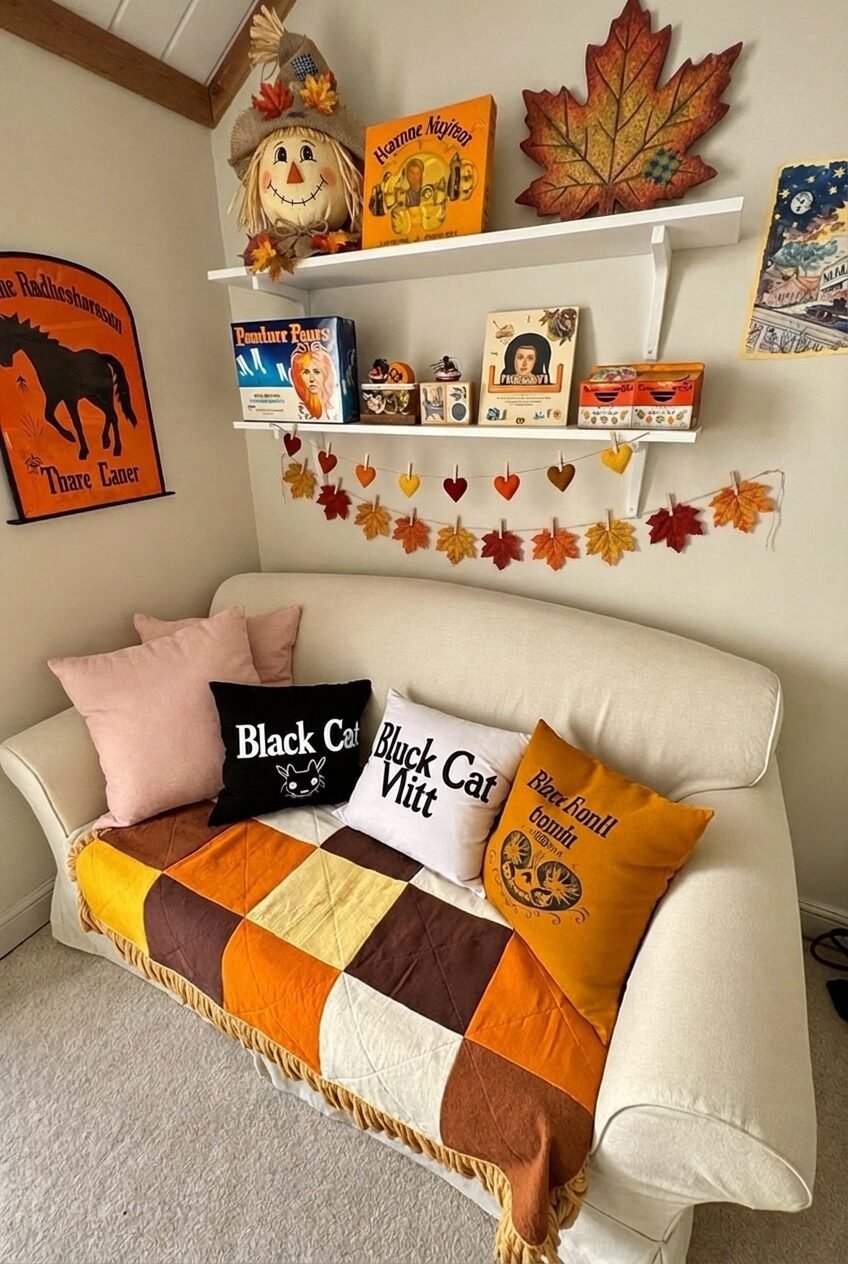
Leaning into a specific theme, like this little black cat and harvest-leaf corner, is a fun way to make a room feel personal rather than showroom-perfect. The mix of throw pillows, a patchwork blanket in warm checkerboard tones, and a small garland of felt leaves and hearts strung along the shelf edge gives this nook a handmade, slightly playful energy that more polished spaces sometimes lack.
The patchwork blanket is doing more than keeping anyone warm. Its mix of mustard, rust, cream, and brown squares ties every loose object on the shelves above back down to the seating, so the eye has a reason to travel top to bottom.
A themed corner like this works best in a smaller, secondary space rather than your main seating area, since the personality is strong. Pick one motif and repeat it across no more than three objects so it reads as a choice, not clutter.
Let Mantel Collections Tell a Story
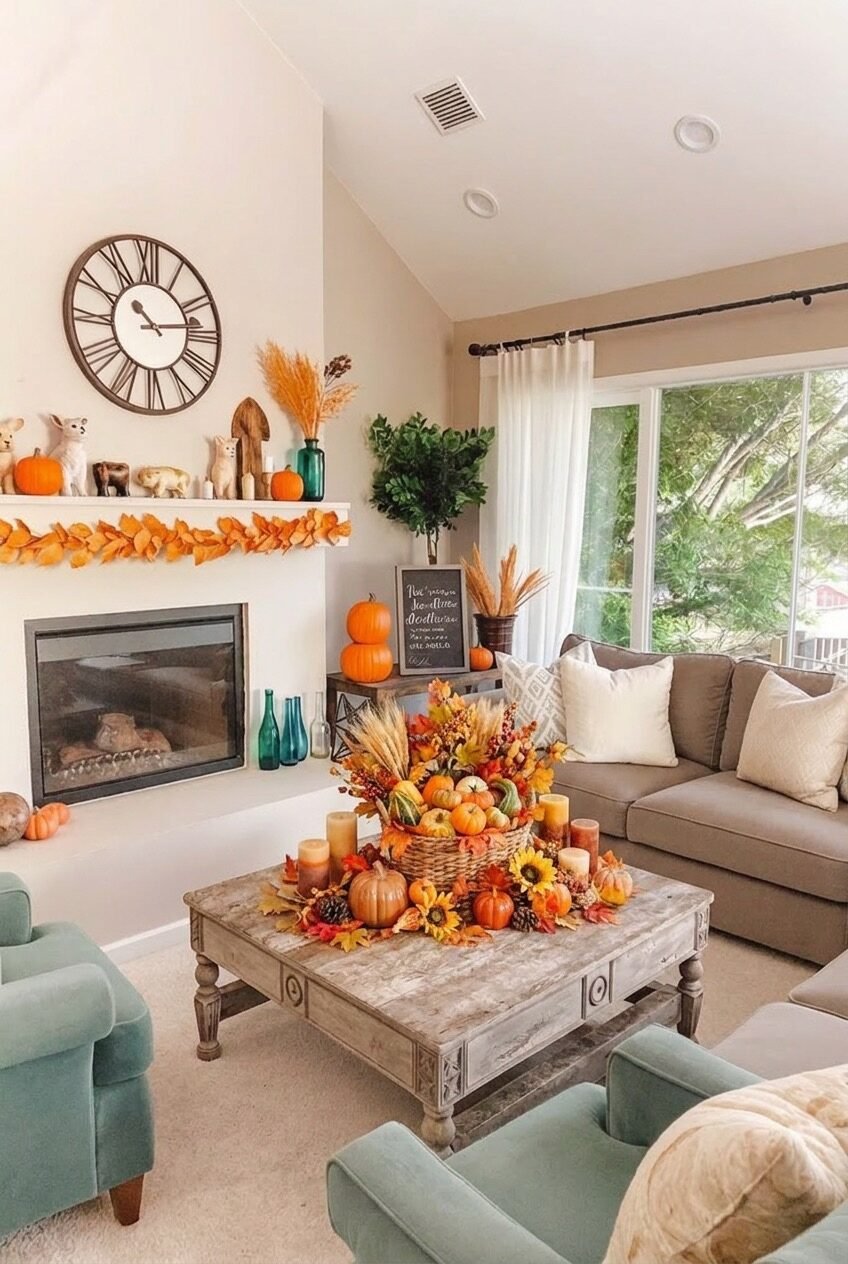
A wall clock, a small herd of ceramic animal figures, a garland of leaves, and a couple of green glass bottles probably sound like a random assortment when you list them out, but on this mantel they read as a collected, lived-in display. The trick is that nothing here was bought as a matching set. Mixing collected objects with seasonal touches makes a mantel feel like it belongs to an actual person rather than a catalog page.
The leaf garland running along the mantel edge is the only purely seasonal element in the bunch, and it’s doing exactly enough. It softens the hard edge of the shelf without burying the personal objects sitting on top of it. That’s a smart ratio to copy.
To pull this off, resist replacing your everyday mantel objects with seasonal ones. Instead, tuck a garland or a few stems in around what’s already there, add one or two small pumpkins, and let your existing collection keep its place.
Let Candlelight Do the Heavy Lifting
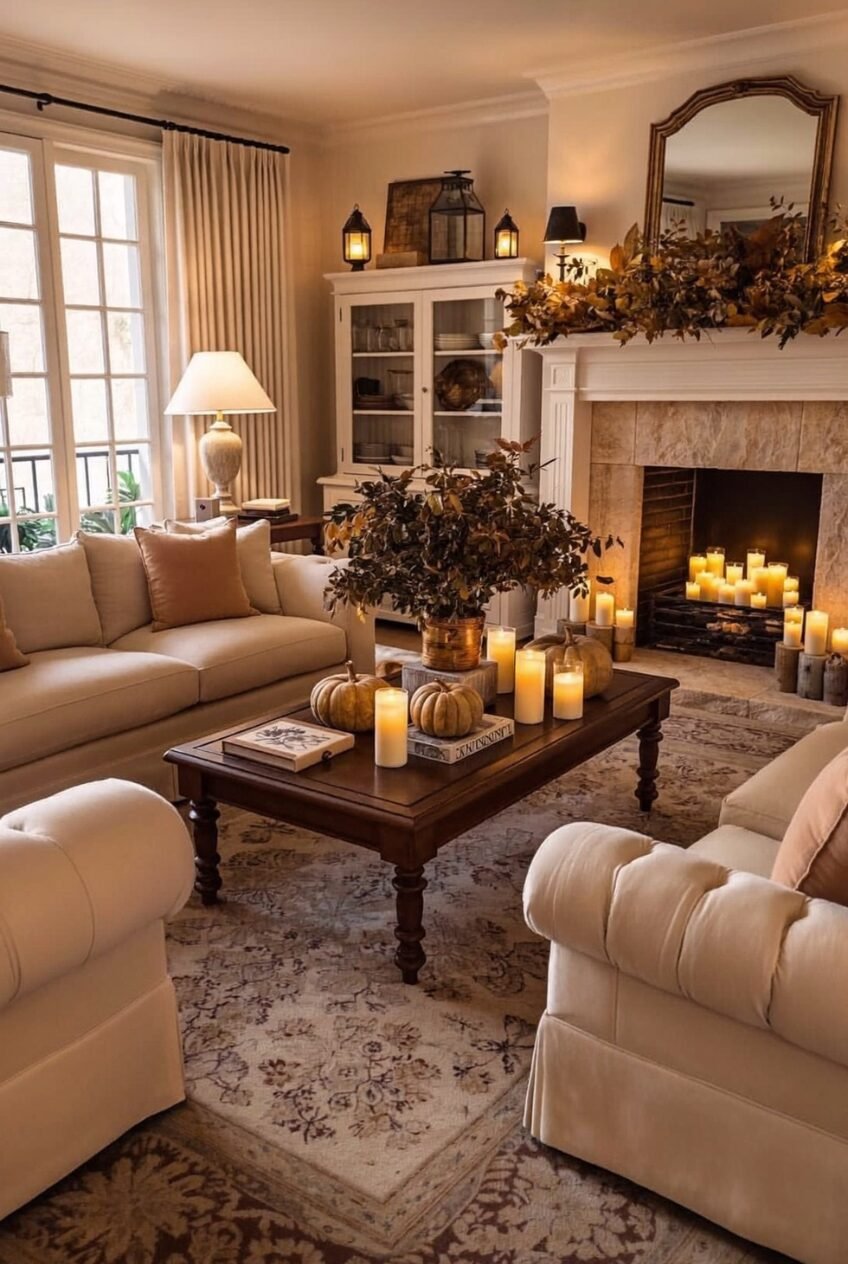
Strip away every pumpkin and gourd from this room, and it would still feel warm because of one thing: the sheer volume of candlelight stacked inside and around that fireplace. Pillar candles of varying heights crowd the hearth itself, more line the coffee table, and the cumulative glow does something no single decor piece can manage on its own.
Neutral, cream-toned upholstery and a faded floral rug give this candlelight somewhere soft to land. If the furniture were dark or saturated, all that warm light would get absorbed instead of bouncing around the room the way it does here. Light surfaces are basically reflectors.
If your space leans light and neutral already, lean into candle volume before buying more seasonal objects. A cluster of ten varying pillar candles will transform a room faster than a single new pumpkin display, and the effect reads as warmth rather than clutter.
Let One Bold Print Anchor Everything
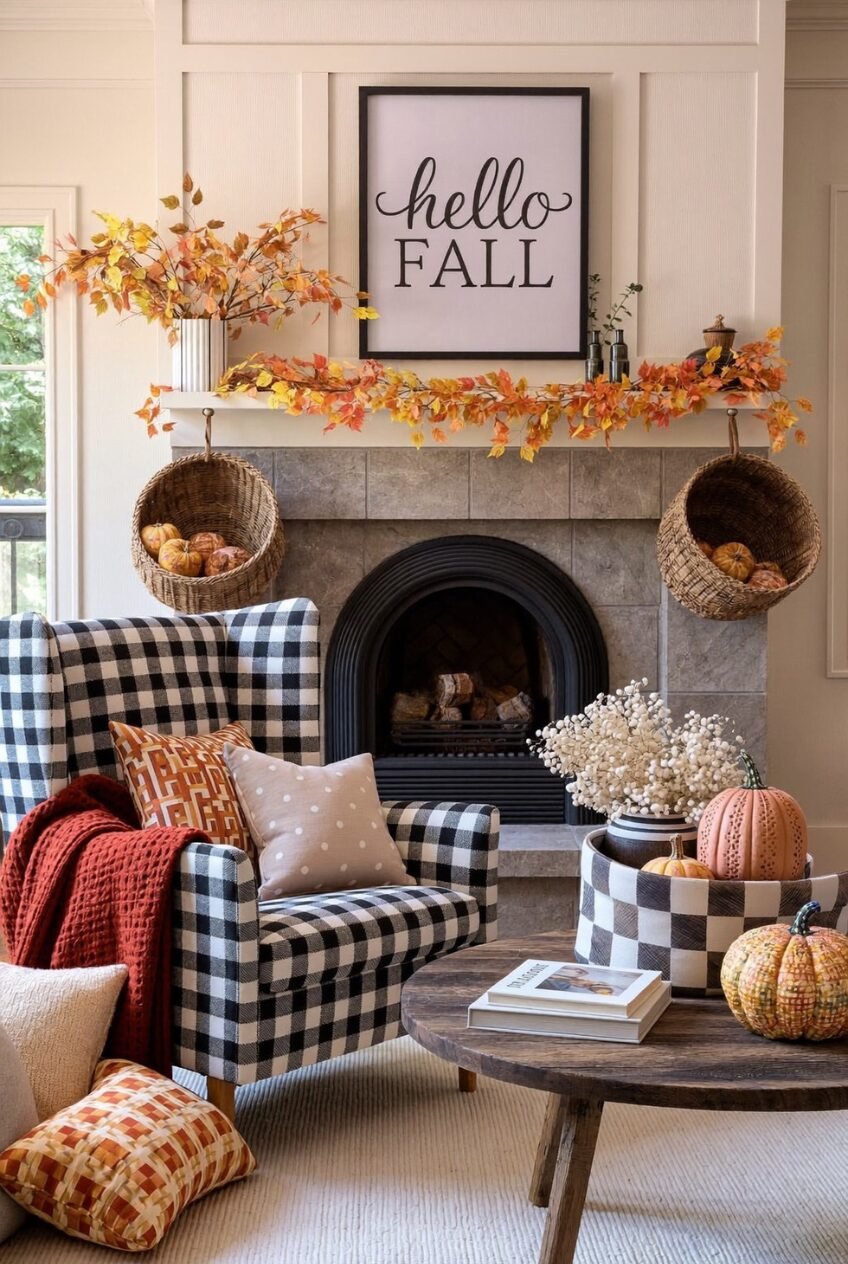
Buffalo check gets dismissed as predictable, but seeing it on a full armchair next to a hello fall sign proves it still has range. The black and white plaid chair becomes the loudest object in the room, and instead of fighting it, the rust throw blanket and mismatched orange pumpkins around it just lean into the contrast rather than trying to soften it.
Hanging woven baskets on either side of the fireplace, filled with small pumpkins, is a detail worth noting since it solves a real problem: floor and table space runs out fast once you’re decorating for a season. Lifting some of the display onto the wall keeps the mantel from feeling overcrowded.
For your own room, pick one bold pattern and commit to it on a single large piece of furniture. Surround it with solid-colored textiles in two or three warm tones, and consider vertical storage if your flat surfaces are already full.
Use Symmetry to Calm a Busy Room
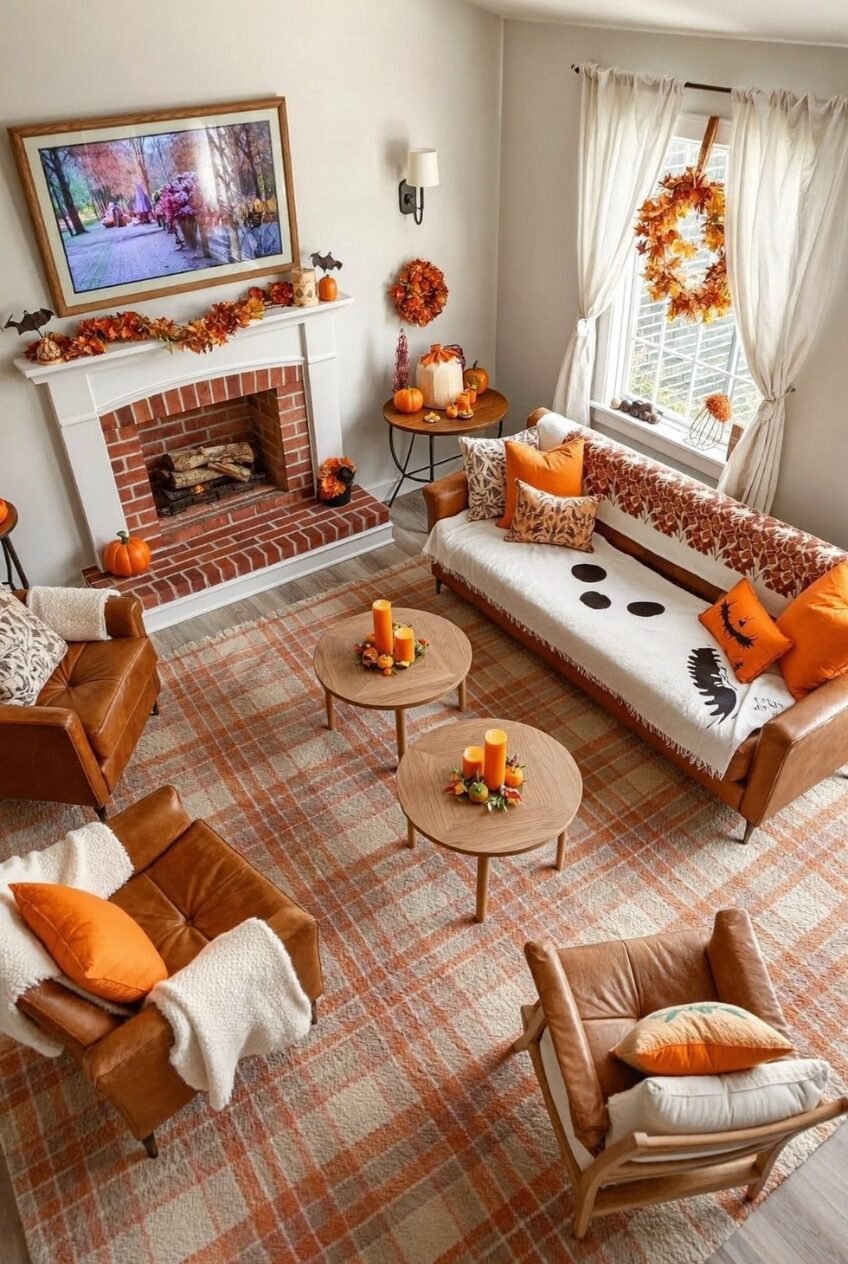
Seen from above, this living room makes an argument that’s hard to catch at eye level: the two round coffee tables, the matching candle clusters on each, and the rug’s plaid pattern are all working together to create rhythm. A leather sectional and three separate armchairs could easily feel chaotic, but the repeated circular shapes on the floor pull the whole layout into order.
The rug itself deserves credit here. Its warm orange and cream plaid pattern essentially does the color coordination for the entire room, meaning every pillow, candle, and blanket just has to pick a shade that already exists somewhere in that weave. That’s a low-effort way to avoid mismatched furniture.
We’d suggest starting any fall refresh with your rug if you’re working with multiple seating pieces that don’t already match. Choose a pattern with three or four colors, then pull every other accent directly from that palette.
Let Stone and Firelight Do the Work
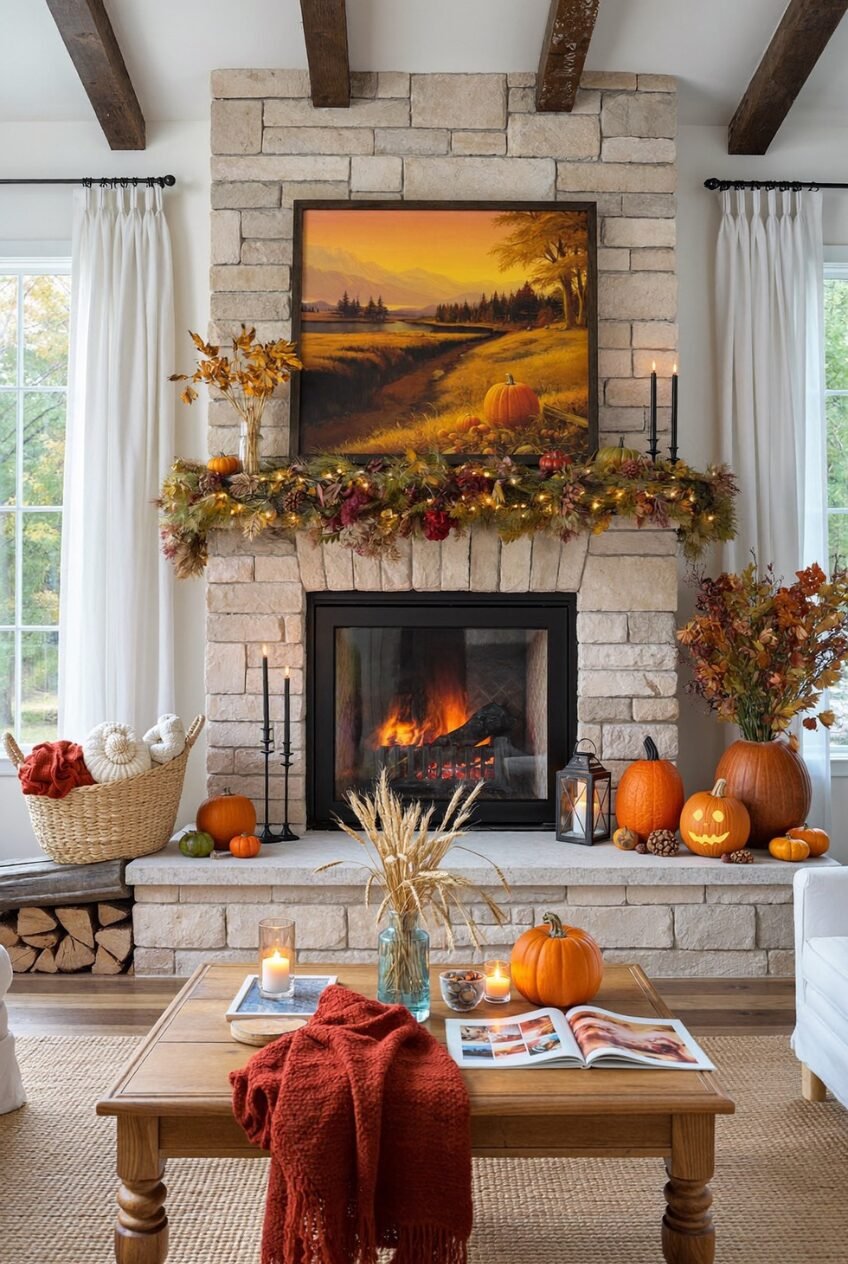
Sometimes the architecture does most of the work before a single pumpkin shows up. This stacked stone fireplace, with exposed wood beams overhead, already has so much natural texture that the styling on top, candles, a woven garland, a couple of carved pumpkins, only needs to support what’s already there rather than compete with it.
A red knit throw draped over the coffee table is a small move that changes the room’s temperature instantly, both literally and visually. Against all that pale stone, one saturated red textile reads as the warmest object in the frame, even warmer than the lit fireplace beside it.
If your living room has strong existing architecture like exposed beams or stone, decorate with restraint and let one or two saturated textiles do the emotional work instead of layering on dozens of small objects. A single bold throw blanket can outperform an entire shelf of trinkets.
The Best Fall Rooms Pick a Lane and Commit to It
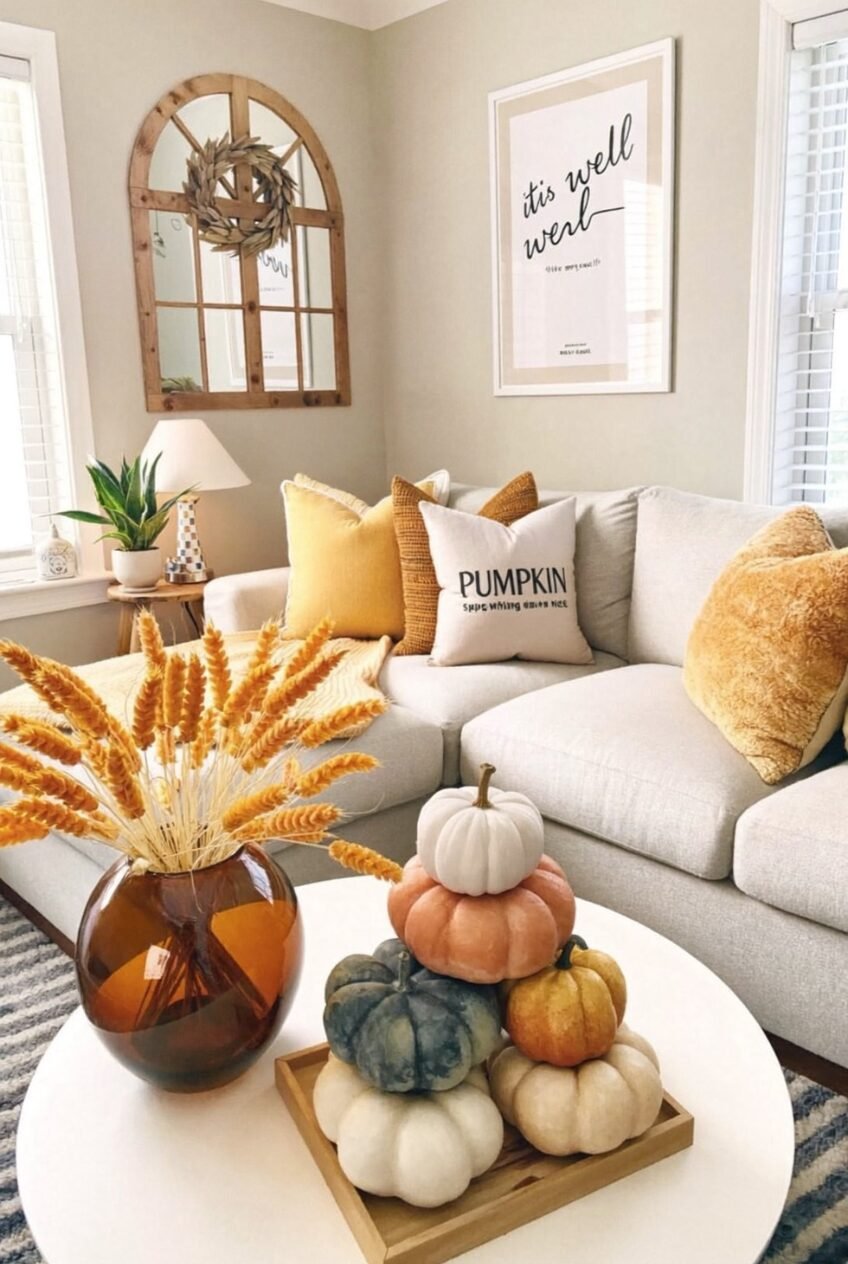
Looking back across all ten of these spaces, the rooms that work hardest aren’t necessarily the ones with the most stuff in them. They’re the ones that picked a specific mood, whether that’s candlelit and quiet or plaid-covered and loud, and followed through on it without getting distracted halfway.
That’s probably the most useful thing to take from any of this. You don’t need every pumpkin shape or every dried botanical trend happening at once. Pick the room above that made you want to sit down in it, then borrow two or three specific techniques from it rather than the whole aesthetic wholesale.
Fall decorating doesn’t have a deadline, either. These touches work just as well in early September as they do in late November, so there’s no rush to get the whole living room finished in one weekend. Layer it in slowly and let the room tell you when it’s done.