
Why These Fall Table Setups Actually Work So Well Together
Fall decorating gets a lot of attention for porches and mantels, but the table is honestly where it matters most. It’s the one surface where people actually sit still long enough to notice the details – the candle flicker, the texture of a runner, the way light hits a pumpkin’s ridges. A table set with intention does more storytelling than almost anything else in the house.
We’re walking through ten very different ways to dress a fall table, from rustic wood slab simplicity to moody, romantic drama. None of them require a full redecorate. Most lean on things you can find at a craft store, a thrift shop, or honestly your own kitchen cabinet.
The goal here isn’t to copy any single look exactly. It’s to notice the small decisions, like color pairing, texture layering, and where the eye lands first, and borrow whatever fits your own table and your own season.
Wood Slabs Anchor Candlelit Centerpieces
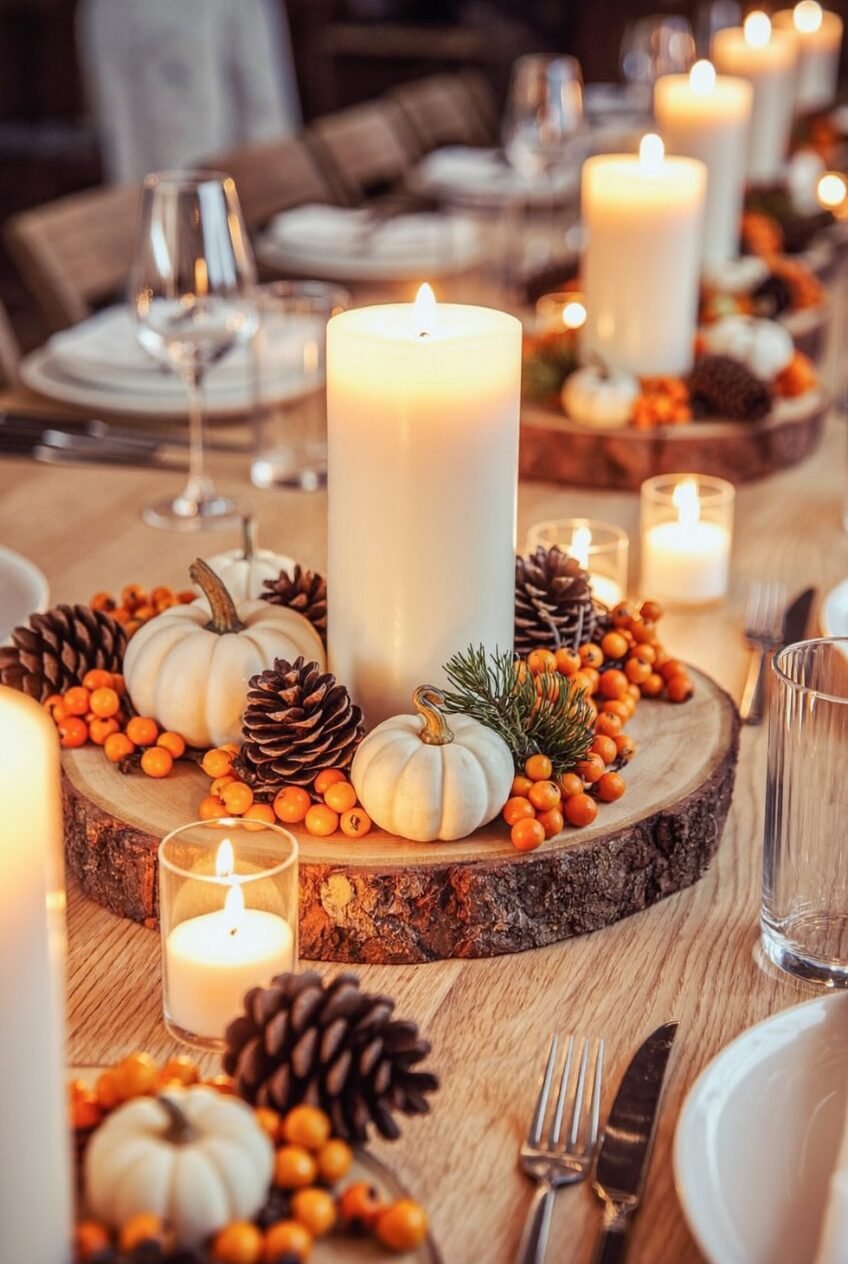
Repetition is doing a lot of quiet work in this setup. Instead of one big centerpiece, there’s a wood slab placed at intervals down the table, each holding a little cluster of pinecones, white pumpkins, and orange berries around a tall candle. Repeating a small moment like this down a long table reads as far more polished than one giant arrangement ever could.
The wood slab itself is the trick. It grounds the natural materials and keeps them from rolling around or looking scattered, while still feeling unfussy. You can find slices at craft stores or even ask a hardware store to cut one from a fallen branch if you want it free.
For your own version, keep each cluster small enough that it doesn’t block sightlines across the table. Mini pumpkins, a few pinecones, some dried berries, and a votive or pillar candle is really all it takes. Vary the candle heights slightly so the row doesn’t feel too uniform.
Layered Glass Jars Hide Light
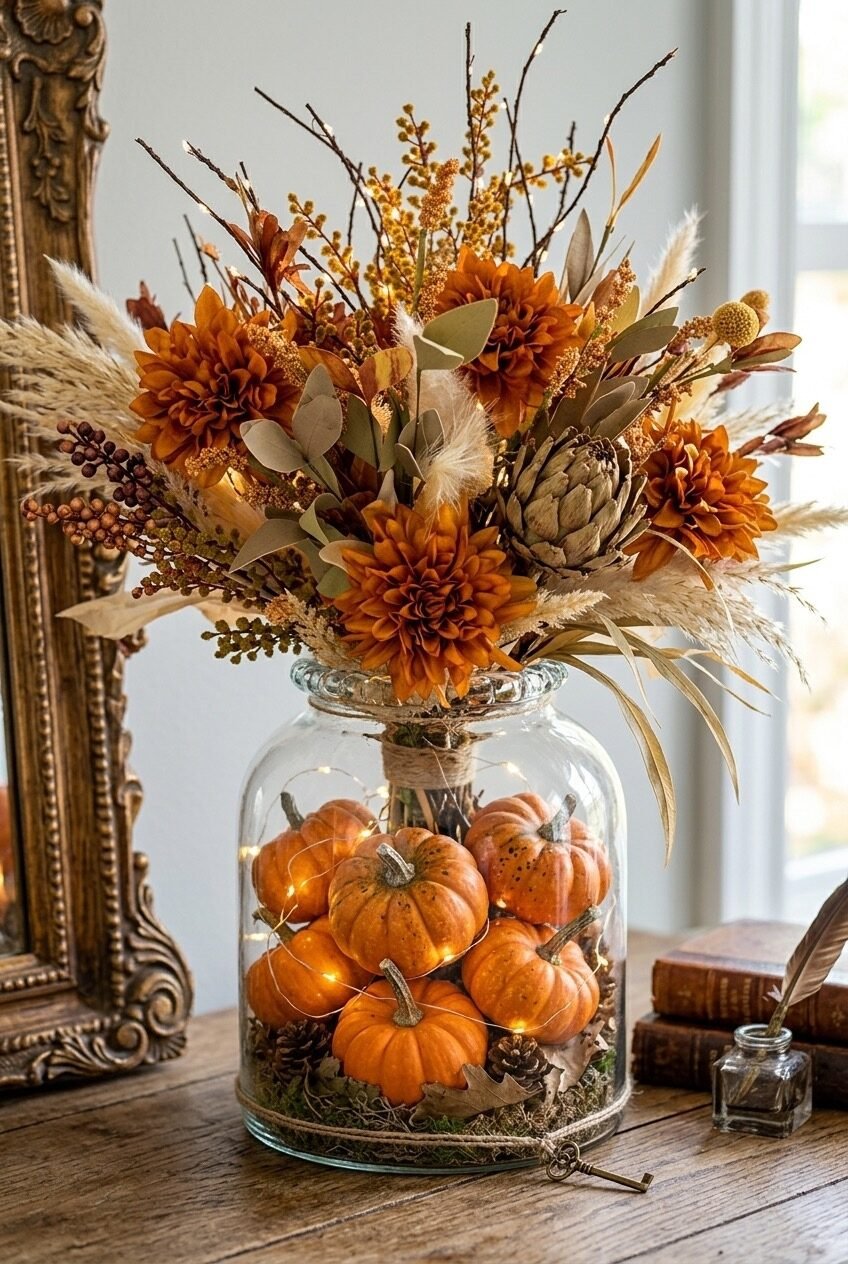
There’s a real sleight of hand happening here. The bottom half of the jar does the surprising work, with string lights woven through mini pumpkins and moss, glowing from inside the glass, while the top half holds a wild, full floral arrangement of dahlias, pampas grass, and dried leaves.
Layering vertically inside a single vessel is the design principle worth stealing. Most people only think about what goes in a vase, not what goes underneath it. Tucking lights and pumpkins into the base turns a plain glass jar into its own light fixture, no extra cord required.
To recreate it, grab a wide mouth glass vase or a large mason jar, layer in fairy lights with a few mini pumpkins and some moss, then let your floral stems rise up and out the top. The contrast between the glowing base and the dried, textured top is what makes it feel special. A small vintage key leaned against the jar adds a nice finishing touch.
Chinoiserie Pottery Meets Rustic Mums
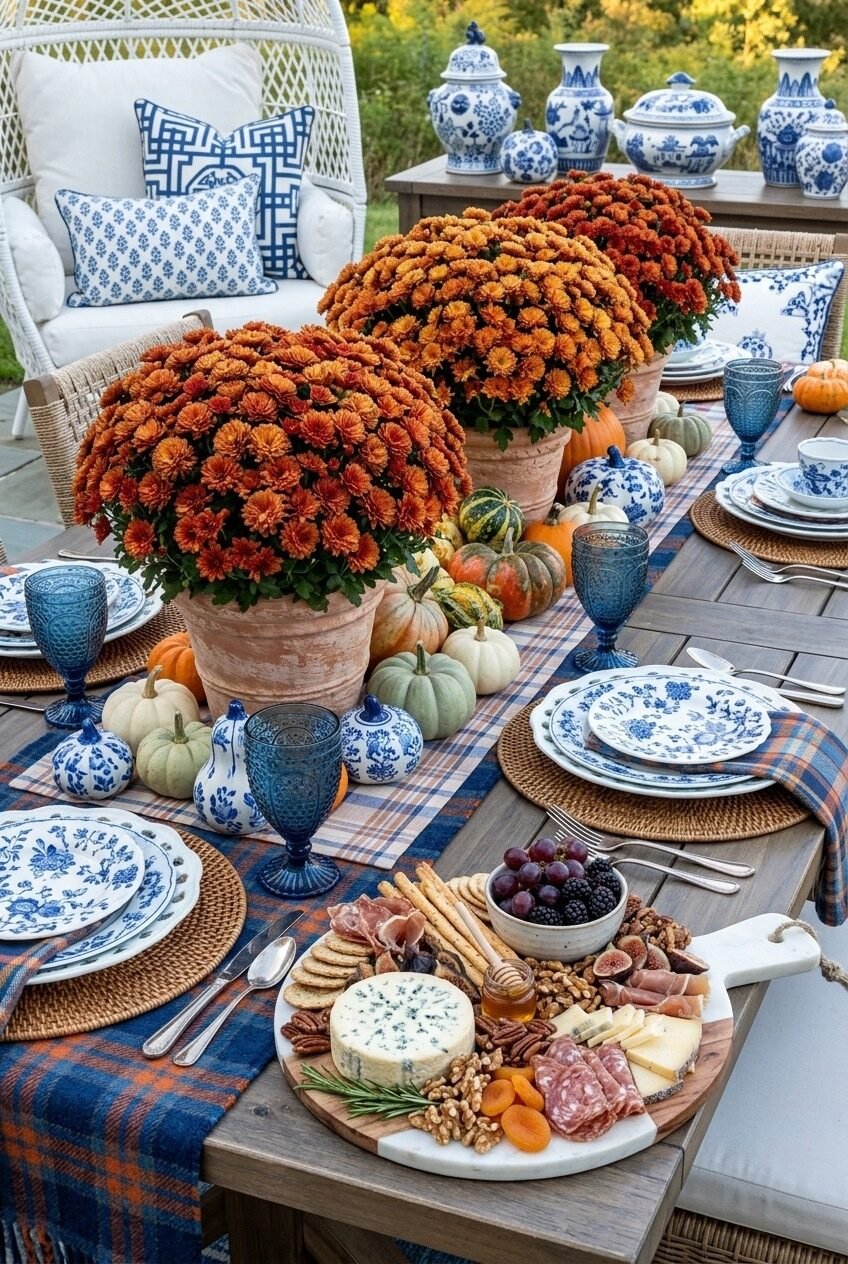
Blue and white pottery next to rust colored mums sounds like it shouldn’t work, and that’s exactly why it does. Pairing a formal, traditional pattern with a casual, earthy plant creates tension that keeps the table from feeling like it came out of one catalog page.
The terracotta pots holding the mums do more than you’d think too. Leaving them unpainted instead of swapping in something matchy lets the warm clay tone bridge the gap between the cool blue china and the orange blooms. Heirloom pumpkins and gourds in cream, sage, and pale orange scatter around the base to soften the formality even further.
Mixing one elegant element with one casual one is a reliable shortcut for tables that feel collected rather than staged. If you want this at home, start with whatever blue and white pieces you already own, even one pitcher counts, then build texture around it with mums, a plaid runner, and a cheese board nobody will mind getting picked apart.
Glass Cylinders Turn Leaves Into Sculpture
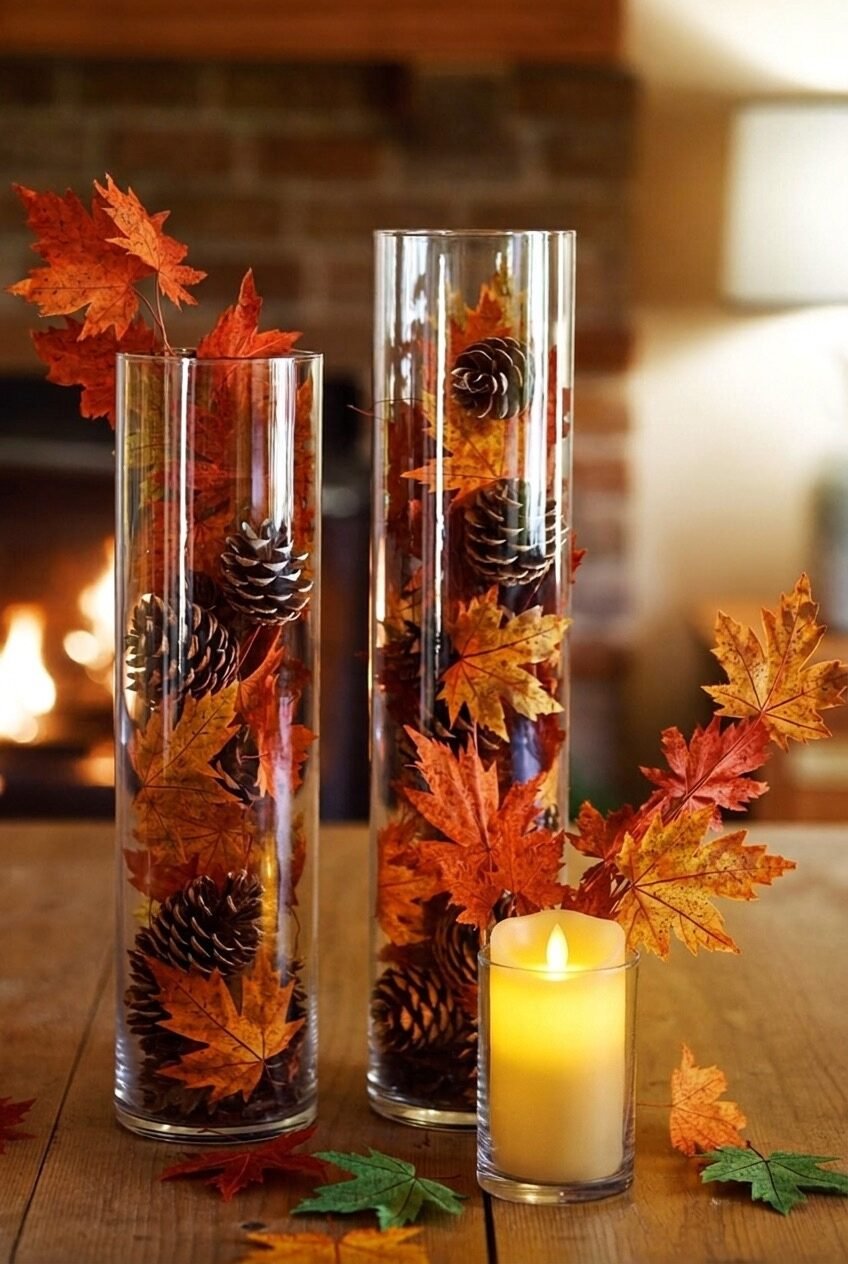
Maple leaves on a table get crushed and forgotten within an hour. Maple leaves stacked inside a tall glass cylinder become something you’d actually photograph. That’s the shift happening here: taking an ordinary, free material and giving it a container that makes it look deliberate.
Height variation between the two vases matters more than it seems. The taller one draws the eye up first, then the shorter one pulls it back down, creating visual rhythm instead of two identical towers side by side. Pinecones tucked between the leaf layers add weight and break up the color so it’s not just solid orange and red.
Gather fallen leaves on a walk, let them dry flat for a day so they don’t wilt against the glass, then layer them with pinecones inside whatever clear vases you have. The simplicity here is the entire point, no flowers, no extra props, just one material shown off well. A single flameless candle beside the vases finishes it without competing.
An All-White Backdrop Lets Pumpkins Pop
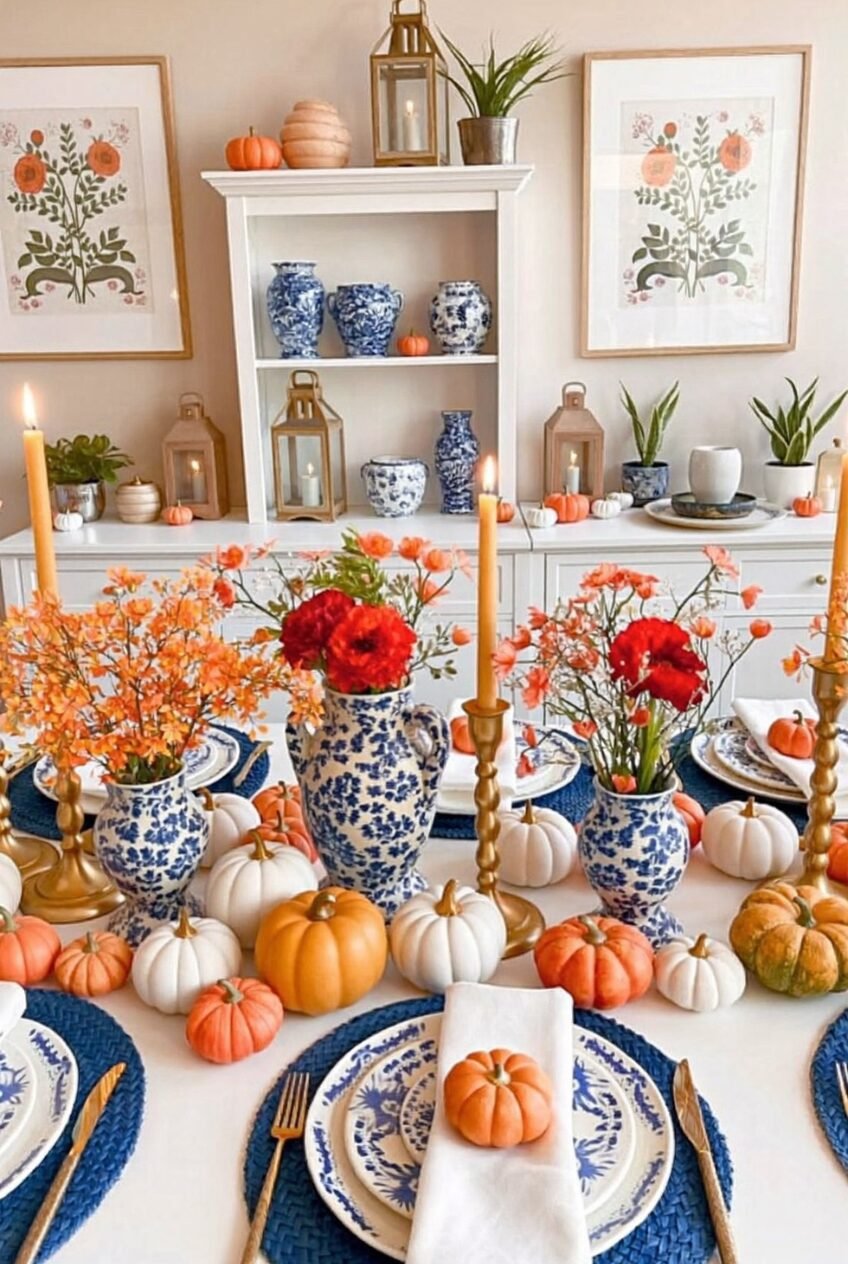
White furniture is the unsung hero of this whole scene. By keeping the cabinet, shelving, and wall art neutral, every pumpkin, every blue and white vase, and every red bloom gets to read at full saturation instead of competing with a busy background.
Scattering pumpkins across multiple surfaces instead of confining them to the table is the other big move. Mini pumpkins sit on the cabinet top, line the table edge, and tuck into place settings, which makes the whole room feel decorated rather than just the table. Brass candlesticks add a warm metallic note that keeps all that white from feeling cold.
If your dining area already has light walls or white furniture, you’re halfway there already. Bring in mismatched pitchers or vases for height, fill them with a couple of bold red or orange stems, then let pumpkins spill across nearby surfaces in varying sizes. Color restraint in the background is what makes the foreground colors actually sing.
Monogrammed Linens Bring Quiet Formality
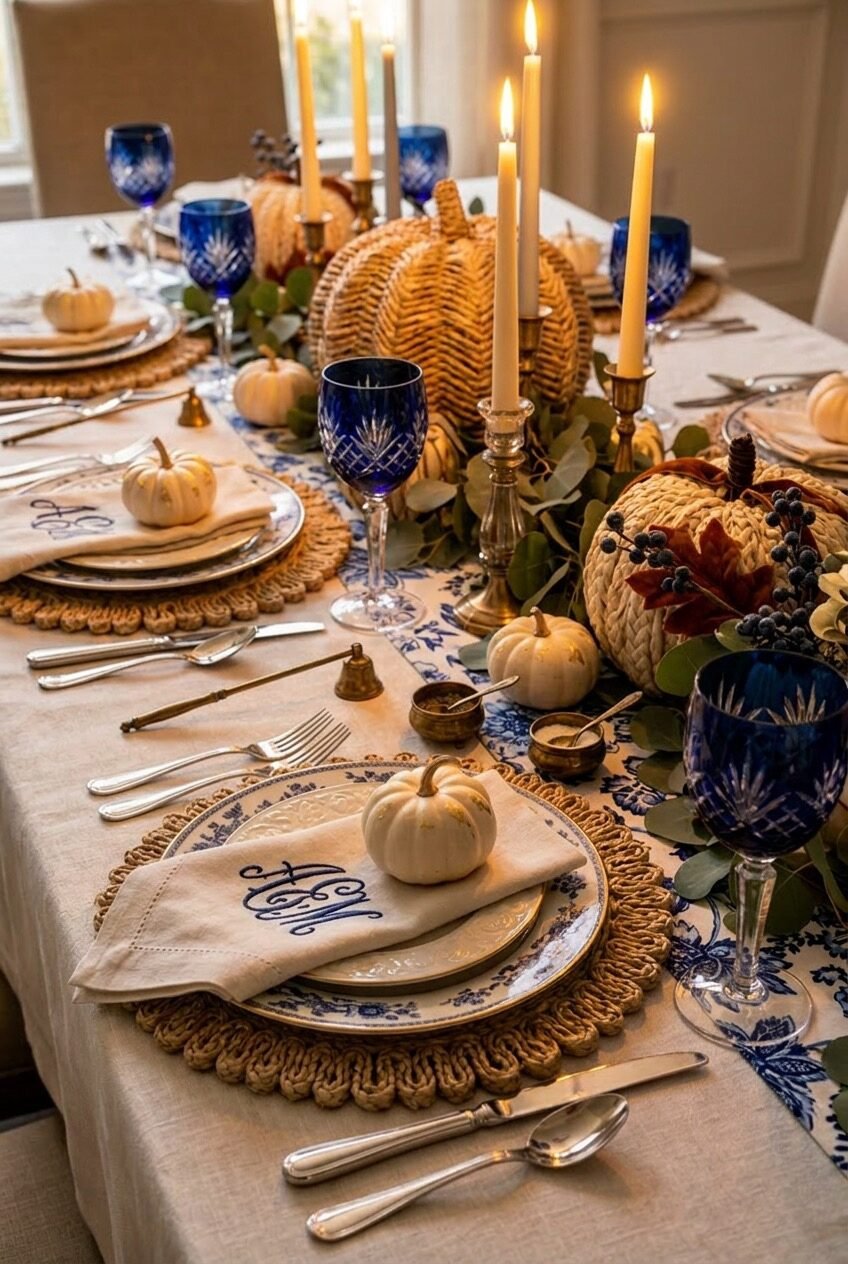
Personalization is the detail doing the heaviest lifting at this table, and it costs almost nothing to add. A monogrammed napkin tucked under a mini pumpkin turns a place setting from generic to genuinely thoughtful in about two seconds.
Everything else here is built to support that one personal touch rather than distract from it. The woven placemats and crocheted style chargers add texture without color, the cobalt cut crystal goblets bring a jewel tone pop, and the eucalyptus garland softens the whole centerpiece with a cooler green that keeps the warm woven pumpkin from looking too matchy with the wood table beneath it.
We’d recommend starting with whatever neutral linens you already own and adding initials with a simple embroidery kit or even fabric paint if you want to skip the sewing machine. Pair them with one statement glass color, a woven charger, and a single textured centerpiece pumpkin, and you’ve got most of this look without buying anything new for the table itself.
Muted Heirloom Pumpkins Skip The Orange
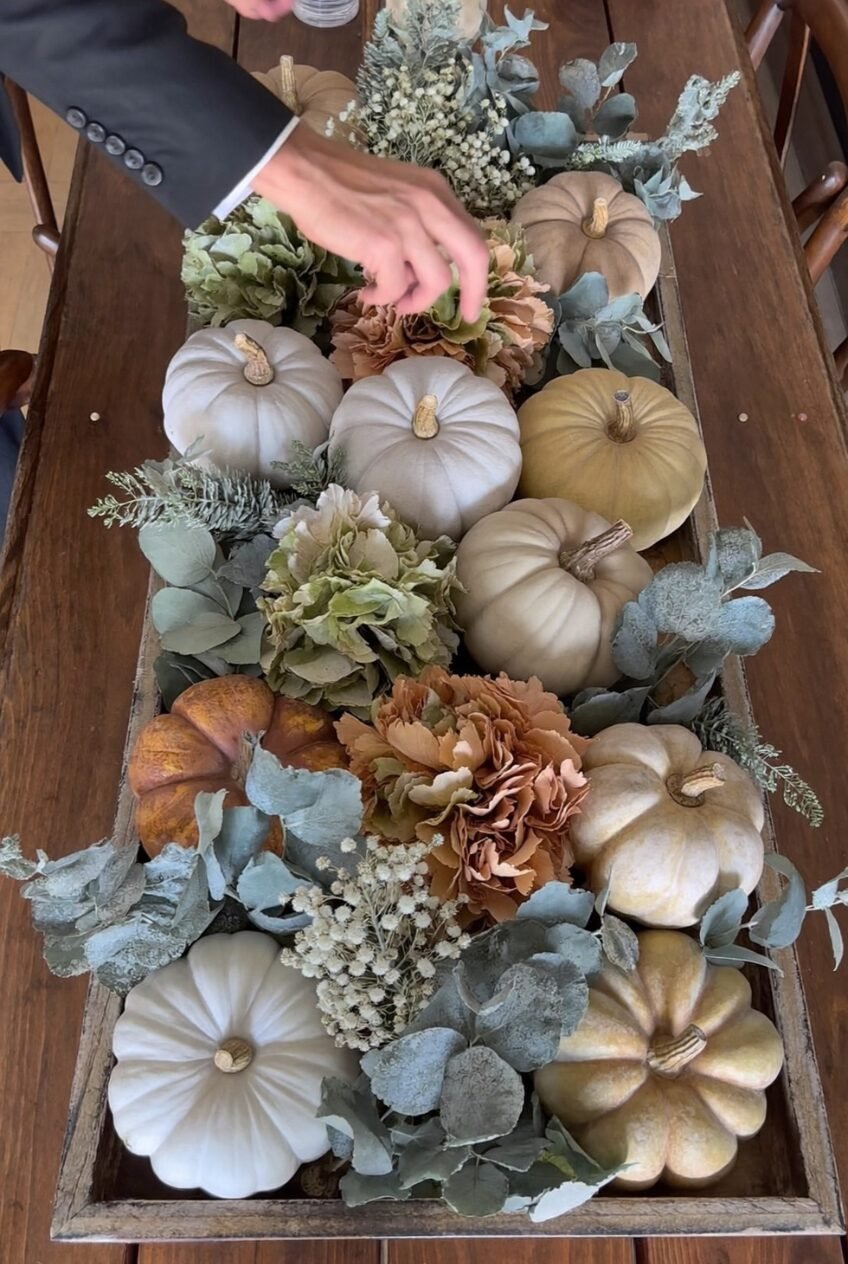
Fall decor doesn’t actually require orange, and this trough full of sage, cream, and gold heirloom pumpkins proves it. Choosing a tonal palette instead of the expected autumn rainbow makes the arrangement feel closer to a fine art still life than a craft project.
The pumpkins’ irregular, deeply ridged shapes are the real stars, and dried hydrangea heads in matching dusty tones get tucked between them to fill gaps without introducing a new color family. Eucalyptus sprigs add just enough green to keep the whole thing from reading beige.
A wooden trough or dough bowl is the easiest way to contain a grouping like this without it sprawling. Source a few heirloom or specialty pumpkin varieties from a farm stand if you can, since their natural color variation does most of the work for you. Sticking to one muted color story, even for a single centerpiece, makes a table feel thought through by someone with a steady hand rather than someone who bought one of everything.
Pampas Grass Pairs With Humor
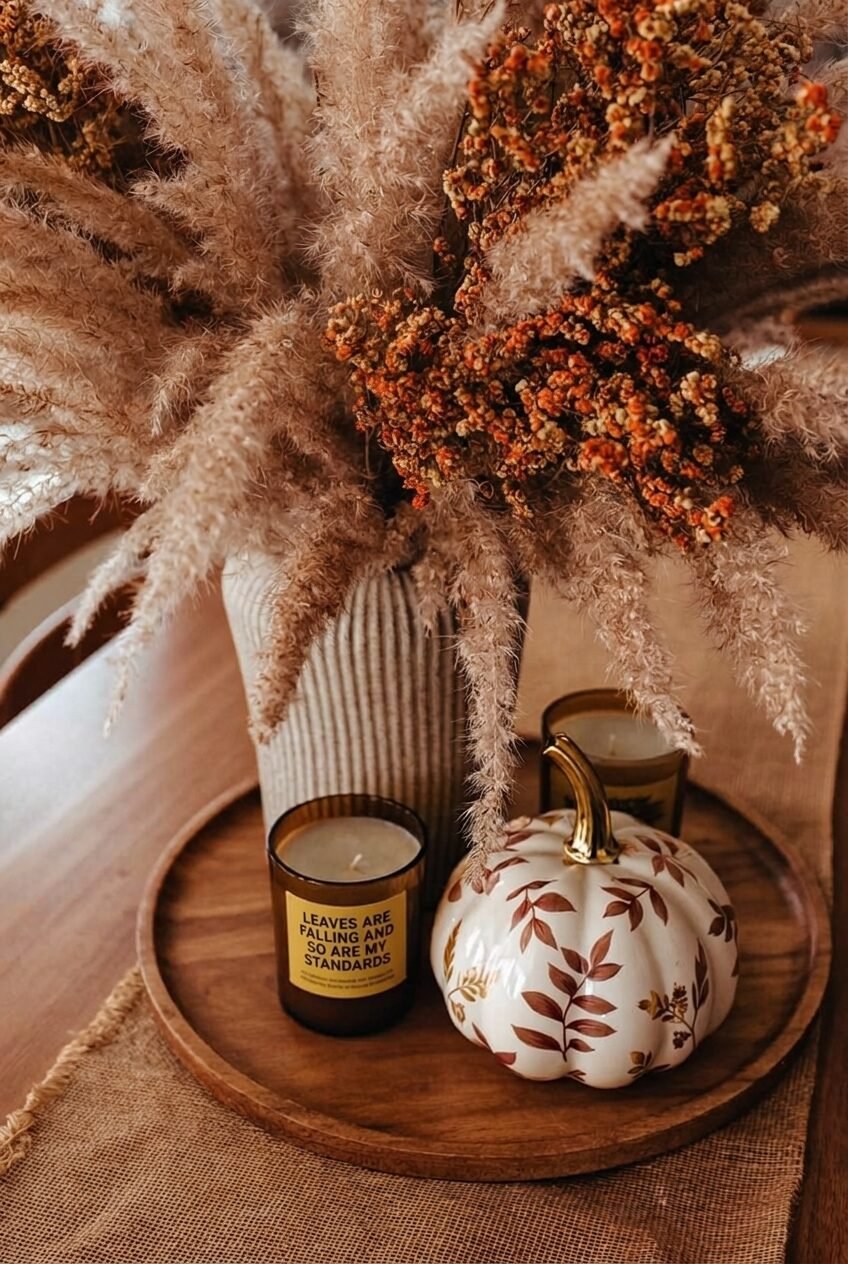
Not every fall vignette needs to take itself seriously, and this one leans into that on purpose. A candle printed with a cheeky line about falling leaves and falling standards sits right next to an oversized pampas grass arrangement, and the contrast between the dramatic florals and the joke is exactly what makes it memorable.
Texture is carrying the visual weight here. The fluffy pampas plumes, the smaller dried orange florals tucked beside them, and the hand painted leaf pattern on the ceramic pumpkin all give the eye plenty to move across even though the color palette stays narrow and warm.
To pull this together, find one oversized dried grass arrangement to act as your height, then surround the base with a candle or two and a single decorative pumpkin instead of a dozen small ones. Adding one small, funny detail to an otherwise pretty vignette is what keeps decor from feeling overly precious. A wood tray underneath keeps it from looking like clutter.
Buffalo Check Pairs With Black Candles
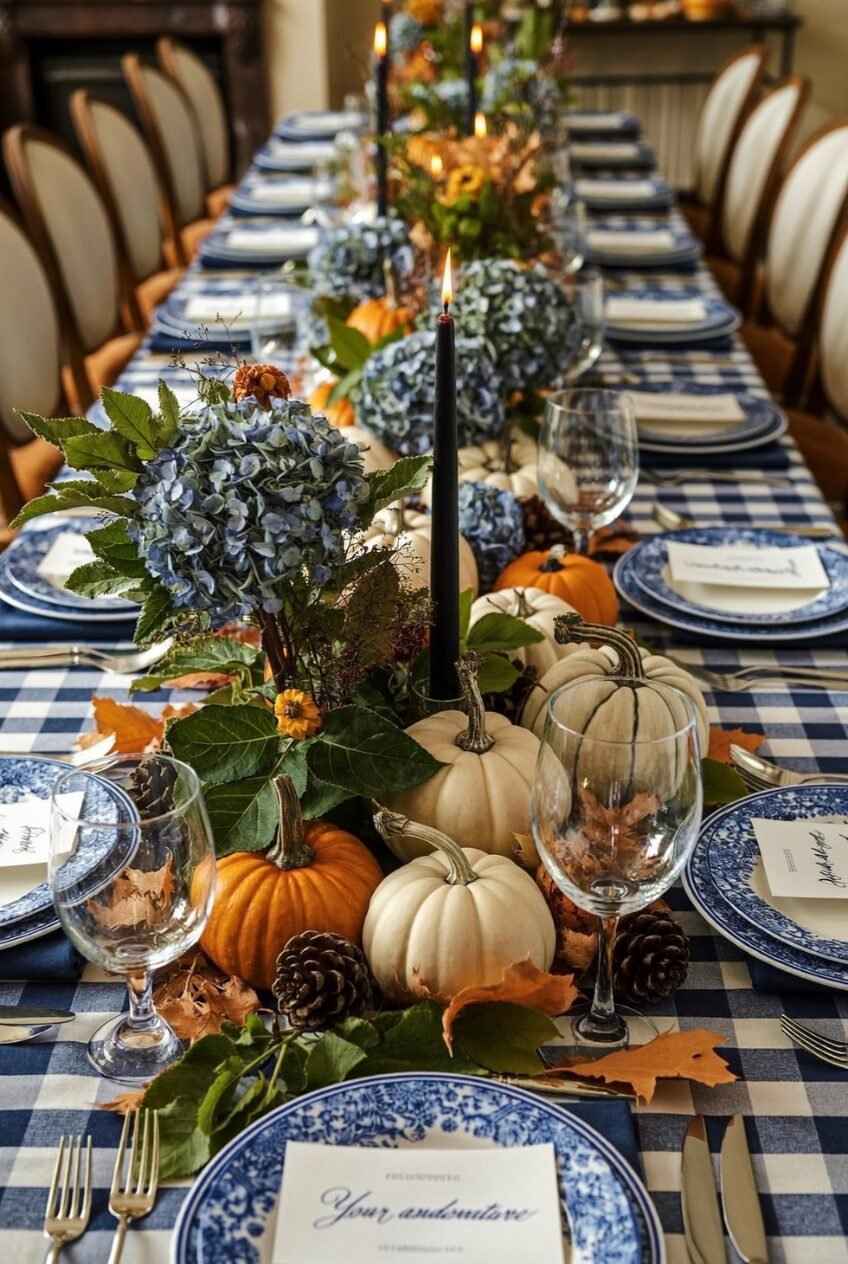
Long tables for a crowd are tricky because they can either look thrown together or overly fussy, and this one threads that needle with a buffalo check runner under an elegant setup. The graphic, casual pattern keeps things from feeling stiff, even with place cards and matching china running the entire length.
Black taper candles are the unexpected choice that makes this work. Cream or white candles would have blended right into the pumpkins and hydrangea, but black creates sharp vertical lines that punctuate the table at regular intervals and give the eye somewhere to land. Blue hydrangea heads mixed with heirloom pumpkins and loose green leaves keep the centerpieces lush without looking overgrown.
For a smaller version at home, even one black taper per place setting can shift a table from cozy to formal. A single unexpected color choice, repeated consistently down the table, reads as a deliberate decision rather than an accident. Pair it with whatever pattern you already have.
A Wood Tray Holds Stillness
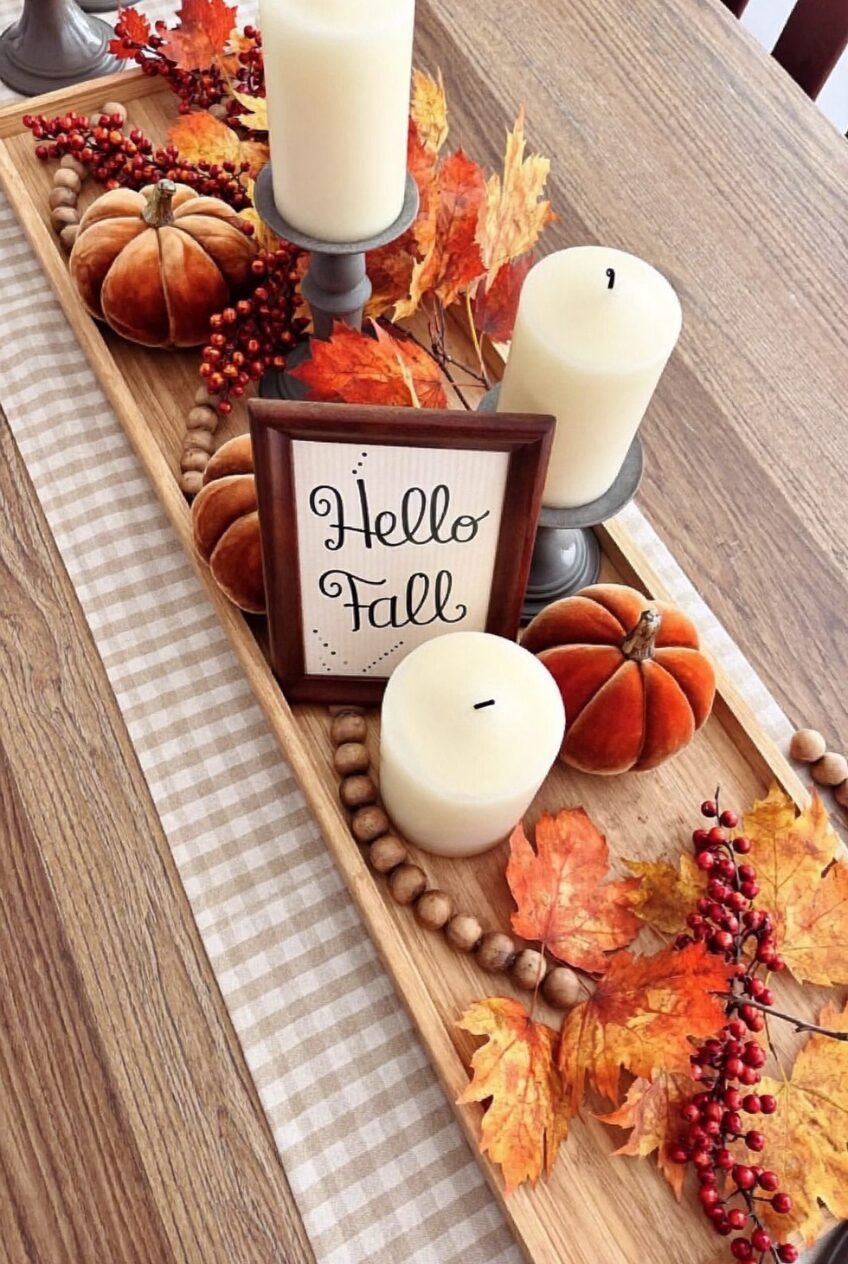
Sometimes the best centerpiece is just a well edited collection of small things on a tray. This one keeps everything contained to a single long wooden runner tray, which means the rest of the table stays clear for place settings and food.
A framed seasonal greeting sits front and center, flanked by ivory pillar candles and velvet pumpkins in two finishes. The wood bead garland looped around the edges adds a handmade, slightly rustic line that keeps the tray from looking like a store display. Berry stems and maple leaves spill over the edges instead of staying perfectly contained, which keeps the whole thing from feeling stiff.
If you’ve got a narrow tray sitting in a closet somewhere, this is the move. Pick one focal point, whether that’s a small framed sign or a single statement candle, then build outward with two or three pumpkins, a candle pair, and some loose foliage. Letting a few leaves spill past the edge keeps it from looking too tidy.
Pick One Idea And Let The Rest Wait
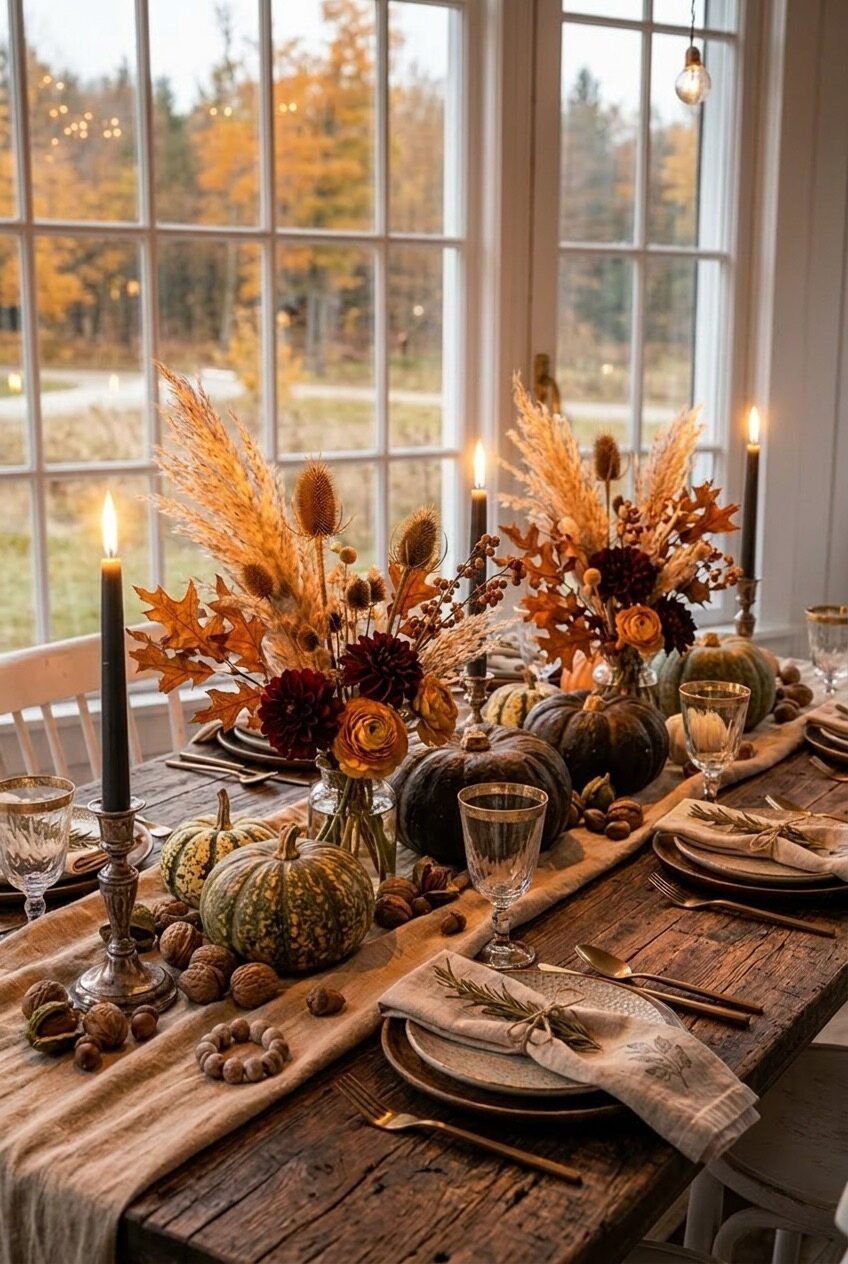
Ten tables, ten completely different moods, and honestly none of them are wrong. Some leaned moody and dramatic with black candles and dark pumpkins, others stayed light and almost playful with a joke candle next to dried pampas grass. That range is the point – fall decorating doesn’t have to follow one formula to feel cohesive.
If you’re staring at your own table wondering where to start, pick whichever idea matched something you already own. A few mismatched candlesticks, one good vase, or a pile of pumpkins from the farm stand is usually enough of a starting point. Building outward from what’s already in the house tends to look more natural than buying an entire matching set.
We’d guess your table doesn’t need every idea here combined, just one done with a little care. Choose the mood that fits how you actually want the season to feel in your home, and let the table do the rest of the talking.